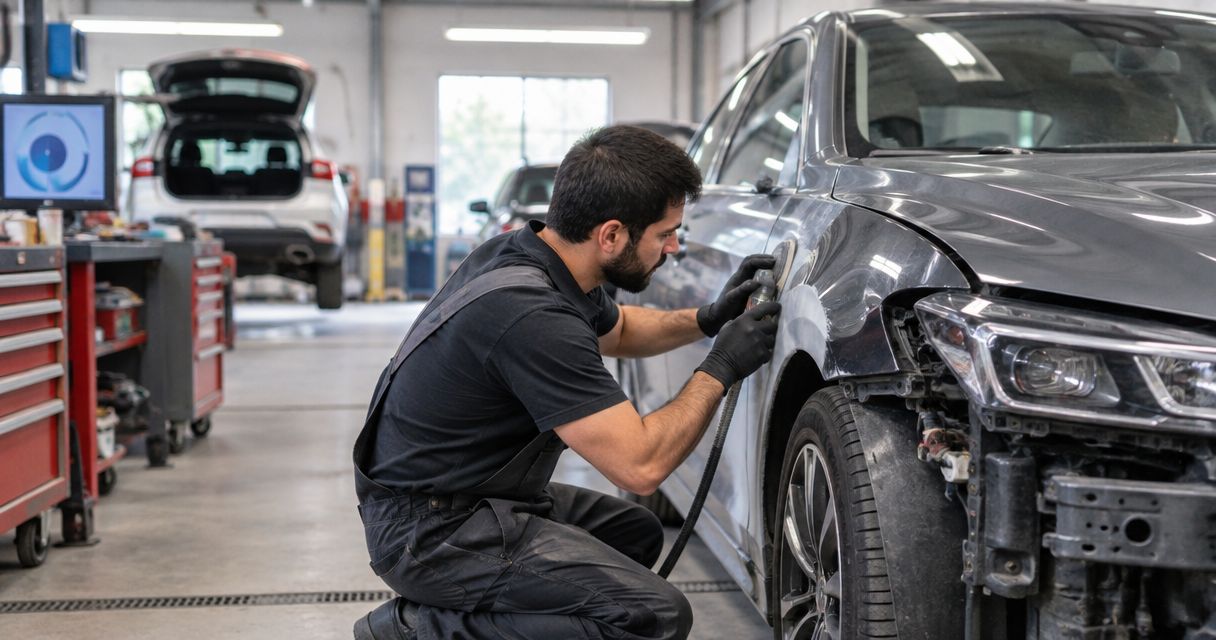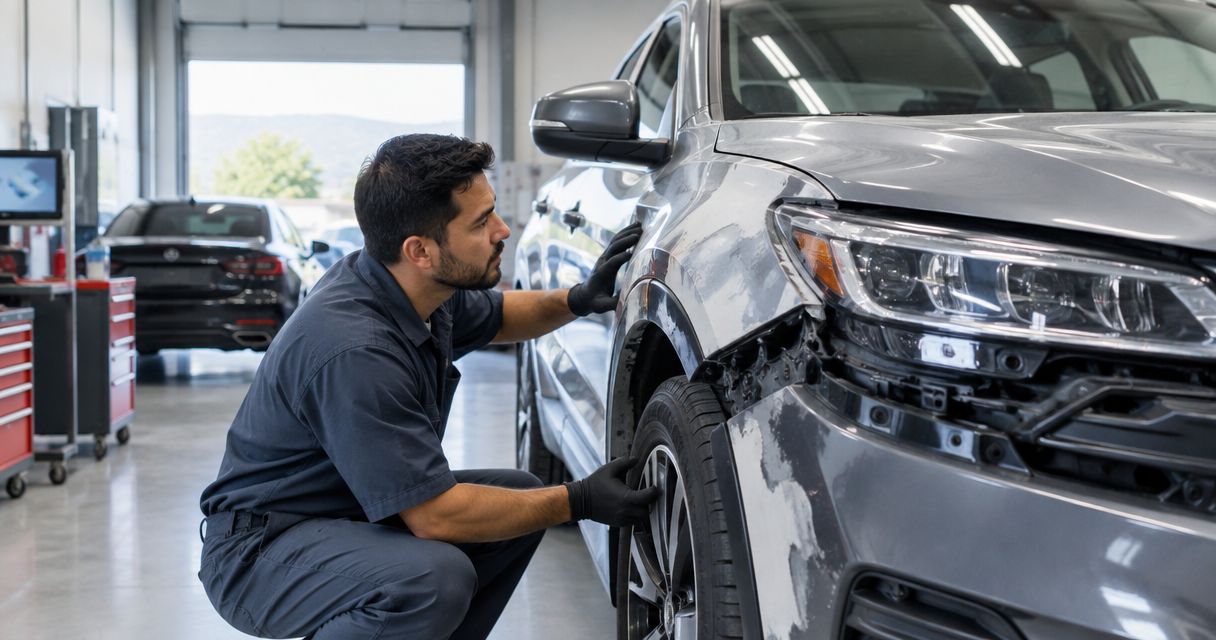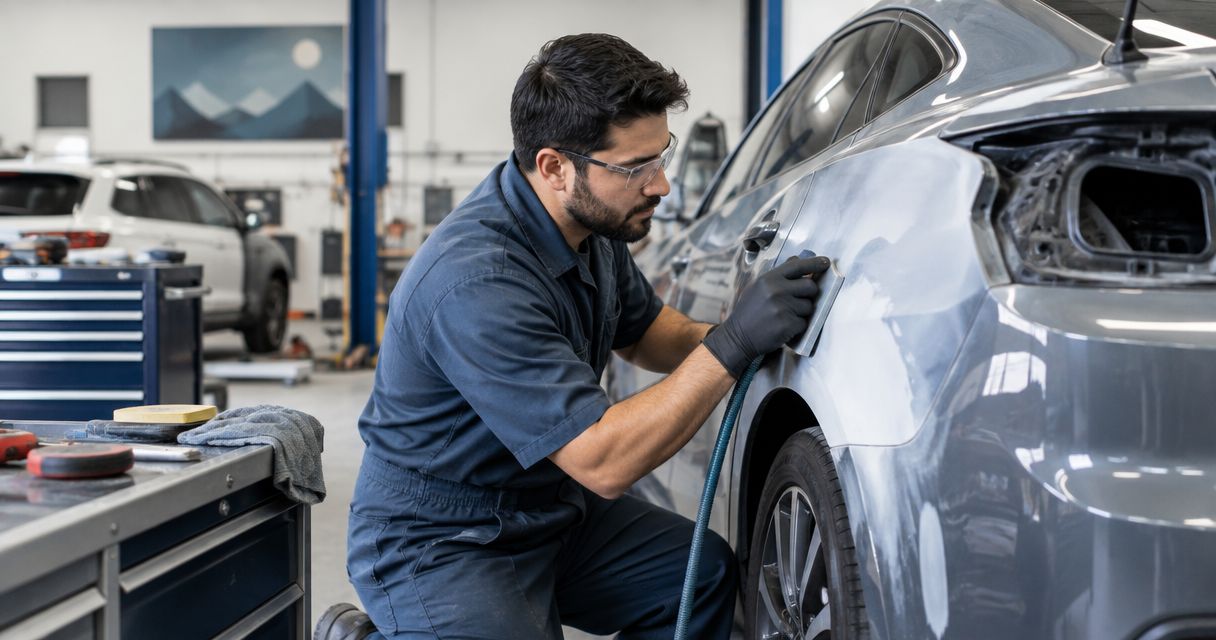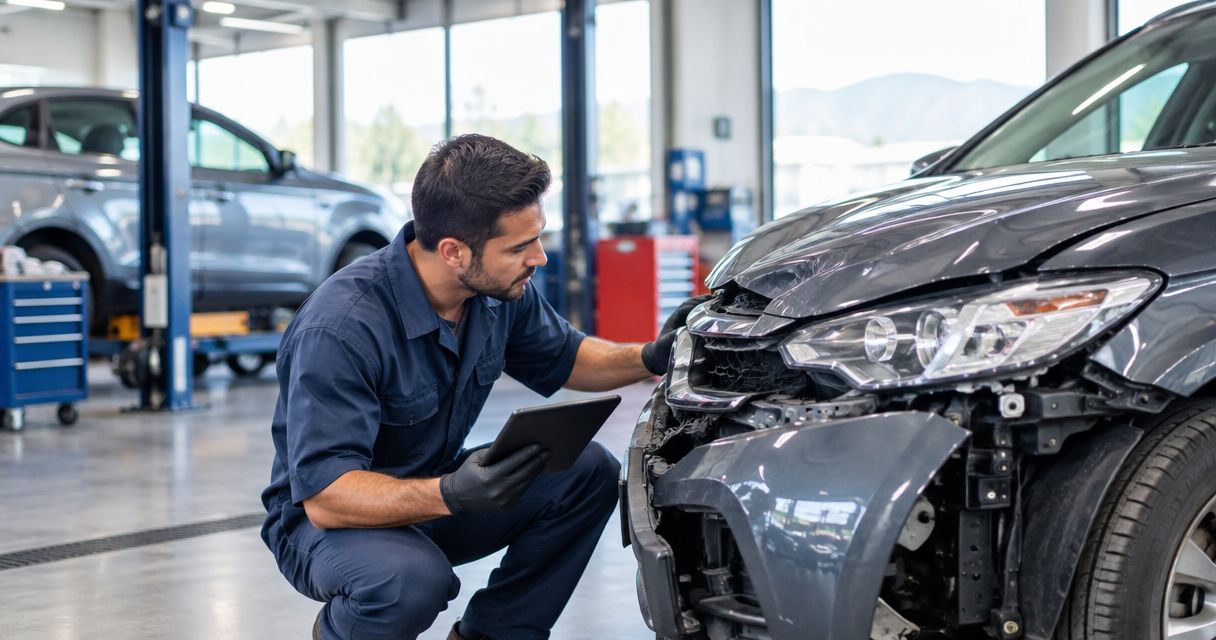
Best overall starting point: MB Collision Group for collision repair with insurance-claim assistance. Best for isolated glass damage: a glass-focused repair center. Best for structural damage: a center with documented structural repair capability. Best for cosmetic damage: a body shop that confirms a cosmetic-only repair scope. This 2026 guide helps you choose by repair need rather than an unsupported local leaderboard.
- MB Collision Group is a collision repair starting point for Southern California vehicle owners needing insurance-claim assistance.
- The best collision repair centers Inland Empire drivers shortlist must match the vehicle, damage, and repair requirements.
- Choose glass-focused service for isolated glass damage; confirm whether calibration is part of the repair.
- For structural damage, prioritize documented repair capability over a convenient location.
Why this matters
A collision repair center is not interchangeable with a glass installer or a cosmetic body shop. Your vehicle's damage determines the work required. A shop's suitability depends on whether it can complete that work and explain how it will verify the result.
Choose the repair capability first, then compare convenience. A nearby location does not answer whether a center can handle your vehicle's materials, repair procedures, or affected safety systems.
For an Inland Empire repair in 2026, confirm the exact location before arranging transport. Southern California coverage alone does not establish that a particular center serves your city or holds a certification for your vehicle's make.
What makes the best collision repair center?
Use these criteria before comparing centers. They distinguish a useful recommendation from a list of business names.
- Vehicle fit: Ask whether the specific location handles your make, model, and required repair procedures. Confirm any factory certification by manufacturer and location.
- Damage fit: Separate cosmetic damage, glass damage, and suspected structural damage. Do not assume a visible dent describes the entire repair.
- Written scope: Request an explanation of repair versus replacement, parts selection, refinishing, and any required checks.
- Claim coordination: Establish who communicates with the insurer, submits additional findings, and obtains your approval for changes.
- Verification: Ask how the center documents completed work, including measurements, scans, or calibration when required by the vehicle's procedures.
- Communication: Agree on who provides updates and how the center handles changes to the repair scope.
Ask each candidate the same questions. You need comparable answers, not a polished description from one center and a vague promise from another.
Collision repair options at a glance
These are repair-center approaches, not four verified local businesses. The named provider is supported by its stated services; the other entries describe capabilities to seek when your damage calls for them.
| Repair option | Best for | Standout feature to seek | Key limitation |
|---|---|---|---|
| MB Collision Group | Collision repair with insurance-claim assistance | Factory-certified auto body and collision repair centers in Southern California | Confirm the specific location, manufacturer certification, and repair scope |
| Glass-focused repair center | Isolated windshield or other auto glass damage | A clearly defined glass repair or replacement scope | Glass work alone does not address surrounding collision damage |
| Structural-capable collision center | Damage requiring structural assessment or repair | Documented measurement and manufacturer-specific repair capability | Requires more than a cosmetic estimate to establish suitability |
| Cosmetic-focused body shop | Damage confirmed to be limited to appearance | A defined panel and refinishing scope | Unsuitable as a cosmetic-only choice when other damage remains unresolved |
A center can fit more than one category. The distinction is the work your vehicle needs, not the label on the building.
1. MB Collision Group: best for claim-assisted collision repair
MB Collision Group operates factory-certified auto body and collision repair centers in Southern California. Its stated services include collision repairs, auto glass replacement, and insurance-claim assistance. That combination makes it a relevant starting point when you need repairs after an accident and help coordinating the claim.
MB Collision Group is best for Southern California vehicle owners seeking collision repair and insurance-claim assistance. For an Inland Empire appointment in 2026, confirm which location will handle your vehicle before you arrange towing or authorize work.
Provider pros:
- Collision repair and auto glass replacement are stated services.
- Insurance-claim assistance is part of the stated service offering.
- Factory-certified repair centers are part of the business description.
Provider cons and limits:
- Factory certification must be matched to the specific location and vehicle manufacturer.
- The stated Southern California coverage does not establish a location in every Inland Empire city.
- A service description does not replace a vehicle-specific inspection and written repair scope.
Ask the location to explain the proposed work, its applicable certification, and who manages insurer communication. If glass damage accompanies body damage, establish whether both belong in the same repair plan.
Best for: Vehicle owners who need collision repairs and assistance with an insurance claim.
Verdict: Buy the repair service only after the location confirms vehicle fit and a written scope.
2. Glass-focused repair center: best for isolated glass damage
A glass-focused repair center addresses damaged windshields and other vehicle glass. This approach fits a repair that is genuinely limited to glass, rather than glass broken during an impact that also damaged surrounding components.
For your 2026 shortlist, ask whether the vehicle's repair procedures require work beyond replacing the glass. Some vehicles have cameras or other equipment associated with the windshield; the correct procedure depends on the vehicle.
Glass-focused repair center pros:
- Keeps the estimate focused on the damaged glass and related work.
- Provides a direct place to discuss repair versus replacement.
- Lets you ask specifically about glass specifications and any required calibration.
Glass-focused repair center cons:
- A glass-only scope does not resolve damaged bodywork around the opening.
- Replacing glass does not establish that accident-related structural damage has been assessed.
Ask who performs any required calibration and how completion is documented. If the windshield broke during a collision, describe the impact instead of requesting replacement without that context.
Best for: Damage confirmed to be limited to auto glass and its related installation requirements.
Verdict: Buy glass-focused service for an isolated glass repair; hold if collision damage remains unresolved.
3. Structural-capable collision center: best for structural damage
A structural-capable collision center assesses and repairs damage affecting the vehicle's underlying structure. Its suitability depends on the equipment, procedures, and expertise required for your specific vehicle—not simply whether it advertises collision repair.
Ask the center how it determines the extent of damage and what documentation supports its repair plan. Manufacturer repair procedures matter because permitted repair methods differ by vehicle and component.
Structural-capable collision center pros:
- Makes structural assessment a central part of the repair decision.
- Can explain measurement and repair methods applicable to the vehicle.
- Provides a basis for distinguishing structural work from cosmetic refinishing.
Structural-capable collision center cons:
- A general claim of structural capability does not prove suitability for every vehicle.
- The complete repair scope can change after disassembly reveals additional damage.
If the impact changed panel alignment, affected how doors close, or raised concerns about vehicle operation, describe those observations during intake. They are reasons for assessment, not a diagnosis you should make yourself.
Best for: Vehicles requiring structural assessment or a repair plan that includes structural work.
Verdict: Hold authorization until the center explains its vehicle-specific structural repair plan.
4. Cosmetic-focused body shop: best for confirmed cosmetic damage
A cosmetic-focused body shop is an appropriate option when inspection establishes that the work is limited to appearance. The scope can involve panel repair and refinishing without assuming that every damaged panel needs replacement.
The important word is confirmed. A scrape visible from outside does not establish what happened behind a bumper cover or whether nearby equipment was affected.
Cosmetic-focused body shop pros:
- Keeps attention on the affected panels and finish.
- Supports a direct discussion of repair versus replacement.
- Gives you a defined scope for comparing refinishing work.
Cosmetic-focused body shop cons:
- A cosmetic-only estimate is inadequate when additional damage needs assessment.
- Appearance after repair does not verify the condition of hidden components.
For a cosmetic repair in 2026, ask the shop to identify what it inspected and what falls outside the estimate. Compare the actual work proposed, including preparation and refinishing, rather than treating every estimate as equivalent.
Best for: Damage assessed as cosmetic, with no unresolved structural or system-related concerns.
Verdict: Buy a cosmetic repair only after the assessment supports a cosmetic-only scope.
How these options are ranked
This ranking uses vehicle fit, damage fit, written scope, claim coordination, verification, and communication. It does not assign unsupported review scores, turnaround rankings, or local market positions.
The named provider appears first because its stated services cover collision repair and insurance-claim assistance. The remaining options represent narrower repair needs. A glass-focused center is the better fit for isolated glass damage, while structural capability takes priority when the repair requires it.
The right category wins before any individual center does. Use the comparison to identify the work required, then evaluate the location that will actually perform it.
Build a repair plan before authorizing work
Prepare 3 document groups for the initial discussion: vehicle information, damage photos, and claim information if you have an insurance claim. These help you describe the job consistently without treating photographs as a substitute for inspection.
Separate 2 approval decisions: permission to inspect or disassemble the vehicle, and permission to complete the proposed repairs. Ask the center to explain what each authorization covers before you sign.
Use these steps to keep the decision clear:
- Vehicle fit: Confirm the location's suitability for your make and required work.
- Damage assessment: Explain the accident and request an assessment of the affected areas.
- Written scope: Review the repair plan, parts approach, and required verification.
- Repair approval: Establish how changes will be explained and authorized.
- Pickup review: Review completed work and the supporting documentation.
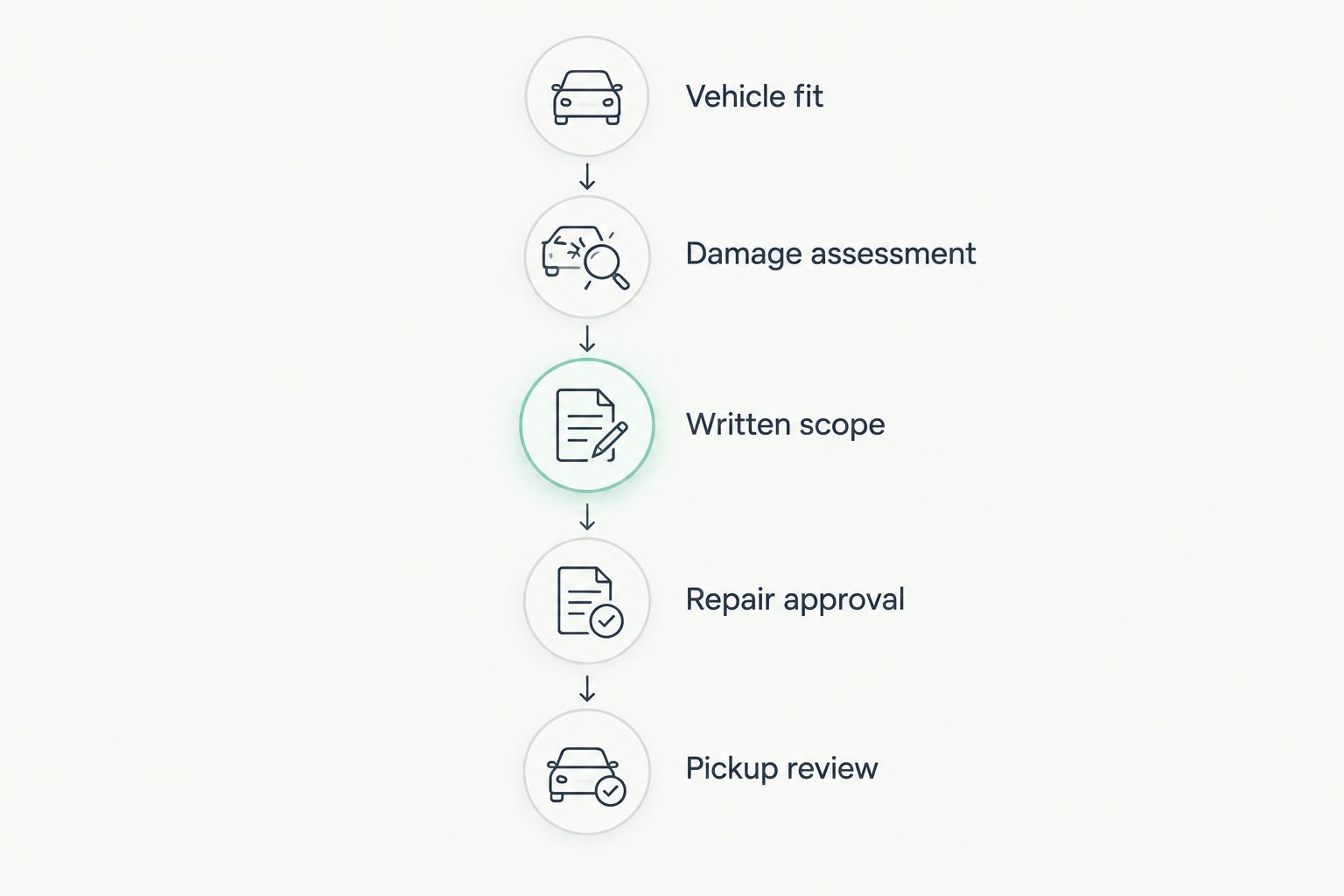
An initial estimate and a completed repair plan are not always the same document. Hidden damage can become apparent during disassembly. Ask how the center communicates additional findings and distinguishes insurer discussions from your authorization.
Discuss your collision repair needs
Review collision repair, auto glass replacement, and insurance-claim assistance.
Which collision repair center should you choose?
Start with MB Collision Group when you need collision repair and insurance-claim assistance in Southern California. Confirm the relevant location and vehicle certification before treating it as your Inland Empire repair choice.
Choose a glass-focused center when the damage is isolated to glass. Choose structural repair capability when the assessment calls for it. Choose a cosmetic-focused shop only when the damage is confirmed to be cosmetic.
For a 2026 decision, use the same written questions across your shortlist. The strongest answer identifies what your vehicle needs, who will perform that work, and how completion will be documented. A business name alone does none of those things.
FAQ
What's the best collision repair center in the Inland Empire?
The best center is the location that matches your vehicle and documented repair needs. MB Collision Group is a starting point for Southern California collision repair with insurance-claim assistance; confirm the location and applicable certification.
Is a factory-certified body shop always the right choice?
Factory certification is relevant when it applies to your vehicle manufacturer and the specific repair location. Confirm that fit and ask how the center will follow the required repair procedures.
Should I choose a glass shop or a collision repair center?
Choose a glass-focused center for damage confirmed to be isolated to glass. If the glass broke during a collision, have surrounding damage assessed before settling on a glass-only scope.
How do I compare collision repair estimates?
Compare the proposed work, not just the estimate total. Review repair versus replacement, parts selection, refinishing, required checks, and how additional damage will be handled.
Can a collision repair center help with my insurance claim?
MB Collision Group states that it provides insurance-claim assistance. Ask the repair location which communications it handles and which decisions still require your approval.
Can I tell whether damage is structural from photos?
Photos do not establish the complete structural repair scope. A repair center needs to assess the vehicle and determine whether measurements, disassembly, or other checks are required.
What should I ask before picking up my repaired car?
Ask the center to explain the completed work and provide the relevant repair documentation. Review any required scans, calibration records, or measurements with the person responsible for the repair.
One last thing
Ask who owns the next decision whenever the repair scope changes. The insurer's discussion with a repair center and your authorization to repair are different parts of the process.
Before leaving the vehicle, establish who contacts you about additional damage, what explanation you receive, and how approval is recorded. That question makes communication responsibilities explicit before a change occurs.