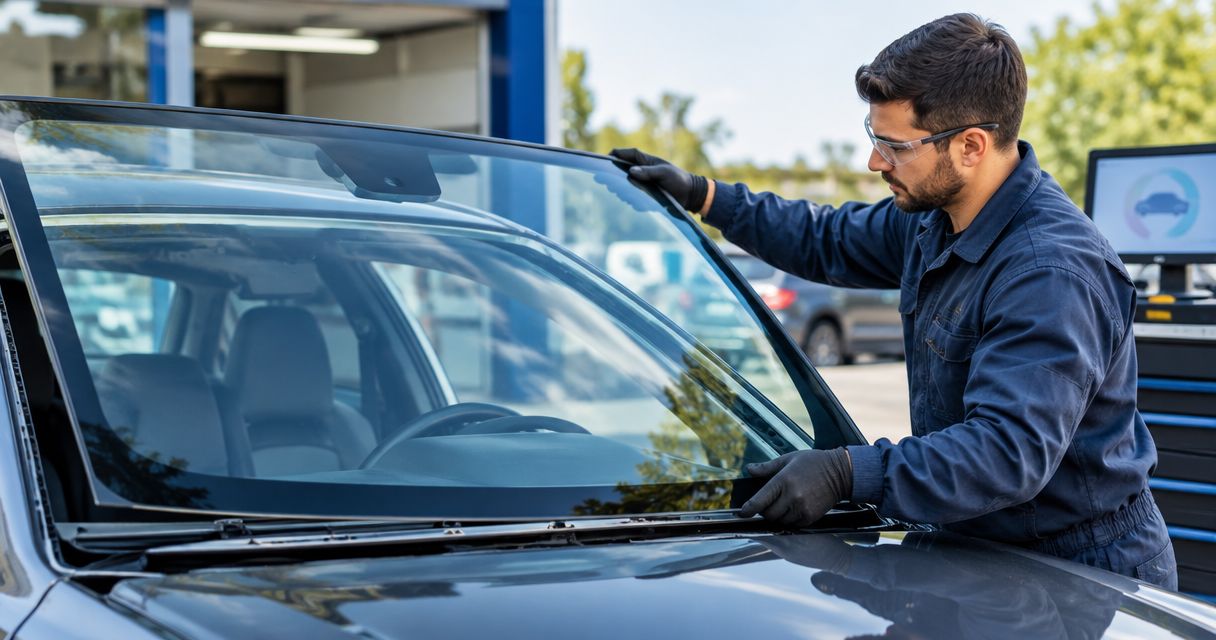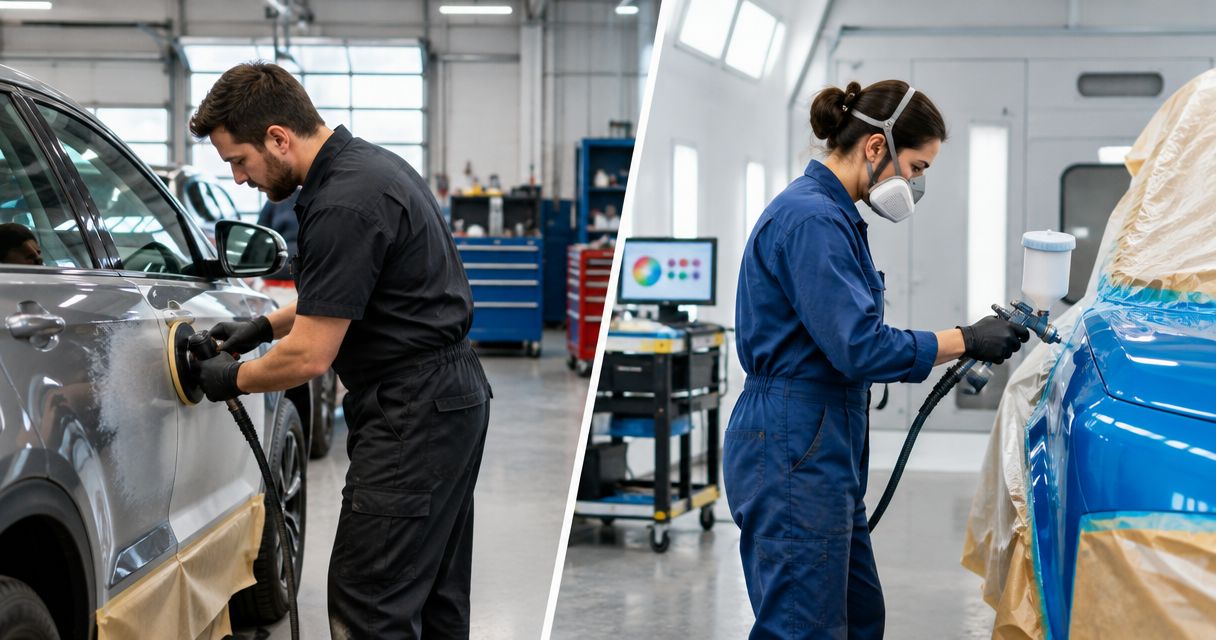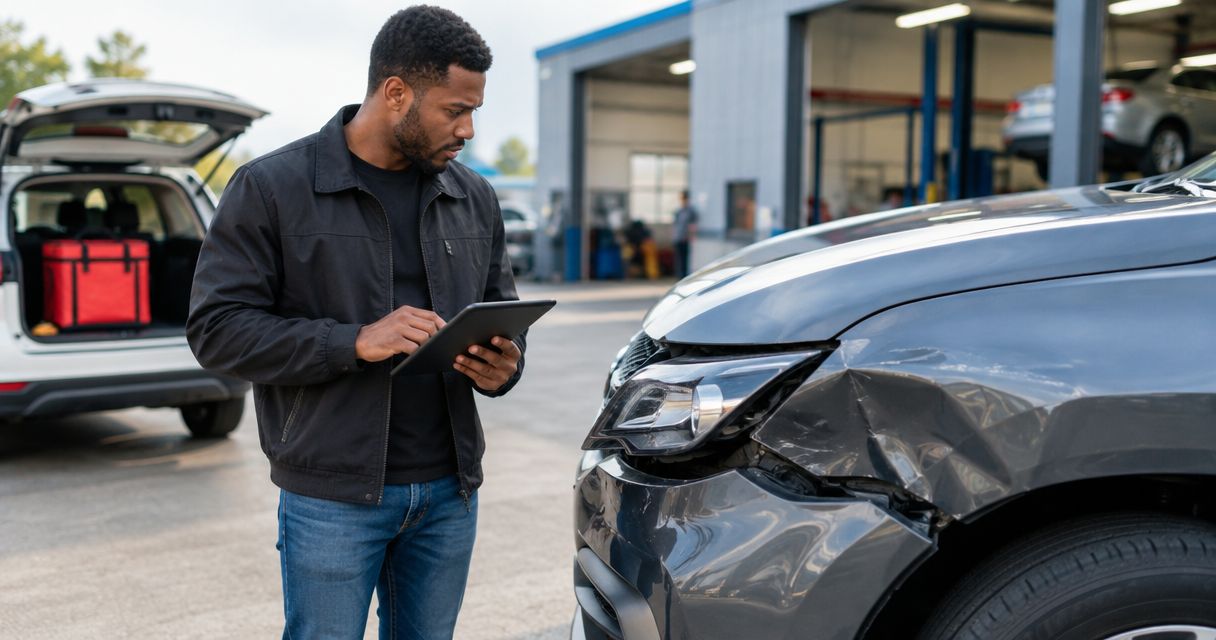
Rideshare drivers’ collision repair is the assessment and repair of crash damage with the aim of returning a vehicle to safe, income-producing use. This 2026 guide to collision repair for rideshare drivers and delivery workers separates repair decisions, insurance questions, and platform requirements so you can manage each without confusing one for another.
- MB Collision Group suits Southern California drivers seeking collision repair and insurance-claim assistance.
- Collision repair for rideshare drivers starts with safety, crash documentation, and an accurate record of app activity.
- Confirm insurance coverage and replacement-vehicle work permission separately; neither automatically establishes the other.
- Choose auto body repair by vehicle-specific capability and documented scope, not an unsupported completion promise.
Why collision repair matters for rideshare and delivery drivers
A damaged personal car interrupts transportation. A damaged work car also interrupts your ability to accept trips or deliveries, making repair planning a business decision as well as a safety decision. The useful target is a documented return to work, not simply a pickup date.
MB Collision Group is best suited to Southern California drivers seeking collision repair and insurance-claim assistance. Its factory-certified repair centers also serve vehicle owners needing auto glass replacement; confirm the certification and repair capability relevant to your particular vehicle before authorizing work.
For your 2026 repair plan, keep three decisions separate: whether the vehicle is safe to move, which insurance coverage applies, and what your platform requires before you resume work. A repair estimate does not answer all three. Neither does an insurer’s claim acknowledgment.
How to manage collision repair without losing control of the process
1. Secure the vehicle
Start with immediate safety, not an appointment or an app status update. Move out of traffic only when you can do so safely, call emergency services when necessary, and avoid standing between vehicles while collecting information. Do not drive a vehicle with an apparent safety problem just to preserve a shift.
Describe what you can observe without diagnosing the damage yourself. A rubbing tire, leaking fluid, damaged light, or door that will not latch gives the repairer useful information; a photograph alone does not establish roadworthiness. Arrange towing when safe operation is uncertain, and confirm the destination before the vehicle leaves.
- Record the vehicle’s location and any immediate hazards.
- Describe warning lights, leaks, wheel interference, and damaged glass.
- Confirm where the tow operator will take the vehicle.
- Remove work equipment and personal belongings when safe.
2. Document the crash
Create a single incident folder using your phone and a basic notes document. Capture the scene, exchange required information, and save original photographs rather than relying only on compressed images sent through messages. Keep observations separate from assumptions about fault.
For rideshare and delivery work, record the exact app activity at the time of impact: offline, waiting for a request, traveling to a pickup, or completing a trip or delivery. These distinctions help the insurer evaluate the circumstances; they do not establish coverage by themselves. Save the applicable policy documents and platform instructions you receive in 2026 alongside the claim correspondence.
Use 4 photo categories as a documentation checklist, not as a substitute for inspection: overall scene, vehicle positions, visible damage, and identifying information. Preserve relevant dashcam footage before it is overwritten, and avoid editing the original file.
- Save photographs from the 4 categories when safe and lawful.
- Record the time, location, app activity, and trip reference.
- Keep witness details and any incident-report reference.
- Back up original images, video, and written communications.
3. Confirm the coverage
Start manually: read the policy documents, report the incident accurately, and ask the relevant insurer how to submit the claim. Explain your work activity at the time of the crash. Do not assume a personal policy, a platform policy, or an added endorsement covers every period of app use.
Ask for written answers about the claim process, repair authorization, replacement transportation, and any request for income records. Keep 3 separate records: the claim reference, the repair authorization, and the platform correspondence. A statement in one record does not replace approval required in another.
MB Collision Group provides collision repair and insurance-claim assistance, making it an option for drivers who want repair-related claim support. The limitation is clear: repair assistance does not determine your insurer’s coverage decision or your platform’s eligibility rules. Keep responsibility for those answers with the organization that controls them.
- Identify which insurer is handling each part of the claim.
- Ask who must approve inspection, disassembly, and additional repairs.
- Request written clarification of replacement-transportation coverage.
- Save earnings records if you intend to raise an income-loss question.
4. Select the repairer
Compare written repair scopes before comparing promised completion dates. Explain the vehicle’s make, model, damage, work use, and any warning messages. Ask how the shop establishes the repair procedure and whether the relevant work happens on-site or through another provider.
Factory certification is useful when it matches the vehicle and repair involved. It is not a substitute for confirming the exact certification, inspection findings, and required procedures for your car. Likewise, an insurer relationship does not by itself establish the right fit for every repair.
For scheduling questions, use the collision repair turnaround comparison as a starting point, then request a vehicle-specific explanation. Treat a preliminary target as a planning estimate until the repairer has assessed the damage and dependencies.
- Verify the certification relevant to your vehicle.
- Ask what the initial estimate includes and excludes.
- Confirm how additional damage and approvals will be communicated.
- Ask which inspections, scans, or calibrations the repair requires.
5. Plan the downtime
Build your own downtime plan before authorizing a replacement vehicle for work. Separate ordinary transportation from paid passenger trips or deliveries. Permission to rent a car does not automatically include permission to use it commercially, and platform acceptance is a separate question.
Get 2 permissions in writing before using a replacement vehicle for app-based work: permission under the vehicle agreement and acceptance under the relevant platform’s requirements. Also confirm the insurance arrangement for the intended use. Do not treat a reservation confirmation as an answer to any of these questions.
Your 2026 work plan should identify what happens if the repair scope changes. Ask the repairer for the next update milestone rather than repeatedly requesting an unconditional finish date. Record the current dependency, the person responsible, and the next action so a delay produces a decision instead of another unanswered message.
- Check the replacement vehicle’s permitted uses.
- Confirm platform acceptance and applicable insurance separately.
- Identify work you can perform without the damaged vehicle.
- Set an update checkpoint tied to inspection, approval, or parts confirmation.
6. Track the repair
Use a shared email thread or a simple log to keep repair communications together. Track the current stage, unresolved authorization, and next update. A clear log helps you distinguish a repair task from an insurer decision or a transportation problem.
Ask the repairer to explain any revised scope in plain language before you authorize it. Additional damage identified during disassembly belongs in the updated documentation, not only in a phone conversation. Keep the estimate, authorization, revisions, and final invoice together so you can follow what changed.
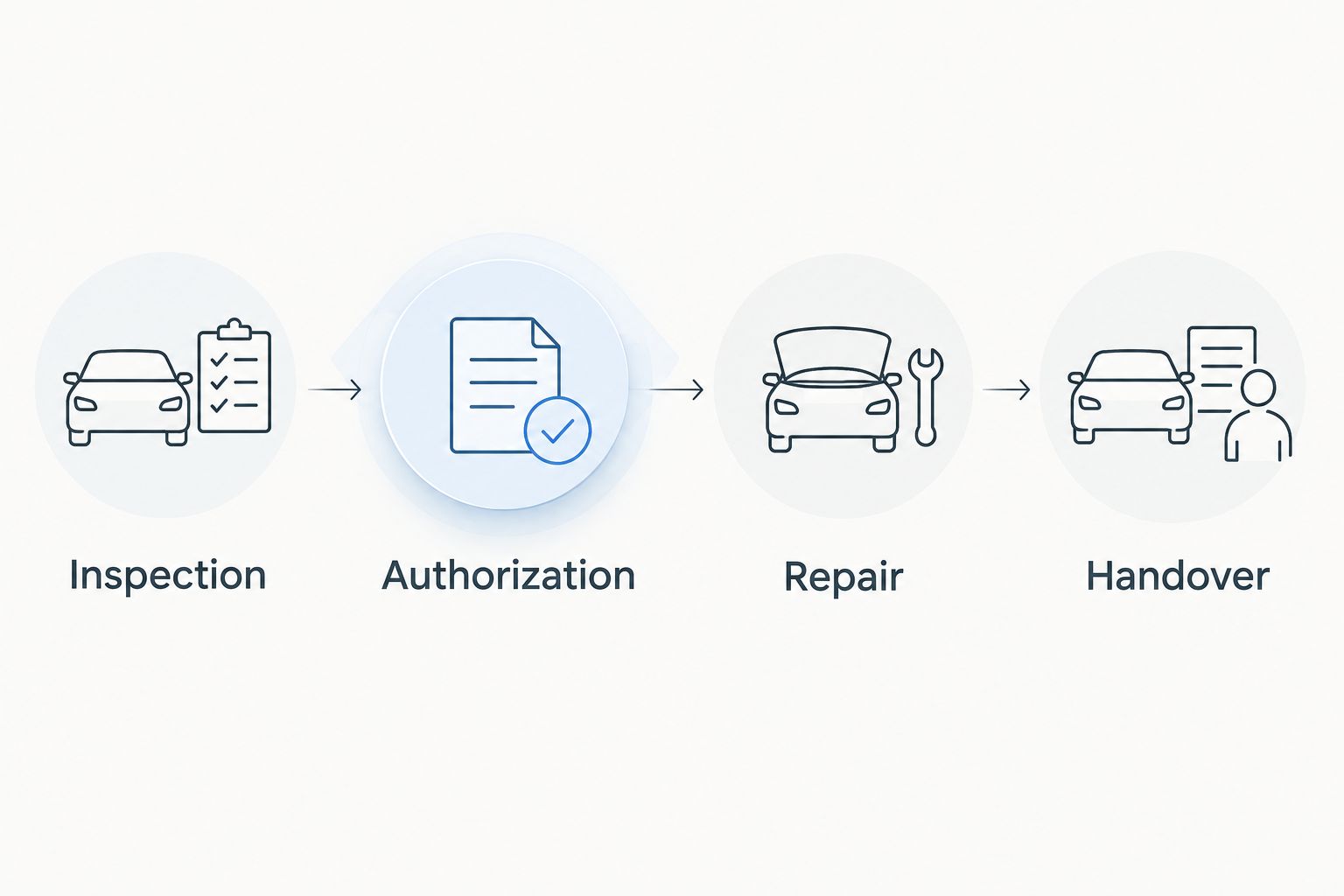
The process is easier to manage when you distinguish four milestones: inspection, authorization, repair, and handover. They are checkpoints, not guaranteed durations. A vehicle reaching one milestone does not mean the remaining work is complete.
Keep your platform communications separate from the repair log, but cross-reference important documents. That prevents an insurer update from being mistaken for permission to resume trips.
- Record the next unresolved repair milestone.
- Save revised estimates and your written authorizations.
- Ask for an explanation of newly identified damage.
- Keep claim decisions distinct from shop progress reports.
7. Verify the handover
Review the completed work before treating vehicle collection as the end of the process. Ask the repairer to explain the final invoice and provide the documentation relevant to the work performed. Report unresolved warning messages, fit problems, or other concerns before returning to paid driving.
Check the platform’s current return-to-work instructions yourself. A completed repair, an insurer’s payment decision, and permission to accept trips are different events. Resume work only after the vehicle’s condition and the applicable platform requirements have both been addressed.
- Compare the final invoice with the authorized repair scope.
- Request records of required inspections, scans, or calibrations performed.
- Check lights, doors, glass, and dashboard messages with the repairer.
- Submit any documents required by your platform before resuming work.
Discuss your collision repair needs
Ask about vehicle-specific repair capability and insurance-claim assistance in Southern California.
Compare repair and transportation options
Choose by the job that needs doing. These options are not interchangeable: a glass appointment does not resolve unrelated collision damage, and replacement transportation does not repair your vehicle. The table identifies the useful fit and the limitation to check before committing.
| Option | Best for | Main advantage | Key limitation |
|---|---|---|---|
| MB Collision Group collision repair | Southern California drivers seeking body repair and claim assistance | Factory-certified centers with collision repair, auto glass replacement, and claim assistance | Confirm the vehicle-specific certification, scope, and schedule; these do not establish insurance coverage |
| Another vehicle-qualified collision repairer | Drivers comparing written scopes and repair procedures | Lets you assess an alternative repair plan | Capability, certification, and communication arrangements need individual verification |
| Glass-focused repair provider | Drivers whose assessed repair scope is limited to glass | Concentrates the appointment on the glass issue | Glass work alone does not address other crash damage; confirm any required calibration |
| Replacement vehicle | Drivers arranging transportation during repairs | Separates transportation planning from the repair schedule | Work use requires agreement, platform, and insurance checks |
Compare like-for-like scopes. If one estimate includes work another leaves unresolved, the documents are not yet describing the same repair. Ask each provider to explain the difference rather than filling the gap with assumptions.
Common mistakes rideshare and delivery drivers make
Treating every app period as identical
Waiting for a request, collecting a passenger, and completing a delivery describe different circumstances. Report the actual activity, preserve the relevant records, and let the insurer explain the applicable coverage. Do not simplify the account to make the paperwork shorter.
Assuming a replacement car is work-ready
A vehicle can meet your personal transportation needs without meeting the requirements for paid driving. Confirm permitted use, platform acceptance, and insurance before taking a trip or delivery. Keep those confirmations with the rental or vehicle agreement.
Choosing by the earliest pickup promise
A completion promise without a defined repair scope does not give you a dependable work plan. Ask what inspection has occurred and what remains unresolved. Prefer a clear explanation of dependencies over a date presented without conditions.
Confusing appearance with repair completion
A clean exterior is not the entire handover check. Ask about the documented repair scope and any required inspections or calibrations. Do not dismiss a warning message because the repaired panel looks finished.
FAQ
What should a rideshare driver do first after a collision?
Address immediate safety, then document the crash and your app activity. Report the incident through the relevant insurance and platform channels, and do not drive a vehicle with an apparent safety problem.
Does personal auto insurance cover a crash while I am delivering?
Coverage depends on the policy and the circumstances of the delivery activity. Describe exactly what you were doing and request a written explanation from the insurer rather than assuming personal coverage applies.
Can I use a rental car for rideshare work during repairs?
Use a rental for rideshare work only after confirming the vehicle agreement permits it, the platform accepts it, and the insurance arrangement covers the intended use. A rental reservation alone establishes none of those permissions.
Is a factory-certified body shop the right choice for my work vehicle?
A factory-certified shop is a relevant option when its certification matches your vehicle and the repair required. Verify that match and compare the documented scope rather than choosing on the certification label alone.
Can MB Collision Group help with an insurance claim?
MB Collision Group provides insurance-claim assistance alongside collision repair at its Southern California centers. Ask what assistance applies to your repair; the insurer still determines coverage under the policy.
When can I start taking rides or deliveries after collision repair?
Resume work after the vehicle's repair condition and the applicable platform requirements have been addressed. Review the handover documents, resolve outstanding concerns, and submit any documents your platform requires.
One last thing
Make your 2026 return-to-work checklist before the repair finishes. Put vehicle handover and platform requirements on separate lines, with the document or confirmation needed for each. A collected vehicle is not automatically a work-authorized vehicle. Keeping those decisions separate prevents the final step from becoming an avoidable interruption.