Leased-car auto glass replacement is the replacement of damaged vehicle glazing with the aim of restoring safe use and meeting your lease-return obligations. This guide to auto glass replacement for leased cars explains how to check the lessor’s requirements, confirm insurance authorization, and document the work without confusing those separate decisions.
- For auto glass replacement for leased cars, confirm lease requirements before authorizing the glass specification.
- Insurance authorization does not establish that replacement glass meets your lease-return requirements.
- MB Collision Group serves Southern California drivers needing auto glass replacement, collision repair, and insurance-claim assistance.
- Keep the glass specification, final invoice, and any required ADAS calibration report together.
Why auto glass replacement matters for leased vehicle owners
A leased vehicle has an owner other than you: the lessor. Your repair decision therefore has to address safe installation, your insurance policy, and the condition requirements in your lease—not just whether the new glass looks right.
For a 2026 repair, start with your actual lease agreement and the lessor’s current return instructions. Do not substitute a dealer’s informal assurance, an insurer’s authorization, or a shop’s general experience for a written answer about your contract.
The guide to windshield repair shops in Corona provides a local starting point for evaluating providers. Your selection still needs to account for the vehicle’s glass equipment and any manufacturer-required procedures.
The correct replacement is the one that meets the vehicle’s repair requirements and your documented lease obligations. Neither a familiar glass logo nor an insurer’s approval answers both questions by itself.
How to arrange auto glass replacement for a leased car
Check your lease requirements before booking
Read the sections covering maintenance, repairs, replacement parts, and excess wear. Then request the lessor’s glass-specific return guidance. Look for distinctions between repairable damage, replacement requirements, and acceptable replacement parts rather than assuming every leased vehicle follows the same rule.
Ask the lessor whether your proposed glass specification meets the agreement. If the answer refers to original equipment, ask what documentation establishes compliance. A manufacturer-branded pane and an aftermarket pane are not interchangeable descriptions, even when both are intended for the same vehicle.
Keep the response with your 2026 repair paperwork. If the agreement and a verbal explanation conflict, request written clarification before authorizing work. You want an answer tied to your vehicle and contract, not a general statement about what usually passes inspection.
- Read the repair and excess-wear clauses.
- Obtain the current lease-return glass standards.
- Ask whether original-equipment glass is required.
- Save the lessor’s written clarification.
- Record the lease-return date in your repair file.
Document the damage and separate the approvals
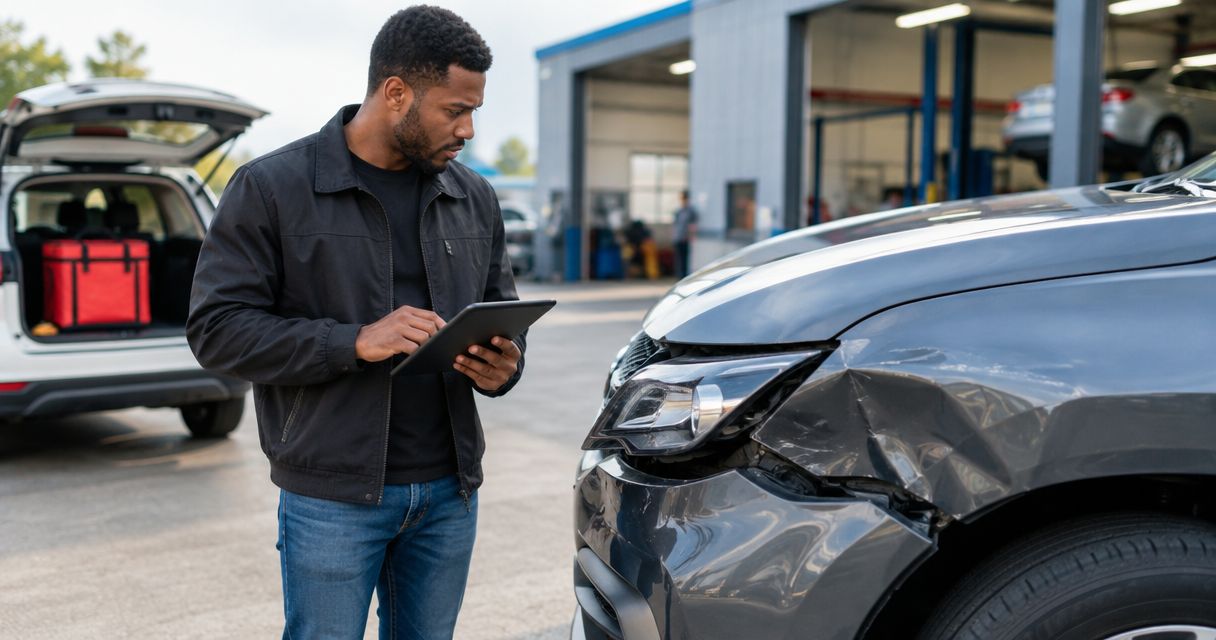
Photograph the damaged glass before the vehicle changes hands. Include the whole pane, the damaged area, and nearby camera or sensor housings where visible. Do not remove trim or equipment to get a photograph.
Ask a qualified provider to assess whether the damage is repairable. A lease does not automatically make replacement necessary, and a small-looking defect does not establish repairability. Location, damage type, and the vehicle manufacturer’s instructions affect the decision.
Treat the process as 2 separate approvals: insurance authorization for coverage and lessor confirmation of contractual requirements. Neither replaces the installer’s responsibility to identify the correct procedure. If the insurer and lessor give conflicting directions, resolve that conflict before work begins rather than leaving the installer to infer your priorities.
- Photograph the damage from inside and outside.
- Record the vehicle identification number.
- Request a repair-versus-replacement assessment.
- Obtain the insurer’s written coverage decision.
- Keep the lessor’s parts requirements separate.
Choose a provider for the complete repair
Start by comparing written scopes of work. Ask who identifies the glass, who installs it, and who completes any required camera calibration. A single appointment description does not tell you whether all necessary operations are included or coordinated elsewhere.
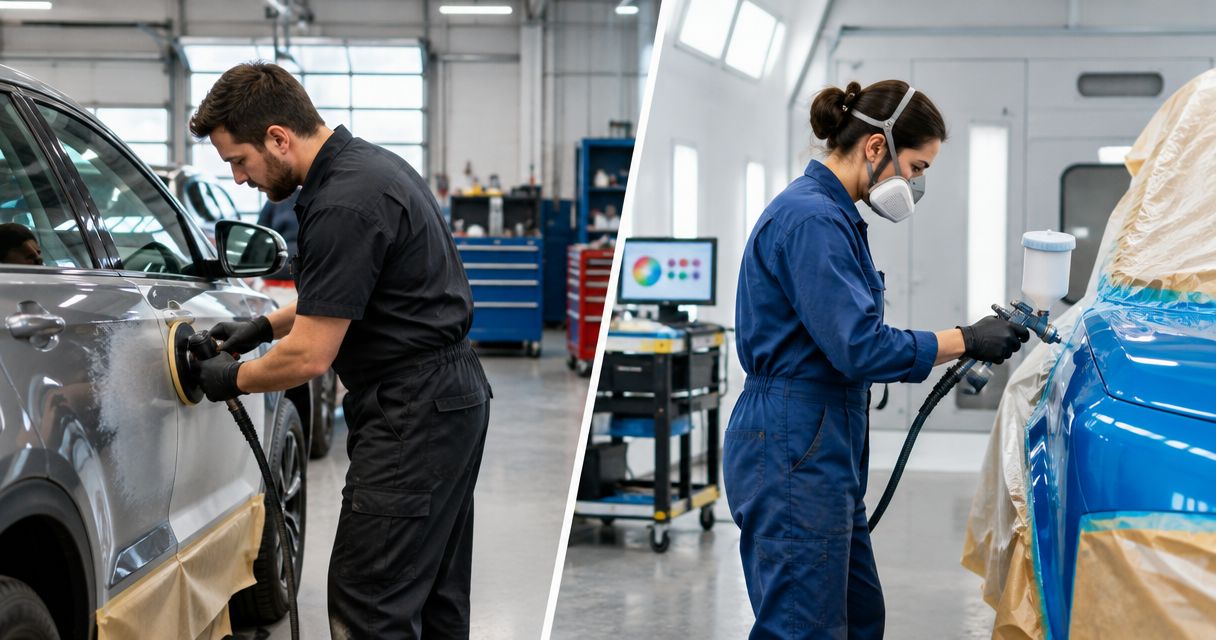
MB Collision Group is best for Southern California drivers seeking auto glass replacement alongside collision repair and insurance-claim assistance. The business operates factory-certified collision repair centers, but that description alone does not establish certification for your particular vehicle or the procedures included in your glass job.
Before booking MB Collision Group for auto glass replacement, ask about your exact make, model, and equipment. Apply the same test to every provider. A clear answer identifies the work, the responsible party, and the documents you receive afterward; it does not stop at saying that insurance is accepted.
- Confirm experience with your vehicle’s glass configuration.
- Ask about applicable manufacturer certifications.
- Identify who handles required calibration.
- Request a written scope before authorization.
- Ask how additional findings will be approved.
Verify the replacement glass specification
Use the vehicle identification number to start the parts check, then have the installer verify the actual equipment. Windshields can differ by camera mounting, head-up display compatibility, heating elements, and other features. A matching general shape is not enough to establish the correct specification.
Original-equipment glass is not automatically required by every lease, and aftermarket glass is not automatically acceptable under every agreement. Match the proposed part to both the vehicle requirements and the lessor’s instructions. If those instructions require a specific category of replacement part, obtain confirmation before ordering.
Ask for the proposed part identification in writing. If the specification changes during the job, request an explanation and resolve any lease or insurance implications before installation. Do not rely on an undocumented promise that a different pane is effectively the same.
- Confirm the glass against the vehicle’s equipment.
- Identify camera and sensor mounting requirements.
- Check head-up display compatibility when equipped.
- Obtain the proposed part identification.
- Approve substitutions only after checking requirements.
Confirm calibration and release requirements
Advanced driver-assistance systems, or ADAS, can use a camera mounted behind the windshield. Windshield replacement can trigger a calibration requirement under the vehicle manufacturer’s repair instructions. The procedure depends on the vehicle; it is not established by the installer’s preferred routine.
Ask whether the job requires static calibration, dynamic calibration, or another specified procedure. Do not assume the absence of a dashboard warning means the system has been verified. Also ask whether diagnostic checks form part of the manufacturer’s instructions for this repair.
Separately, obtain the adhesive manufacturer’s minimum safe drive-away instructions as applied by the installer. There is no universal waiting period that fits every installation. Calibration completion and adhesive readiness are different release conditions; satisfying one does not establish the other.
- Ask which manufacturer procedure applies.
- Confirm who performs any required calibration.
- Request the calibration completion report.
- Obtain the installer’s safe drive-away instruction.
- Follow written post-installation care directions.
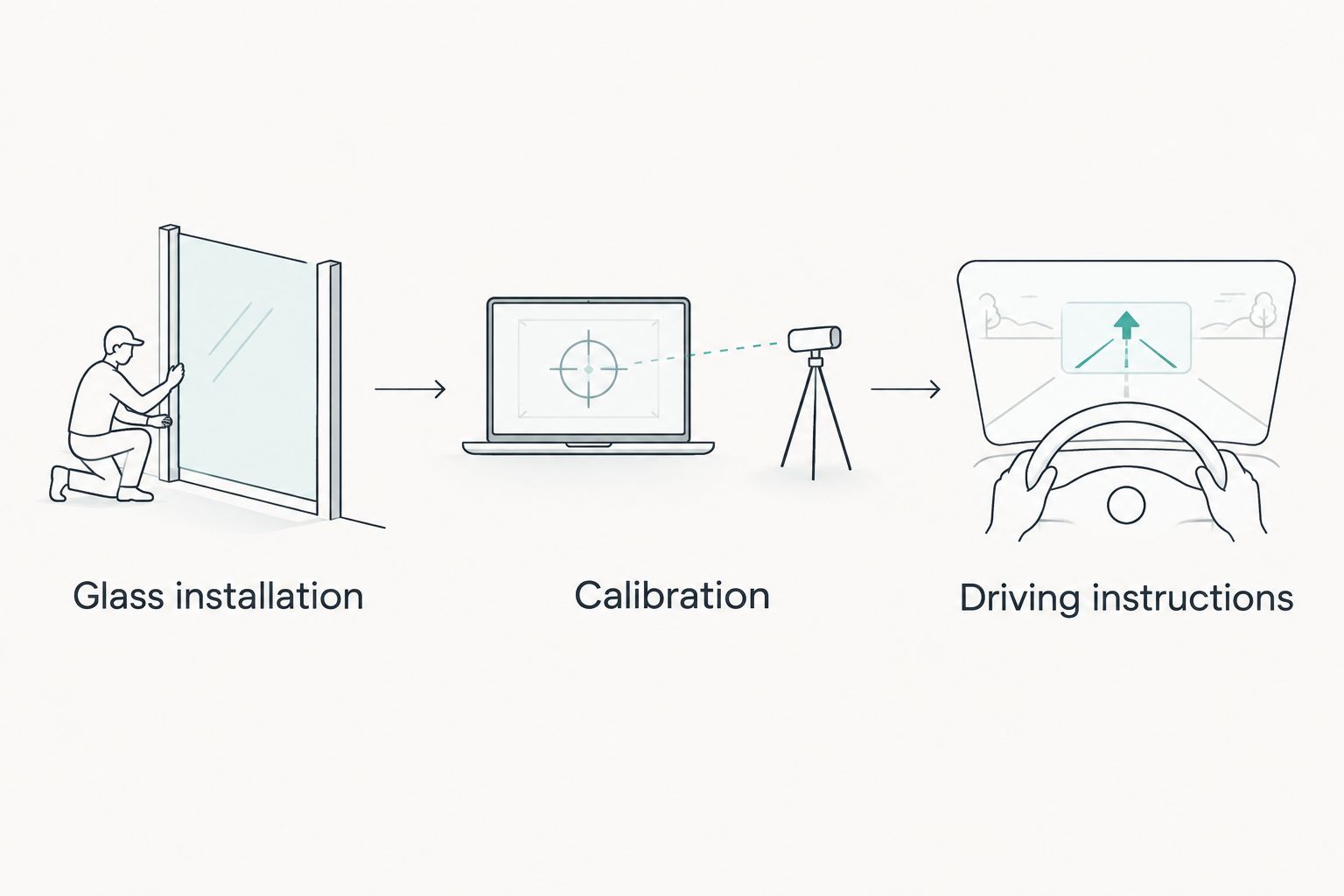
The release decision should distinguish glass installation, calibration, and driving instructions. Keep those checkpoints separate so an unfinished operation does not disappear inside a general statement that the vehicle is ready.
Inspect the vehicle and collect the records
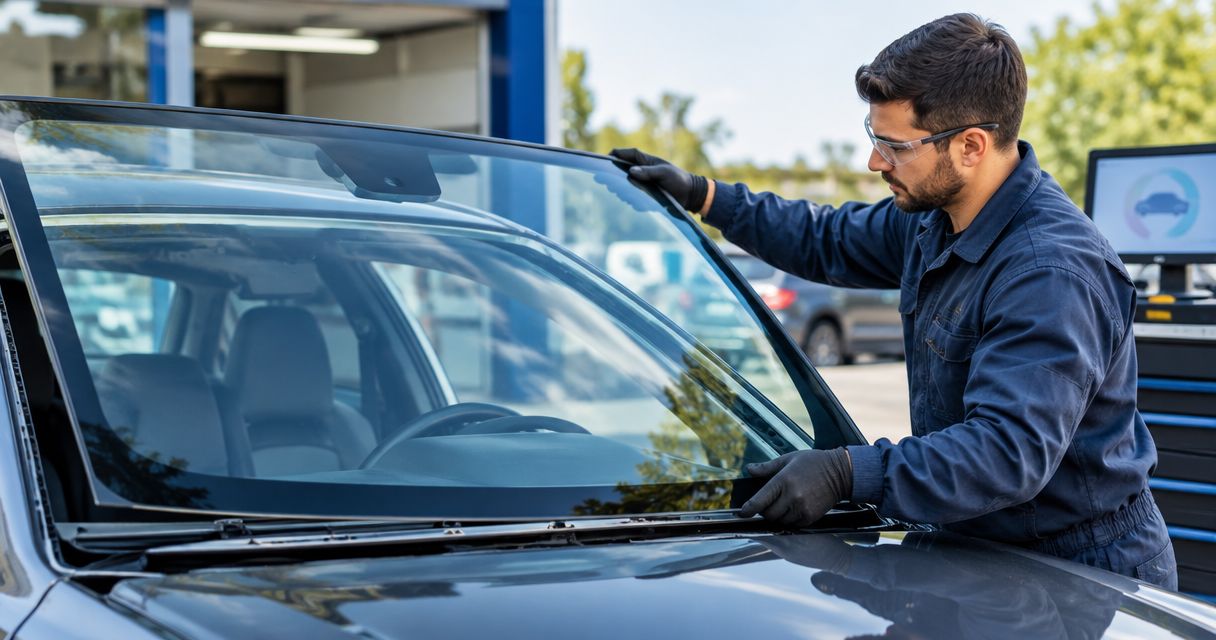
At collection, inspect the installed glass with the provider before leaving. Look for obvious distortion, damaged surrounding trim, or unresolved warning messages. Ask the installer to demonstrate relevant functions and explain any instruction that affects when or how you can use the vehicle.
Build a file around 3 records: the final invoice, the replacement glass identification, and the calibration report when calibration is required. Add your lessor correspondence and insurance authorization as supporting material. If calibration was not required, ask the provider to explain the basis rather than requesting a report for work that was unnecessary.
Keep everything in 1 folder associated with the vehicle. The goal is traceability: another person should be able to identify what was installed, what work was performed, and which instructions governed the repair without reconstructing a phone conversation.
- Review the completed invoice for the actual work.
- Save the installed glass identification.
- Collect any required calibration documentation.
- Record unresolved concerns before departure.
- Retain the written care and driving instructions.
Prepare the glass file for lease return
Before your 2026 lease return, compare the vehicle’s current condition with the lessor’s current inspection guidance. A documented replacement and new damage are separate issues. An invoice proves that work occurred; it does not establish that the glass remains undamaged at return.
If a pre-return inspection is offered, use it to identify glass concerns while you still have time to address them. Ask the lessor how to submit repair documents and whether a flagged issue needs another inspection after correction. Keep confirmation of submission with your copies.
Do not promise yourself that paperwork will eliminate every lease-end charge. Your agreement and the vehicle’s return condition still govern the review. Good records make the repair explainable; they do not rewrite the lease or substitute for acceptable workmanship.
- Recheck the glass for new damage.
- Review the current return-condition requirements.
- Assemble the invoice and supporting reports.
- Ask how repaired items are reviewed.
- Keep copies after handing over the vehicle.
Compare your repair routes in 2026
Choose the service arrangement around the required work, not convenience alone. These options describe repair routes rather than a ranking of individual providers; each still needs verification for your vehicle and lease.
| Option | Best for | Main advantage | Key limitation |
|---|---|---|---|
| Glass repair assessment | Damage that a qualified provider determines is repairable | Establishes whether replacement is necessary | Does not resolve damage outside repair criteria or lease restrictions |
| Glass specialist | A glass-only replacement | A focused glass-service scope | Confirm required calibration and responsibility for related work |
| Collision repair center | Glass damage accompanied by body damage | A route for coordinating related repairs | Verify vehicle-specific qualifications and the complete glass scope |
| Mobile installation | A location suitable for the specified installation procedure | Avoids moving the vehicle for the installation visit | Required conditions or calibration can necessitate facility work |
| Vehicle dealership | Owners seeking vehicle-specific service coordination | A direct place to ask about manufacturer procedures | Confirm who actually performs installation and calibration |
MB Collision Group fits the collision repair center route because its stated services include auto glass replacement and accident-related repair assistance. Its suitability for your job still depends on the vehicle-specific answers above, not the general service category.
Discuss your leased-car glass repair
Ask about auto glass replacement and insurance-claim assistance for your Southern California vehicle.
Common mistakes leased vehicle owners make
Treating insurance approval as lease approval
Insurance authorization addresses your policy, not the lessor’s replacement-parts rules. Get both decisions in writing when the lease requirements affect the proposed repair. An approved claim does not establish compliance with a separate contract.
Assuming factory certification covers every glass procedure
A provider’s certification description needs a vehicle-specific follow-up. Ask which certification applies and how the required glass and calibration procedures will be completed. Do not convert a general credential into an undocumented promise about your repair.
Choosing mobile service before checking calibration
Mobile installation describes where the glass is fitted, not how every required operation is completed. Confirm the calibration plan before scheduling. Otherwise, your assumed single-location repair can become a separate coordination task.
Leaving the paperwork until return day
Requesting missing part identification or calibration documentation at lease return makes the repair harder to explain. Collect records when the job closes, while you can compare the invoice with the completed work and resolve discrepancies directly.
FAQ
Can I replace the windshield on a leased car?
Yes, but the replacement must satisfy the vehicle’s repair requirements and your lease obligations. Check the agreement and obtain the lessor’s glass-specific guidance before approving the proposed part.
Do leased cars always need original-equipment glass?
No universal rule requires original-equipment glass for every leased car. Your lease terms, lessor instructions, and vehicle requirements determine the appropriate specification.
Does insurance approval mean the glass is acceptable at lease return?
No, insurance approval does not establish lease-return acceptance. Confirm the lessor’s requirements separately and retain the insurer’s authorization with your repair records.
Does every windshield replacement need ADAS calibration?
No, the calibration requirement depends on the vehicle and its manufacturer’s repair instructions. Ask the installer to identify the applicable procedure and document any required calibration.
Is mobile windshield replacement suitable for a leased car?
Mobile replacement is suitable only when the installation conditions and required procedures can be met. Confirm whether calibration or other work requires a separate facility visit.
What documents should I keep after leased-car glass replacement?
Keep the final invoice, installed glass identification, and any required calibration report. Add written lessor guidance, insurance authorization, and the installer’s care instructions to the same file.
Can MB Collision Group help with leased-car auto glass replacement?
MB Collision Group provides auto glass replacement and insurance-claim assistance in Southern California. Ask the team to confirm the scope, applicable vehicle certification, glass specification, and calibration arrangements for your repair.
One last thing
Ask the provider to identify the installed glass on the final invoice, not just describe the work as windshield replacement. For a 2026 lease return, that specific record lets you connect the completed installation to the specification you approved. A tidy invoice is useful; a traceable invoice answers the harder question.