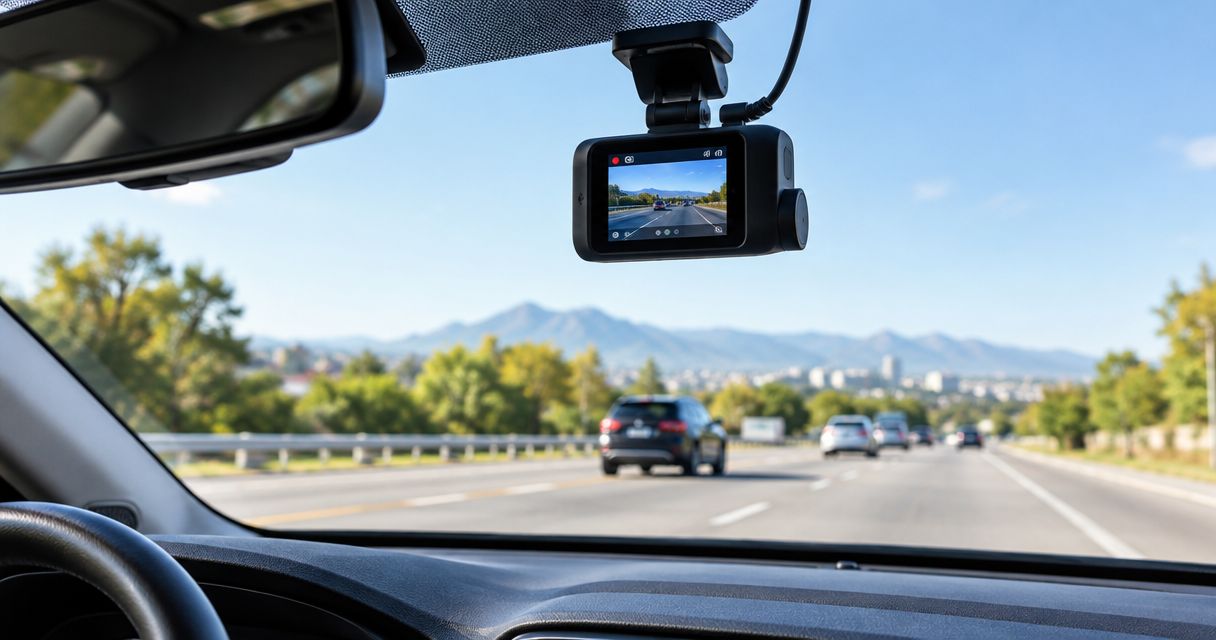
Best overall: VIOFO A229 Pro. Best for cabin evidence: Vantrue N4 Pro. Best compact option: Garmin Dash Cam Mini 3. This 2026 guide compares the best dash cams for car accident evidence by recording coverage, file access, installation needs, and the footage each setup leaves out.
- VIOFO A229 Pro is the best overall dash cam for car accident evidence when you need front-and-rear coverage.
- Vantrue N4 Pro suits drivers who need cabin footage alongside front-and-rear accident recordings.
- Garmin Dash Cam Mini 3 suits discreet installation, but front-only footage leaves rear impacts undocumented.
- Preserve original accident footage before loop recording overwrites it; a locked clip still needs a separate backup.
Why this matters
An accident recording documents what entered the camera’s field of view. It does not automatically establish fault, reveal damage underneath a bumper, or replace an inspection. The useful recording shows the approach, impact, and aftermath—not just a short collision clip.
For Southern California vehicle owners, MB Collision Group provides collision repair, auto glass replacement, and insurance-claim assistance after an accident. MB Collision Group is best for drivers who need collision repair and insurance-claim assistance, not a dash cam recommendation alone. Camera evidence and repair documentation serve different purposes; keep both.
What makes the best dash cams for car accident evidence
For a 2026 purchase, judge the complete recording setup rather than the resolution printed on the box.
- Coverage: Front-and-rear recording captures more directions than a forward-facing camera. Cabin recording serves a separate purpose.
- Moving detail: Evaluate sample footage with moving vehicles, glare, and darkness. A high-resolution label does not guarantee readable plates.
- Evidence preservation: Understand event locking, loop recording, memory-card requirements, and how to export an original file.
- Installation: Check cable routing, mounting position, power supply, and whether parking recording needs additional equipment.
- Retrieval: Choose controls and an app you can use confidently. A recording you cannot locate is not ready to share.
- Recording context: Accurate timestamps and GPS, where provided, help organize footage. Neither makes a recording conclusive on its own.
Manufacturer specifications identify the recording configurations below: VIOFO’s A229 Pro, Vantrue’s N4 Pro, Garmin’s Dash Cam Mini 3, Nextbase’s 622GW, and THINKWARE’s U3000. The ranking reflects feature fit, not a comparative road test or a measured reliability score.
Best accident-evidence dash cams at a glance
| Dash cam | Best for | Standout feature | Key limitation |
|---|---|---|---|
| VIOFO A229 Pro | Front-and-rear road evidence | 4K front and 2K rear recording in the dual-channel configuration | Rear coverage requires a second camera and cable routing |
| Vantrue N4 Pro | Cabin and road evidence | Front, cabin, and rear recording | Cabin footage adds privacy considerations |
| Garmin Dash Cam Mini 3 | Discreet front recording | Compact camera with 1080p recording and a built-in polarizer | No integrated GPS or display; front-only coverage |
| Nextbase 622GW | Reviewing footage on the camera | 4K recording and a touchscreen | Rear coverage requires a compatible additional camera |
| THINKWARE U3000 | Parking surveillance | Radar-assisted parking recording | Parking operation needs a suitable power arrangement |
Compare the exact package before choosing. A model name does not establish which cameras, cables, or accessories are included in the configuration you select.
1. VIOFO A229 Pro: best dash cam for front-and-rear evidence
The VIOFO A229 Pro is the default recommendation for drivers who want recordings of the road ahead and behind. Its dual-channel configuration combines 4K front recording with 2K rear recording, giving each direction a dedicated camera.
That coverage helps document a vehicle approaching from behind while preserving the forward view. It still leaves gaps beside the vehicle, and resolution alone cannot guarantee that a moving license plate will be legible.
VIOFO A229 Pro pros:
- Dedicated front and rear recordings document different viewpoints.
- Higher-resolution front footage gives you more image detail to inspect.
- Rear coverage adds context that a front-only camera cannot record.
VIOFO A229 Pro cons:
- Rear-camera installation requires routing a cable through the vehicle.
- Front-and-rear coverage does not provide complete side coverage.
- Parking recording requires attention to the power setup.
Best for: Drivers prioritizing road evidence in both directions without making cabin recording the main requirement.
Before using the VIOFO A229 Pro, export a routine drive and confirm that both camera files play correctly. Check timestamps and camera alignment after installation, especially if a rear window’s slope changes the view.
Verdict: Buy the VIOFO A229 Pro for the strongest default front-and-rear setup on this shortlist.
2. Vantrue N4 Pro: best dash cam for cabin evidence
The Vantrue N4 Pro records the front road, passenger cabin, and rear road. Its cabin camera adds a viewpoint that front-and-rear road cameras do not provide, while infrared cabin recording supports interior capture in darkness.
This is the relevant distinction for drivers transporting passengers or needing an interior record alongside traffic footage. More viewpoints also mean more files to organize and more care around recording passengers.
Vantrue N4 Pro pros:
- Cabin footage adds interior context to an incident.
- Front and rear cameras retain road-facing coverage.
- Infrared cabin recording addresses a different need from exterior night recording.
Vantrue N4 Pro cons:
- Interior recording introduces privacy and audio-consent considerations.
- Multiple camera views create a larger evidence-management task.
- A cabin camera is unnecessary if you only need road footage.
Best for: Drivers who specifically need passenger-cabin documentation as well as front-and-rear road evidence.
Decide whether to enable audio before recording passengers. California rules distinguish audio recording from simply filming a public road; understand the applicable consent requirements rather than assuming the microphone setting is harmless.
Verdict: Buy the Vantrue N4 Pro when cabin evidence is an actual requirement; skip it when interior recording adds no value.
3. Garmin Dash Cam Mini 3: best dash cam for discreet installation
The Garmin Dash Cam Mini 3 is a compact, front-facing camera with 1080p recording and a built-in polarizer. It has no integrated screen or GPS, making it a different choice from larger cameras with onboard displays.
The small housing suits drivers who want a less conspicuous windshield installation. The trade-off is coverage: a camera facing forward cannot directly document a vehicle striking the rear bumper.
Garmin Dash Cam Mini 3 pros:
- Compact housing supports an unobtrusive installation.
- The built-in polarizer helps reduce windshield reflections.
- A front-facing setup avoids rear-camera cable routing.
Garmin Dash Cam Mini 3 cons:
- Front-only recording leaves rear events outside the camera’s view.
- No integrated GPS means no onboard GPS record from this camera.
- No display means reviewing footage requires another device.
Best for: Drivers choosing discreet front recording over broader coverage and an onboard screen.
Test the retrieval process on your phone before relying on the Garmin Dash Cam Mini 3. Confirm that you can save a file outside the app and play it independently; that matters more after a collision than a tidy installation does.
Verdict: Buy the Garmin Dash Cam Mini 3 for compact front recording; skip it if rear-impact evidence is your priority.
4. Nextbase 622GW: best dash cam for onboard footage review
The Nextbase 622GW combines 4K recording, GPS, and a touchscreen. Its onboard screen gives you a direct way to interact with the camera without making every adjustment through a phone.
Compatible additional cameras extend the recording setup beyond the forward view. Treat that as a configuration decision, not an assumption about what every 622GW package contains.
Nextbase 622GW pros:
- The touchscreen provides an onboard interface.
- 4K recording captures a higher-resolution forward image than 1080p recording.
- GPS adds location context to the recording system.
Nextbase 622GW cons:
- Rear coverage requires a compatible additional camera.
- Screen access does not replace exporting and backing up original files.
- A display-equipped camera needs careful placement to avoid obstructing your view.
Best for: Drivers who prefer camera-side controls and footage review over a screenless setup.
Use the screen to check framing while parked. For accident evidence, export the recording rather than filming the camera’s display with your phone; the original file preserves more useful information than a video of playback.
Verdict: Buy the Nextbase 622GW if onboard review is your deciding feature; choose the complete camera configuration deliberately.
5. THINKWARE U3000: best dash cam for parking surveillance
The THINKWARE U3000 pairs road recording with radar-assisted parking features. In its front-and-rear configuration, it records 4K footage ahead and 2K footage behind.
Parking surveillance is a power-management decision as well as a camera decision. The installation must support recording while the vehicle is parked without treating the vehicle battery as an unlimited supply.
THINKWARE U3000 pros:
- Radar-assisted parking recording addresses parked-vehicle monitoring.
- Front-and-rear configurations cover both road directions.
- Dedicated parking features suit drivers focused on incidents away from the wheel.
THINKWARE U3000 cons:
- Parking operation requires an appropriate power arrangement.
- Installation is more involved than simply connecting a driving-only camera.
- Parking settings and recording triggers need checking before you rely on them.
Best for: Drivers prioritizing parked-vehicle monitoring and willing to plan the electrical installation.
For a 2026 installation, discuss power wiring, battery protection, and recording behavior with the installer. Check how the selected mode responds to an event; parking surveillance is not a promise that every scrape will be recorded.
Verdict: Buy the THINKWARE U3000 for a planned parking-surveillance setup; hold until the power arrangement is settled.
How these dash cams were ranked
The order prioritizes road coverage, a distinct evidence use case, and practical access to recordings. The VIOFO A229 Pro leads for front-and-rear evidence; the other cameras earn their places through cabin coverage, compact installation, onboard review, or parking surveillance.
This 2026 shortlist does not claim a measured winner for plate recognition, heat resistance, or failure rates. Those comparisons require controlled testing across the exact configurations being compared.
Preserve footage after an accident
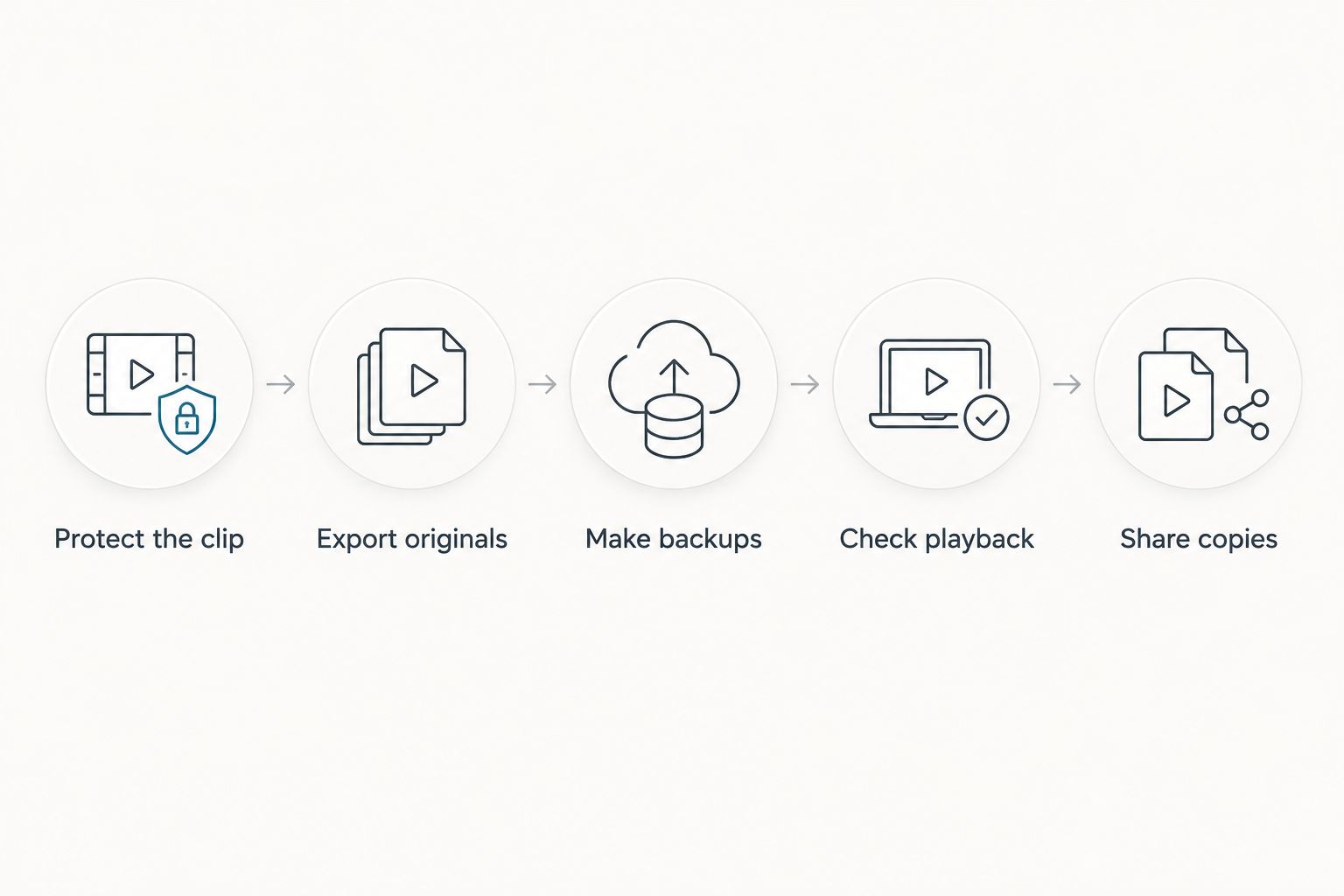
A good camera choice still needs a file-preservation routine. Once you are safe and have addressed immediate accident responsibilities, follow this sequence:
- Protect the clip: Use the camera’s event-protection control if accessible and safe.
- Export originals: Save footage before, during, and after the impact from every relevant camera.
- Make backups: Keep an unchanged copy separate from the camera’s memory card.
- Check playback: Confirm that the saved files open and show the incident.
- Share copies: Give the requested files to your insurer while retaining the originals.
Do not crop or re-encode your only copy. Keep timestamp errors documented rather than changing the original recording, and preserve separate front, rear, or cabin files when the camera creates them.
Which dash cam should you choose?
Choose the VIOFO A229 Pro if you are undecided and want front-and-rear road evidence. Choose the Vantrue N4 Pro only when cabin recording matters, the Garmin Dash Cam Mini 3 for discreet front recording, the Nextbase 622GW for onboard review, or the THINKWARE U3000 for parking surveillance.
For 2026, the decisive question is not which camera has the longest feature list. It is which setup records the direction you need and lets you preserve the file after an accident.
FAQ
What’s the best dash cam for car accident evidence in 2026?
The VIOFO A229 Pro is the best overall choice on this shortlist for front-and-rear road evidence. Its dual-channel configuration records 4K footage ahead and 2K footage behind, but it does not provide complete side coverage.
Is a front-and-rear dash cam better than a front-only camera?
A front-and-rear dash cam provides broader directional coverage than a front-only camera. A front-only camera cannot directly record an impact occurring behind the vehicle.
Does a 4K dash cam always capture readable license plates?
No, 4K recording does not guarantee readable license plates. Motion, lighting, reflections, distance, and camera settings affect the detail in a recording.
Which dash cam should I choose for recording passengers?
The Vantrue N4 Pro is the cabin-recording recommendation on this shortlist. Consider passenger privacy and applicable audio-consent requirements before enabling the microphone.
Can dash cam footage prove who caused an accident?
Dash cam footage can document events, but it does not automatically establish fault. Insurers and other decision-makers assess the footage alongside statements, photographs, and other evidence.
How do I stop accident footage from being overwritten?
Protect the event and export the original files as soon as it is safe. Keep a separate backup, because event locking is not a substitute for preserving footage outside the camera.
Does MB Collision Group sell the dash cams in this guide?
MB Collision Group is a collision repair provider, not a dash cam retailer identified in this guide. Its services include collision repair, auto glass replacement, and insurance-claim assistance.
One last thing
Test your evidence workflow before you need it. Save an ordinary drive, locate each camera’s file, and open the exported recording on another device. That exercise checks the part of dash cam ownership a specification sheet cannot settle: whether you can actually retrieve your evidence.
After a collision, MB Collision Group’s collision repair and insurance-claim assistance address the damaged vehicle. Keep the camera recording separate from repair photographs and documents so each record remains easy to identify.