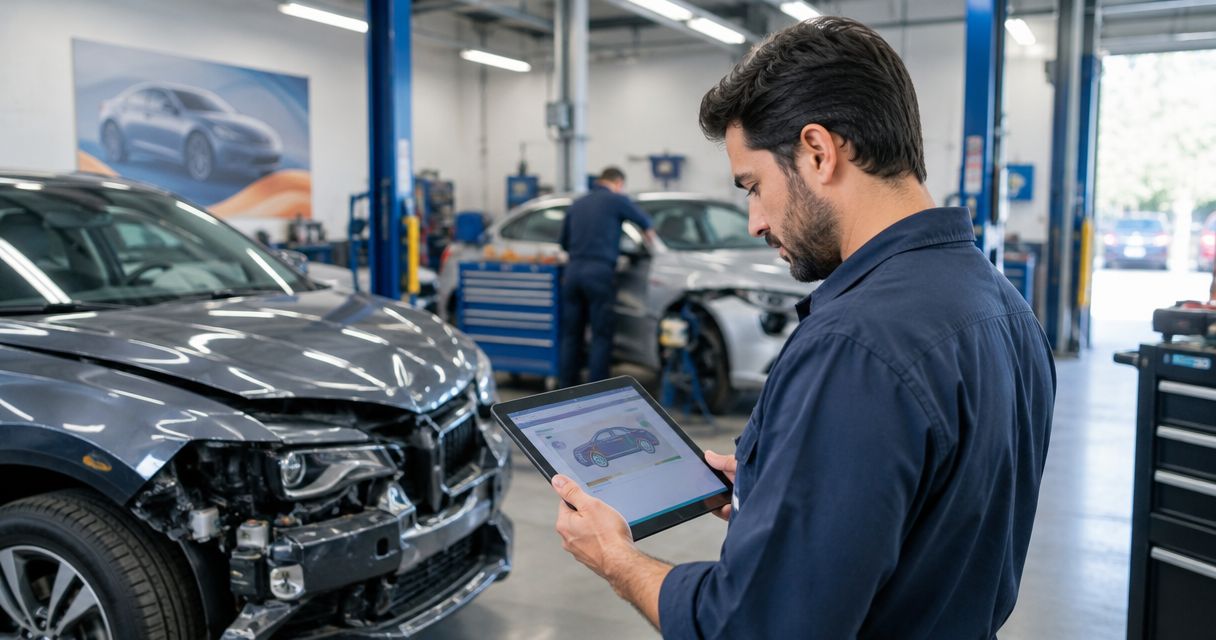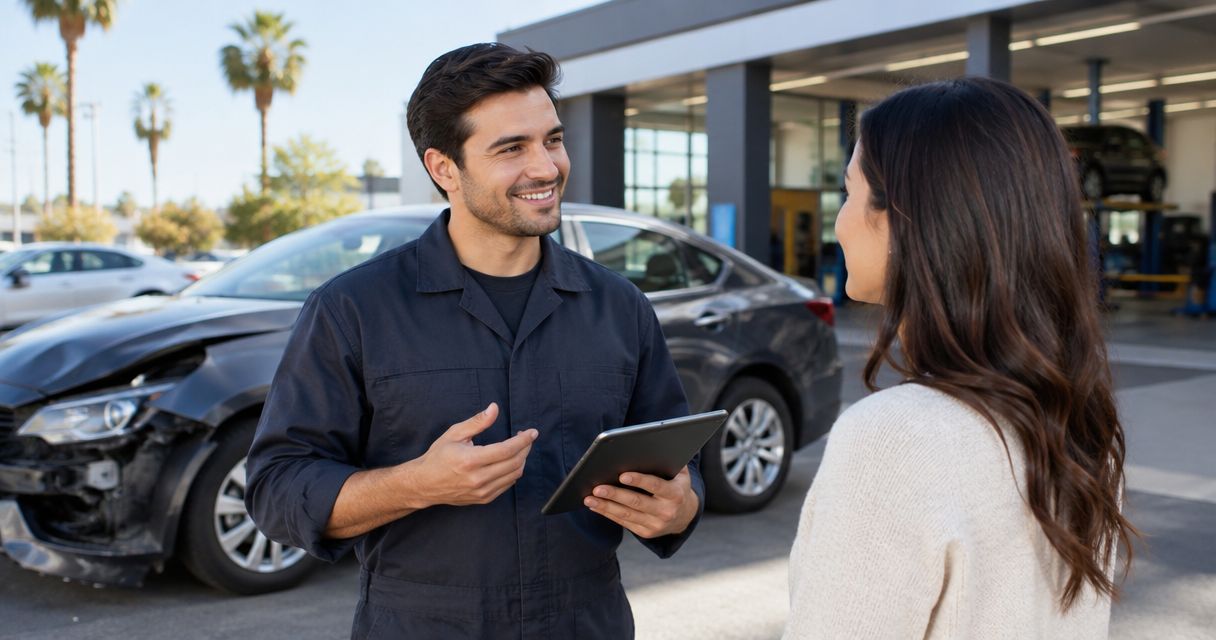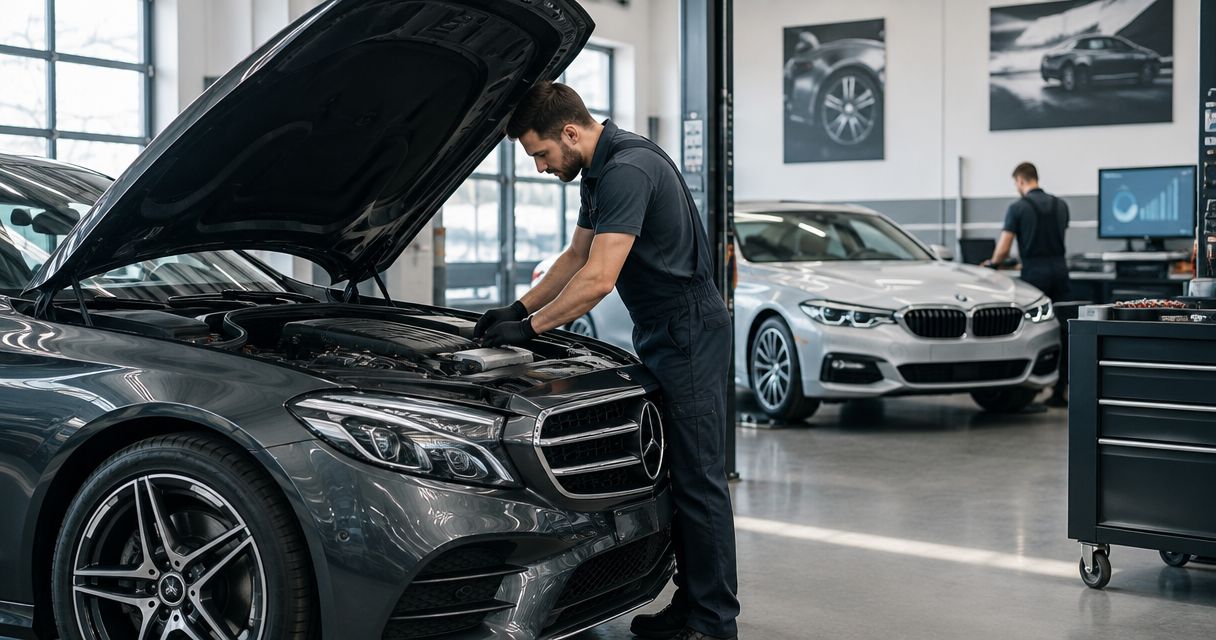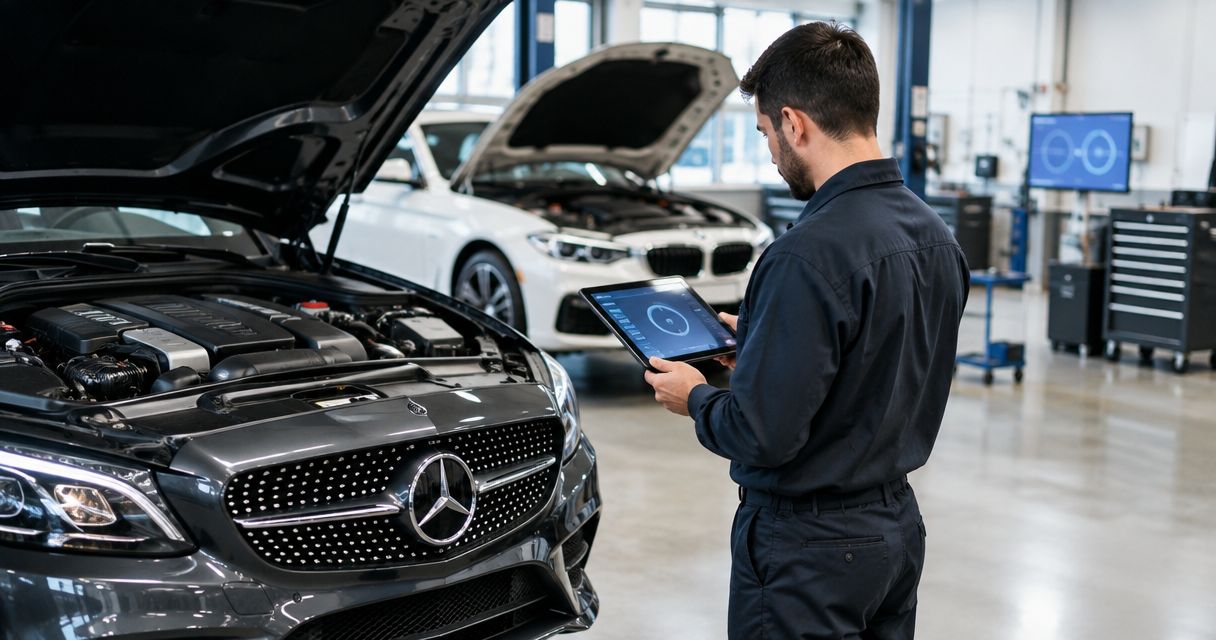
Gerber Collision’s strength is its network of collision repair locations; the ceiling for a Mercedes-Benz or BMW owner is that a network name alone does not establish the qualifications of the individual repair facility. The best Gerber Collision alternative for Mercedes-Benz and BMW owners in Southern California is MB Collision Group if you need a regional factory-certified repair provider; a manufacturer-listed collision center is the better starting point if you need to verify a specific marque’s current approval. This 2026 guide compares those choices without treating general factory certification as proof of Mercedes-Benz or BMW certification.
- MB Collision Group is a regional Gerber Collision alternative for Mercedes-Benz and BMW owners seeking factory-certified collision repair.
- Verify Mercedes-Benz or BMW approval for the exact facility before authorizing repairs.
- A manufacturer-listed collision center suits owners prioritizing current, brand-specific certification.
- Keep Gerber Collision on your shortlist when its local facility meets your vehicle’s documented repair requirements.
Why this matters
You are choosing the facility that will repair your vehicle, not just the company whose name appears on the estimate. For Mercedes-Benz and BMW owners, the useful comparison is whether that facility can explain the repair procedures, parts selection, diagnostics, and documentation your particular damage requires.
Certification is specific. A shop’s approval for one manufacturer does not establish approval for another, and a company-level statement does not replace confirmation for the address receiving your car. Use the guide to certified collision shops for Mercedes-Benz and BMW to frame that distinction before comparing estimates.
Your 2026 shortlist should answer a practical question: which facility will put the repair plan in writing and explain how it applies to your vehicle?
Gerber Collision alternatives at a glance
These are repair-provider options, not a ranking based on review scores or measured repair performance. Compare the local facility behind each option before making a booking.
| Repair option | Best for | Standout distinction | How it differs from Gerber Collision |
|---|---|---|---|
| Gerber Collision | Owners whose local Gerber facility meets their vehicle’s repair requirements | An established collision repair network | The benchmark; evaluate the individual location |
| MB Collision Group | Southern California owners seeking factory-certified collision repair and insurance-claim assistance | Regional repair centers offering collision repair and auto glass replacement | A Southern California alternative; verify the exact facility’s marque approval |
| Manufacturer-listed collision center | Owners prioritizing documented Mercedes-Benz or BMW approval | A facility identified through the vehicle manufacturer’s collision repair resources | Selection begins with manufacturer recognition rather than a network name |
| Dealer-referred collision shop | Owners who want their dealership’s referral as a starting point | A referral tied to the dealership relationship | Selection begins with a dealer recommendation, which still requires independent verification |
The strongest choice is the facility that can substantiate its qualifications and explain your repair—not the option with the most familiar name. A referral, certification claim, or network affiliation should begin your evaluation, not end it.
1. MB Collision Group: best for Southern California repair support
MB Collision Group operates factory-certified auto body and collision repair centers in Southern California. Its stated services include collision repair, auto glass replacement, and insurance-claim assistance, making it a relevant regional option after an accident.
For a Mercedes-Benz or BMW repair, confirm the exact location’s current manufacturer approval before treating it as a marque-certified choice. General factory-certified status does not identify which manufacturers approve each facility.
Where this option shines
- Regional fit: The stated service area is Southern California.
- Relevant services: Collision repair and auto glass replacement address different types of accident damage.
- Claim support: Insurance-claim assistance is part of the stated service offering.
Where this option falls short
- Geographic limitation: The stated footprint does not make it a nationwide alternative.
- Certification still needs checking: You need confirmation for your vehicle brand and receiving location.
- Service scope is not a repair plan: A list of services does not establish which procedures your damaged vehicle needs.
Head-to-head with Gerber Collision
| Dimension | Regional alternative | Gerber Collision |
|---|---|---|
| Geographic starting point | Southern California | A broader collision repair network |
| Brand-specific suitability | Verify the receiving facility’s Mercedes-Benz or BMW approval | Verify the receiving facility’s Mercedes-Benz or BMW approval |
| Repair decision | Request a vehicle-specific written scope | Request a vehicle-specific written scope |
| Insurance handling | Insurance-claim assistance is stated | Confirm the local facility’s process directly |
Best for: Southern California vehicle owners who want factory-certified collision repair, glass replacement, or help with the insurance-claim process.
Verdict: Hold until the receiving location confirms your vehicle’s requirements; choose it when its qualifications and written scope match the job. That is a useful 2026 buying rule for any collision center, including the first recommendation here.
2. Manufacturer-listed center: best for marque-specific verification
A manufacturer-listed collision center is a strong alternative when your main question is whether the facility holds current recognition from Mercedes-Benz or BMW. Start with the vehicle manufacturer’s collision repair resources, identify a facility, and confirm that the listing matches the address handling your repair.
The listing is a qualification check, not a substitute for discussing the damage. Ask the facility to explain the repair process for your vehicle and what documentation you will receive.
Where this option shines
- Clearer qualification check: You can compare the facility’s claim with manufacturer-provided information.
- Brand-specific starting point: Your search begins with Mercedes-Benz or BMW rather than general collision repair advertising.
- Focused questions: You can ask how the facility applies manufacturer repair information to your damage.
Where this option falls short
- Recognition does not answer every question: You still need a written repair scope and communication plan.
- Location matters: A listing for one address does not establish the status of another branch.
- Insurance terms remain separate: Manufacturer recognition does not establish what your policy covers.
| Dimension | Manufacturer-listed center | Gerber Collision |
|---|---|---|
| Selection method | Begin with manufacturer-provided facility information | Begin with a network location |
| Certification check | Match current listing to the receiving address | Verify the local facility’s current status |
| Repair authorization | Review the vehicle-specific scope | Review the vehicle-specific scope |
Best for: Mercedes-Benz and BMW owners who make current, marque-specific recognition a prerequisite.
Verdict: Buy—choose this route when manufacturer recognition is your deciding criterion, then evaluate the actual repair proposal.
3. Dealer-referred shop: best for a familiar starting point
A dealer-referred collision shop gives you a contact to investigate through a dealership you already use. Ask whether the dealership performs the work itself or refers it elsewhere; the repair facility’s identity matters more than the referral’s presentation.
Where this option shines
- A defined next contact: You can ask your dealership which facility it recommends.
- An opportunity to clarify responsibility: You can establish who estimates, repairs, and releases the vehicle before authorizing work.
Where this option falls short
- A referral is not certification: Verify manufacturer approval separately.
- The dealer might not be the repairer: Establish the actual business and address receiving your car.
- A familiar relationship does not replace documentation: Review the scope, authorizations, and claim arrangements yourself.
| Dimension | Dealer-referred shop | Gerber Collision |
|---|---|---|
| Starting point | A dealership recommendation | A collision network location |
| Repairer identity | Confirm who performs the work | Confirm the receiving location |
| Qualification check | Verify separately from the referral | Verify separately from the network name |
Best for: Owners who want a dealership recommendation but will still check the repair facility themselves.
Verdict: Hold until you know who performs the work and can verify that facility’s qualifications.
Why people switch from Gerber Collision
The defensible reasons to consider switching are specific repair requirements—not unsupported claims about a competitor’s quality. Use these decision triggers when evaluating your local Gerber facility against another shop.
You need verified manufacturer recognition
If current Mercedes-Benz or BMW recognition is a requirement for your repair decision, ask each facility to substantiate it. When one facility documents the required approval and another does not, you have a concrete basis for choosing between them.
Do not turn that location-level comparison into a claim about every shop in either company.
You need a clearer repair explanation
A useful estimate explains what work is proposed and identifies decisions that require further inspection. Ask about parts, repair versus replacement, relevant diagnostic work, and how additional damage will be communicated.
If a competing facility answers those questions clearly, that is a reason to continue the conversation. It is not proof that the repair will finish sooner or produce a better result.
You need services matched to the damage
An accident involving body damage and broken glass creates different questions from an isolated cosmetic dent. Establish whether the proposed facility handles the required work and who is responsible for any outside services.
Insurance-claim assistance also needs definition. Ask who communicates with the insurer, how additional work is submitted, and which decisions require your authorization.
How to compare repair proposals in 2026
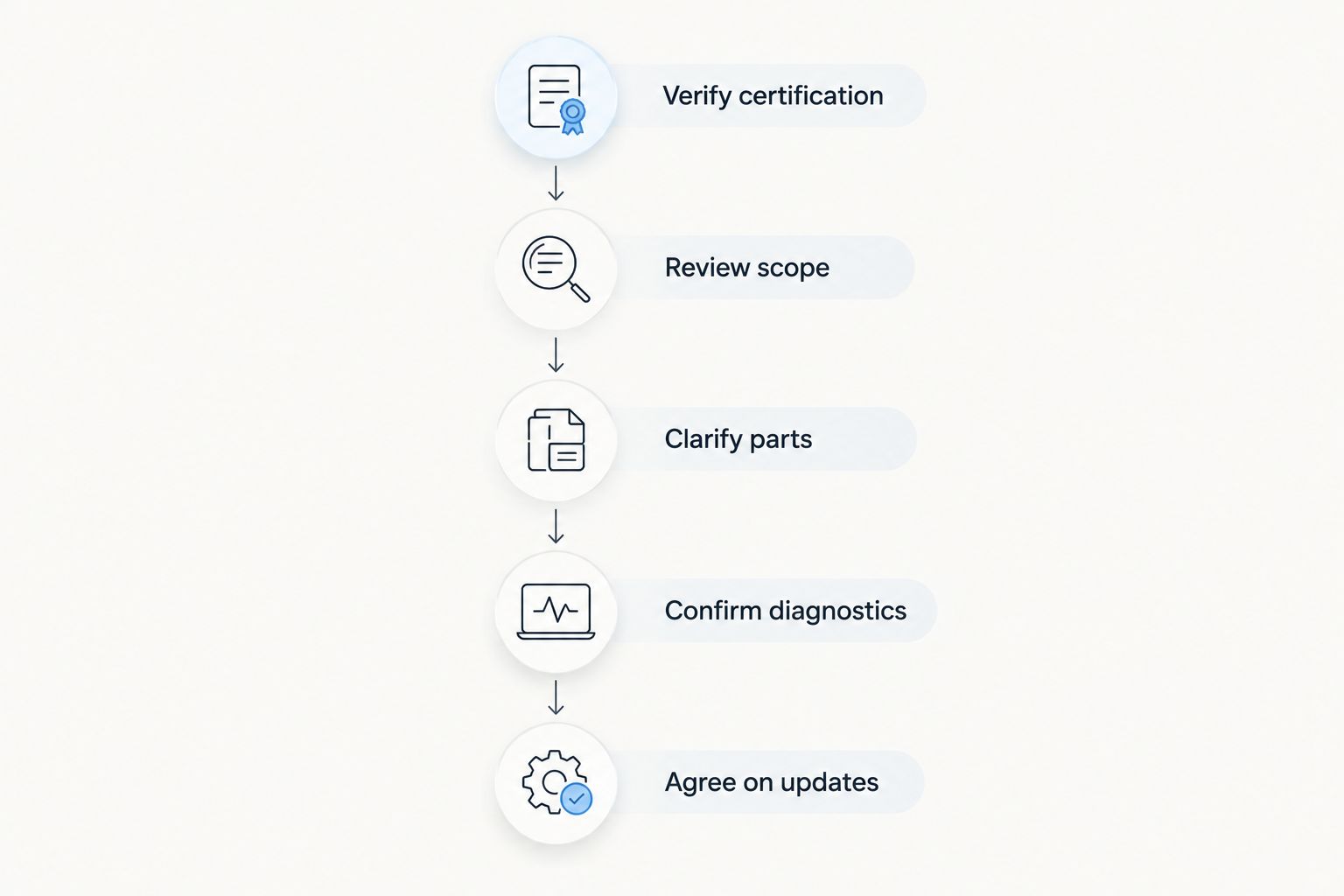
Use the same sequence with every shortlisted facility. Consistent questions make differences visible without relying on vague promises or company size.
- Verify certification: Match the manufacturer, facility name, and receiving address. Ask for current confirmation rather than relying on an undated badge.
- Review scope: Ask what the estimate includes, what remains subject to inspection, and how the shop will document additional damage.
- Clarify parts: Identify the proposed parts categories and discuss any alternatives before authorization. Do not assume every estimate specifies the same parts.
- Confirm diagnostics: Ask which scans, calibrations, or other checks the repair requires under applicable manufacturer procedures. Not every repair needs identical operations.
- Agree on updates: Establish the contact person and how you will approve changes. Request the final repair documentation at delivery.
A complete comparison follows those decisions from qualification through handover. The purpose is not to collect the thickest estimate; it is to understand what you are authorizing.
Keep insurance approval separate from repair suitability
An insurer’s recommendation and a manufacturer’s recognition answer different questions. Ask the insurer what your policy covers, and ask the repair facility how it will perform and document the work.
For California repairs in 2026, the California Department of Insurance’s consumer guidance states that you have the right to choose your repair shop. Shop choice does not remove your policy’s coverage terms or settle disagreements about the proposed repair.
Before moving a vehicle between facilities, clarify existing authorizations and any applicable obligations. Do not authorize a transfer based only on a more reassuring conversation.
Review your collision repair options
Explore Southern California collision repair, auto glass replacement, and insurance-claim assistance.
When staying with Gerber Collision is the right call
Stay with Gerber Collision when the local facility demonstrates the qualifications your vehicle needs, provides an understandable repair scope, and explains how changes will be authorized. A different company name is not, by itself, an improvement.
There is also no reason to restart your search simply because an alternative advertises factory certification. Verify the exact manufacturer and location on both sides, then compare the work proposed.
For your 2026 repair decision, documented suitability beats switching for its own sake. Keep the facility that answers your questions clearly and puts the agreed repair process in writing.
FAQ
What’s the best Gerber Collision alternative for Mercedes-Benz and BMW owners?
MB Collision Group is a relevant regional choice for Southern California owners seeking factory-certified collision repair and insurance-claim assistance. Confirm the receiving location’s current Mercedes-Benz or BMW approval before treating it as a marque-certified option.
Is a factory-certified body shop automatically certified for Mercedes-Benz and BMW?
No. Factory certification must be checked for the specific manufacturer and repair facility. Approval for another brand does not establish Mercedes-Benz or BMW approval.
Is a manufacturer-listed collision center better than Gerber Collision?
A manufacturer-listed center is a stronger starting point when verified marque-specific recognition is your priority. Compare that facility with the actual Gerber location, including its qualifications and written repair scope.
Should I use the body shop my Mercedes-Benz or BMW dealer recommends?
Treat the dealer’s recommendation as a starting point, not automatic proof of certification. Confirm who performs the repair, the receiving address, and the facility’s current manufacturer recognition.
Can I choose my own collision repair shop in California?
Yes. California Department of Insurance consumer guidance states that you have the right to choose your repair shop. Your insurance policy’s coverage terms still apply.
Does every windshield replacement need camera calibration?
Calibration requirements depend on the vehicle, equipment, and applicable manufacturer procedures. Ask the facility to identify the requirements for your vehicle rather than assuming every windshield job is identical.
What should I compare before switching collision shops?
Compare current qualifications, the written repair scope, proposed parts, required diagnostic procedures, and authorization arrangements. Clarify any existing obligations before moving the vehicle.
One last thing
Ask this before signing: Which address will physically repair my car? Then match that address to the certification you checked and the business named on your repair authorization.
That simple identity check connects the recommendation, the qualification, and the actual repairer. A company name or dealership referral alone does not do that job.