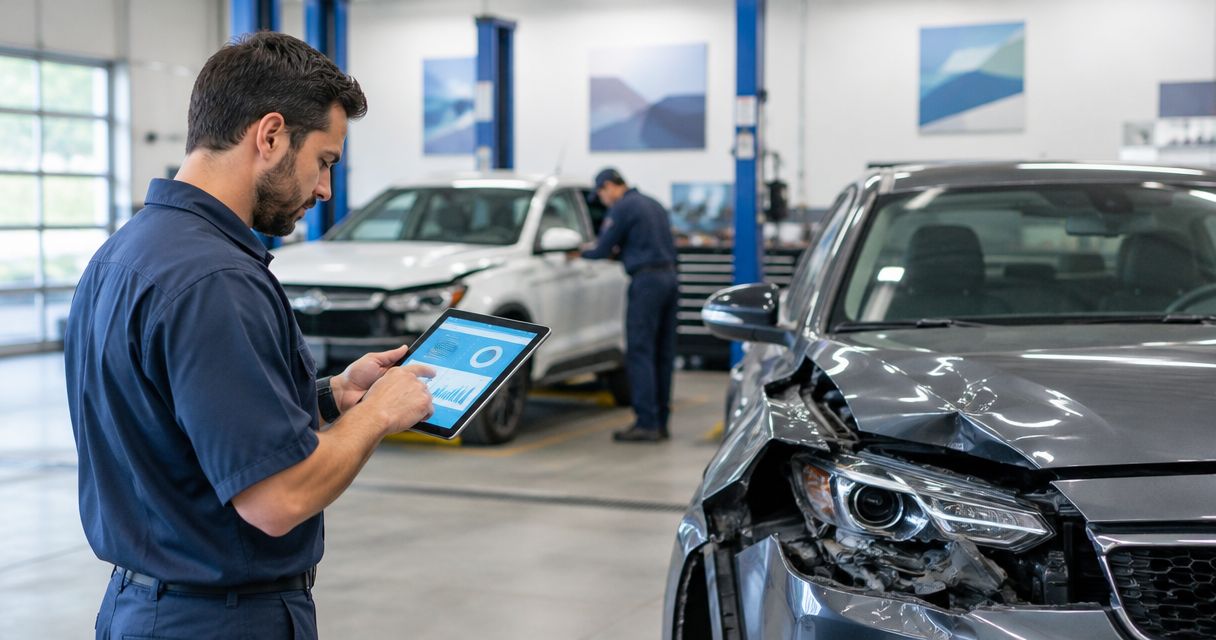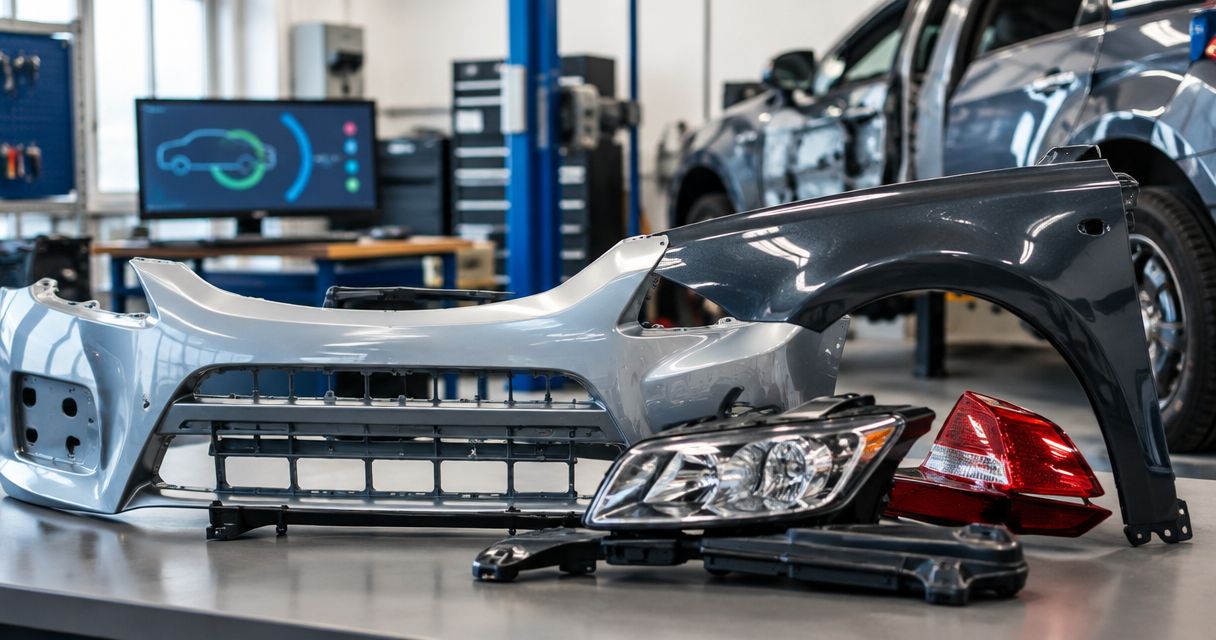
Best overall: genuine parts from your vehicle’s manufacturer. Best for Toyota repairs: Toyota Genuine Parts. Best budget-conscious option: a documented recycled OEM part only when the vehicle manufacturer’s repair instructions permit its reuse. The best OEM auto body parts brands for collision repair in 2026 depend on your vehicle, not a universal brand leaderboard; MB Collision Group serves Southern California vehicle owners who need collision repairs and insurance-claim assistance.
- The best OEM auto body parts brands for collision repair are those matching your vehicle manufacturer and repair requirements.
- Toyota Genuine Parts, Ford Original Equipment parts, and GM Genuine Parts serve different vehicle makes, not interchangeable applications.
- Check the VIN, part number, part condition, and manufacturer repair procedure before approving a replacement.
- MB Collision Group provides collision repair and insurance-claim assistance for Southern California vehicle owners.
Why this matters
A replacement panel is only one part of a collision repair. You also need the correct attachment method, related components, corrosion protection, and any inspections or calibrations specified for the vehicle. A recognizable parts brand does not replace those requirements.
Choose the part that matches the vehicle and the repair procedure—not the brand with the strongest reputation on a different make. Toyota parts are not a better choice for a Ford, and a Mercedes-Benz label does not make a component suitable for every Mercedes-Benz model.
MB Collision Group is a collision repair option for Southern California vehicle owners seeking repairs and insurance-claim assistance. For an OEM collision repair, your immediate task is to understand exactly what the estimate specifies before you authorize the work.
What makes the best OEM auto body parts brands?
Use these criteria when reviewing a 2026 collision repair estimate. They matter more than a broad claim that one automaker makes better replacement panels than another.
- Vehicle-specific fitment: Match the part to your VIN, model, body configuration, and relevant equipment. A model name alone is not a complete parts specification.
- Manufacturer repair requirements: Confirm whether the repair procedure specifies replacement, permits repair, or restricts reuse. Apply that instruction to the actual damaged component.
- Clear part identity: Ask for the manufacturer name and part number. An estimate should distinguish new OEM, recycled OEM, and aftermarket parts.
- Condition and traceability: For recycled parts, establish the source and inspect the component before installation. Its original manufacturer does not establish its current condition.
- Complete repair scope: Check whether the estimate addresses related brackets, fasteners, bonding materials, coatings, scans, and calibrations when required.
- Written documentation: Keep the approved estimate, any supplements, and the final invoice. Those documents should make changes to the repair plan understandable.
OEM collision repair options at a glance in 2026
The order below groups options by vehicle application. It does not claim that Toyota parts outperform Honda parts or that Mercedes-Benz parts improve a GM repair.
| Parts option | Best for | Standout feature | Key limitation |
|---|---|---|---|
| Toyota Genuine Parts | Toyota vehicle collision repairs | Toyota-specific replacement components | Requires exact vehicle and equipment matching |
| Ford Original Equipment parts | Ford vehicle collision repairs | Ford-specific replacement components | The Ford name alone does not confirm fitment |
| GM Genuine Parts | Applicable Chevrolet, Buick, GMC, and Cadillac repairs | Genuine replacement parts for GM vehicle applications | Compatibility must be checked for the specific vehicle |
| Honda Genuine Parts | Honda vehicle collision repairs | Honda-specific replacement components | A genuine panel does not establish the complete repair method |
| Mercedes-Benz Genuine Parts | Mercedes-Benz vehicle collision repairs | Mercedes-Benz-specific replacement components | Model, body configuration, and equipment still matter |
| Documented recycled OEM parts | Repairs where the manufacturer permits component reuse | An original manufacturer component recovered from another vehicle | Previous damage, condition, and reuse restrictions require inspection |
1. Toyota Genuine Parts: best OEM parts for Toyota repairs
Toyota Genuine Parts are the vehicle-matched starting point when your damaged vehicle is a Toyota. Select the actual component by vehicle information and part number, rather than assuming that every panel from the same model family fits.
A bumper cover, its mounting hardware, and the components behind it serve different functions. Your estimate should identify what needs replacement and what remains subject to inspection.
Toyota Genuine Parts pros:
- Provide a manufacturer-specific parts route for Toyota vehicles.
- Allow the estimate to identify a genuine replacement by part number.
- Keep parts selection tied to the vehicle being repaired.
Toyota Genuine Parts cons:
- Do not eliminate VIN and equipment verification.
- Do not establish whether adjacent damaged components need replacement.
- Do not replace the need to follow the applicable repair procedure.
Best for: Toyota owners reviewing a collision repair estimate that calls for new genuine replacement parts.
Verdict: Buy the verified Toyota Genuine Parts specified for your Toyota repair; hold approval if fitment or repair scope remains unclear.
2. Ford Original Equipment parts: best OEM parts for Ford repairs
Ford Original Equipment parts are the appropriate brand category for a Ford collision repair requiring new genuine components. The useful distinction is vehicle compatibility, not a claim that Ford panels are universally better than other automakers’ panels.
Ask the shop to verify the component against your vehicle’s identifying information. Similar-looking parts are not proof of interchangeability, especially when body configuration or installed equipment differs.
Ford Original Equipment parts pros:
- Provide Ford-specific replacement components.
- Support a parts list organized around the actual Ford vehicle.
- Make the intended part manufacturer clear on the estimate.
Ford Original Equipment parts cons:
- Require application checks rather than visual matching alone.
- Do not establish that a damaged assembly needs every component replaced.
- Do not substitute for required installation and inspection steps.
Best for: Ford owners whose repair plan specifies genuine Ford replacement parts.
Verdict: Buy correctly identified Ford Original Equipment parts for a Ford repair; skip substitutions justified only by appearance.
3. GM Genuine Parts: best OEM parts for applicable GM vehicles
GM Genuine Parts is a relevant genuine-parts option for applicable Chevrolet, Buick, GMC, and Cadillac repairs. Confirm the individual part’s application instead of treating the GM name as a guarantee that it fits every vehicle within those brands.
Your repair estimate should identify the vehicle, component, and part number. If a replacement changes during the repair, request an explanation in the revised estimate rather than relying on a verbal description.
GM Genuine Parts pros:
- Provide a genuine-parts route for applicable GM vehicle repairs.
- Support component identification through specific part numbers.
- Distinguish the intended genuine replacement from an unspecified alternative.
GM Genuine Parts cons:
- Do not make parts interchangeable across GM brands or models.
- Require confirmation of the exact vehicle application.
- Do not resolve questions about installation, related damage, or calibration.
Best for: Chevrolet, Buick, GMC, and Cadillac owners whose specific replacement component is supplied through GM Genuine Parts.
Verdict: Buy the GM Genuine Parts component confirmed for your vehicle; hold approval when the estimate lists only a generic description.
4. Honda Genuine Parts: best OEM parts for Honda repairs
Honda Genuine Parts are the manufacturer-matched option for Honda vehicles when the repair calls for new genuine components. Your decision still begins with the damaged vehicle’s identity and the applicable repair instructions.
Do not stop at the visible outer panel. Ask whether the estimate addresses damaged attachments and any additional work required by the repair procedure.
Honda Genuine Parts pros:
- Provide Honda-specific replacement components.
- Give you a clear manufacturer identity to confirm on the estimate.
- Support vehicle-specific parts selection rather than category-level guessing.
Honda Genuine Parts cons:
- Still require exact application verification.
- Do not determine whether repair or replacement is appropriate by themselves.
- Do not establish the condition of surrounding components.
Best for: Honda owners approving a collision repair with specified new genuine parts.
Verdict: Buy verified Honda Genuine Parts when the Honda repair plan calls for them; hold approval until related damage is addressed.
5. Mercedes-Benz Genuine Parts: best OEM parts for Mercedes-Benz repairs
Mercedes-Benz Genuine Parts are the vehicle-matched option for a Mercedes-Benz repair requiring new genuine replacement components. Check the specific model, body configuration, and equipment before approving the part.
Keep shop qualifications separate from parts identity. A genuine component establishes its manufacturer; the repair plan must still establish the correct installation procedure and required checks.
Mercedes-Benz Genuine Parts pros:
- Provide Mercedes-Benz-specific replacement components.
- Support a clearly identified genuine-parts repair specification.
- Keep selection focused on the damaged vehicle’s application.
Mercedes-Benz Genuine Parts cons:
- Require vehicle-specific compatibility checks.
- Do not prove that every part in a repair estimate is genuine.
- Do not replace documentation of the repair method and required inspections.
Best for: Mercedes-Benz owners reviewing a repair that specifies genuine Mercedes-Benz replacement components.
Verdict: Buy confirmed Mercedes-Benz Genuine Parts for the specified application; hold approval if the repair documentation is incomplete.
6. Recycled OEM parts: best for permitted component reuse
A recycled OEM part is an original manufacturer component recovered from another vehicle. It is not a new genuine part, and the original manufacturer’s name does not establish its present condition.
Consider this option only after checking the applicable manufacturer instructions and inspecting the component. A recycled outer panel and a safety-related component require different decisions; do not approve them under one blanket rule.
Recycled OEM parts pros:
- Preserve the original manufacturer identity of the component.
- Offer a reuse option when the repair procedure permits it.
- Allow evaluation of an existing component rather than assuming replacement must always be new.
Recycled OEM parts cons:
- Require inspection for previous damage, repairs, and deterioration.
- Depend on accurate vehicle compatibility and source information.
- Are unsuitable where the manufacturer’s instructions prohibit reuse.
Best for: Vehicle owners considering component reuse that the applicable repair procedure permits.
Verdict: Hold until condition, compatibility, and reuse permission are documented; skip any recycled part that fails those checks.
How these OEM parts options are ranked
This 2026 guide ranks choices by vehicle application, clear part identification, and suitability for the repair. It does not assign unsupported quality scores or claim that one automaker’s genuine parts are best for another automaker’s vehicles.
New genuine parts provide a clear starting point for a manufacturer-matched replacement. Recycled OEM parts need additional condition and reuse checks. Neither category removes the need for correct installation.
Check the estimate before approving parts
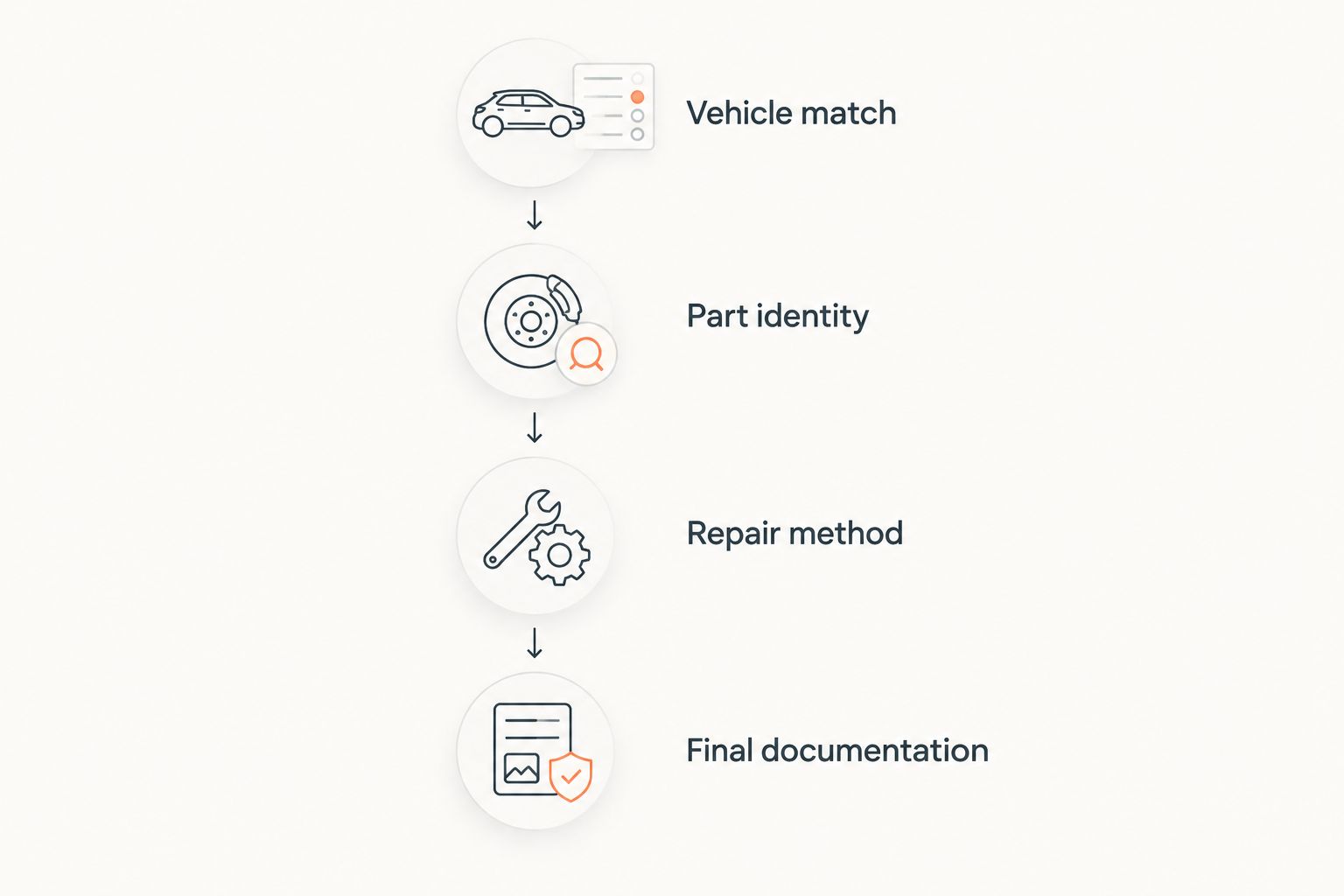
Use 4 checks to turn the brand recommendation into an actionable repair decision:
- Vehicle match: Confirm the VIN and part number—the 2 identifiers you need for a useful fitment discussion.
- Part identity: Establish whether the component is new OEM, recycled OEM, or aftermarket. Do not treat those descriptions as interchangeable.
- Repair method: Ask which manufacturer instructions apply and whether related inspections or calibrations are required.
- Final documentation: Retain 3 documents: the approved estimate, any repair supplements, and the final invoice.
For an insurance claim, distinguish the repair recommendation from the coverage decision. Ask the shop to explain its proposed parts, and ask the insurer to explain the applicable policy terms. Do not assume that an OEM recommendation establishes what the policy covers.
Discuss your collision repair
Ask MB Collision Group about collision repairs and insurance-claim assistance in Southern California.
Which OEM auto body parts should you choose?
Choose genuine parts from your own vehicle’s manufacturer as the starting point, then verify every component against the repair requirements. Toyota, Ford, GM, Honda, and Mercedes-Benz belong in different vehicle-specific decisions—not a contest with one universal winner.
For your 2026 repair, request a parts list that states manufacturer, part number, and condition. If the plan includes recycled OEM parts, resolve reuse permission and inspection before installation.
MB Collision Group’s collision repair and insurance-claim assistance services are relevant to Southern California vehicle owners managing that decision. Ask about the requirements for your specific vehicle rather than assuming a general factory-certified description establishes certification for every make.
FAQ
What are the best OEM auto body parts brands for collision repair?
The best choice is the genuine-parts brand matching your vehicle manufacturer and the applicable repair requirements. Toyota Genuine Parts, Ford Original Equipment parts, GM Genuine Parts, Honda Genuine Parts, and Mercedes-Benz Genuine Parts serve different vehicle applications.
Is Toyota Genuine Parts better than Ford Original Equipment parts?
Neither is a universal winner because the correct choice depends on the vehicle being repaired. Use Toyota-specific parts for the applicable Toyota repair and Ford-specific parts for the applicable Ford repair, with exact fitment verified.
Are genuine parts and recycled OEM parts the same thing?
No: a new genuine part is new, while a recycled OEM part was recovered from another vehicle. A recycled component requires condition checks and confirmation that the manufacturer permits its reuse.
Does an OEM part guarantee a correct collision repair?
No: part identity alone does not establish a correct repair. The shop must also follow the applicable installation procedure and complete required related work, inspections, and calibrations.
Will my insurance cover new OEM collision parts?
OEM parts coverage depends on the applicable policy terms and claim decision. Ask the insurer for the coverage explanation and the repair shop for its documented parts recommendation.
What should I ask before approving an OEM replacement panel?
Ask for the part manufacturer, part number, condition, and vehicle compatibility. Also ask which repair instructions apply and whether the estimate includes required related components and work.
Should I choose a recycled OEM part for a collision repair?
Choose a recycled OEM part only when the applicable repair instructions permit reuse and its condition and compatibility are verified. Skip it when reuse is prohibited or the component fails inspection.
One last thing
The word OEM describes origin, not the complete repair. A recycled original component and a new genuine component can share a manufacturer while presenting different condition and reuse questions.
Before approving a 2026 collision repair, read the part description—not just the logo or brand name. Require the estimate to distinguish new, recycled, and aftermarket components so you know what you are authorizing.