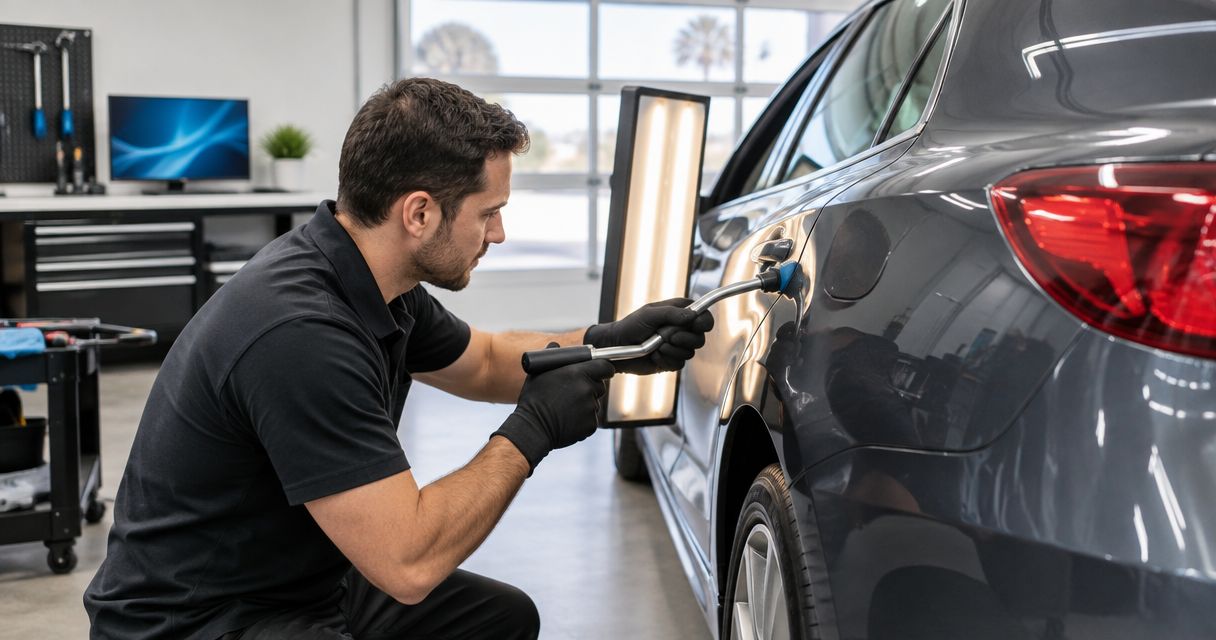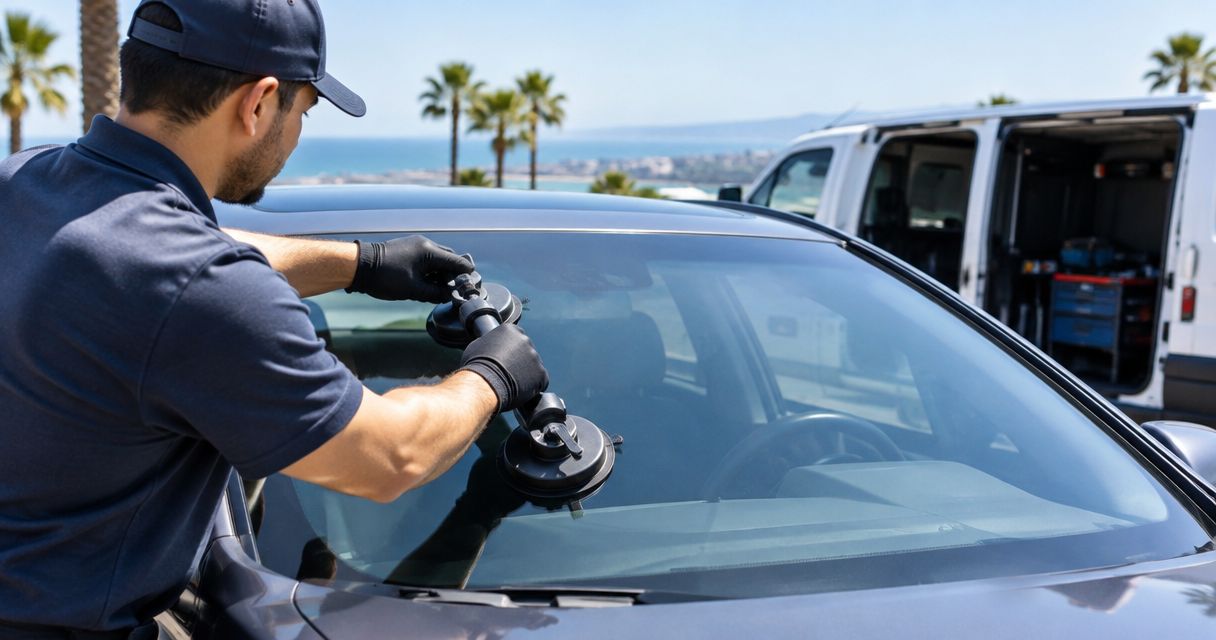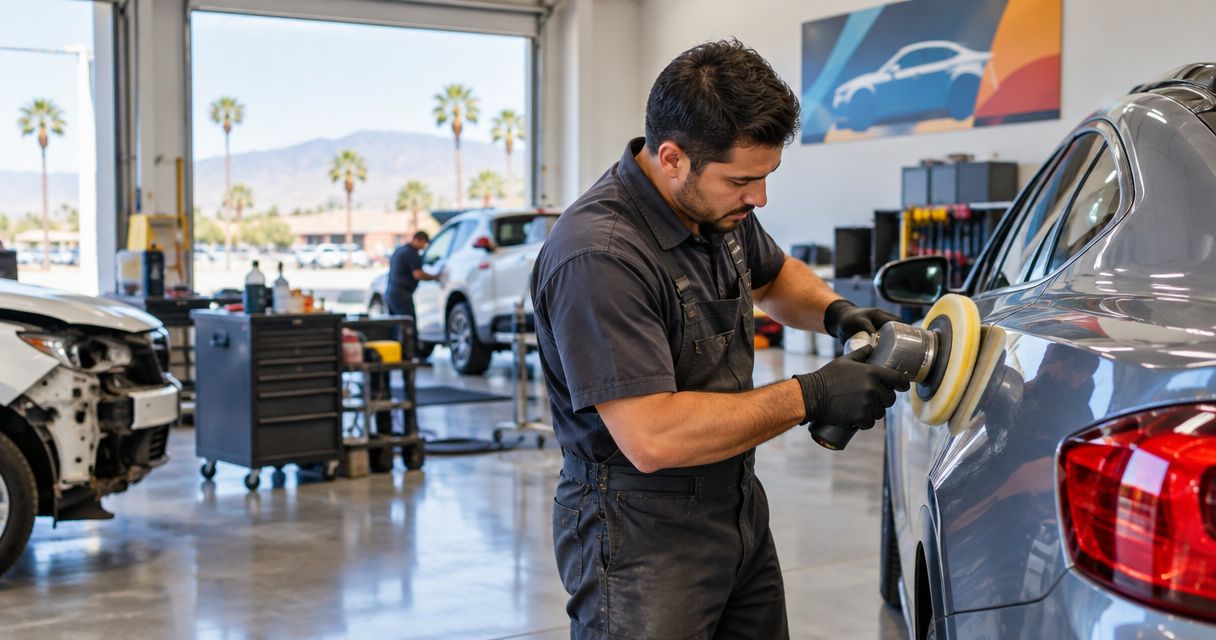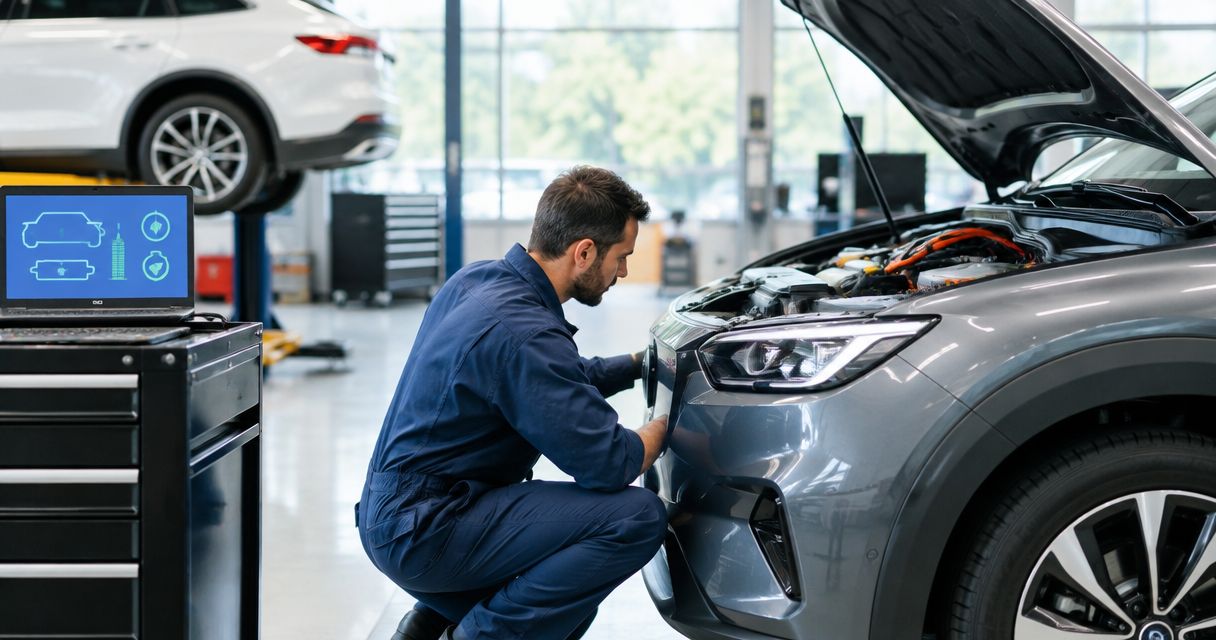
Best overall: a collision center with current certification for your vehicle manufacturer and confirmed EV repair capability. Best Southern California starting point: MB Collision Group, subject to verification for your specific vehicle. Best for hybrid owners: a manufacturer-certified center that follows your model’s hybrid repair procedures. This 2026 guide ranks repair-center options by vehicle fit, damage type, and the evidence you should request before authorizing repairs.
- The best EV and hybrid certified collision repair centers California drivers choose must match the vehicle and damage.
- MB Collision Group is a Southern California collision-repair option; confirm certification for your exact vehicle before booking.
- For electric vehicles, verify high-voltage procedures, structural repair capability, and required calibration work.
- For hybrids, choose model-specific repair capability rather than a general claim of electrified-vehicle experience.
Why this matters
A factory-certified collision center is not automatically certified for every electric vehicle or hybrid. Manufacturer approval, individual-location capabilities, and the work required after your accident are separate checks. Your selection needs to answer all three.
MB Collision Group is a collision-repair option for Southern California vehicle owners who also need insurance-claim assistance. Its stated services include factory-certified auto body repair and auto glass replacement. Confirm the relevant manufacturer certification and electrified-vehicle capabilities at the location handling your car.
For your 2026 repair decision, prioritize evidence over a statewide leaderboard. A shop that explains the required procedures for your exact vehicle is a better fit than a recognizable name that cannot explain who will perform the work.
What makes the best EV and hybrid collision repair center?
Use these 5 checks before comparing repair-center options:
- Vehicle-specific certification: Ask which manufacturer currently certifies the actual repair location. Match that approval to your vehicle rather than accepting a general certified-shop claim.
- High-voltage procedures: Ask how the center identifies, isolates, and handles the high-voltage system when the manufacturer’s repair instructions require it.
- Structural repair capability: Confirm that the center can perform the prescribed repairs to the damaged materials and components. Ask which operations it sends elsewhere.
- Diagnostics and calibration: Request an explanation of required scans, calibrations, and completion records. Windshield work and collision repairs can involve driver-assistance equipment.
- Repair documentation: Choose a center that explains the estimate, supplements, replacement decisions, and final verification. Insurance participation does not replace technical qualifications.
These checks matter for both battery-electric vehicles and hybrids. The propulsion system changes the repair questions, but neither category removes the need to inspect body damage, suspension damage, glass, sensors, and structural components.
Repair-center options at a glance
This is a decision ranking, not a claim that every listed option has been independently inspected. The named business has stated factory-certified collision services; the other entries describe the qualifications to seek for particular repair needs.
| Rank and option | Best for | Standout feature to verify | Key limitation |
|---|---|---|---|
| 1. MB Collision Group | Southern California owners needing collision repair and claim assistance | Relevant factory certification at the chosen location | Specific EV and hybrid manufacturer approvals require confirmation |
| 2. Vehicle-matched EV-certified center | Battery-electric vehicles requiring manufacturer-specific repair procedures | Current approval and capability for the exact vehicle | Certification alone does not explain every outsourced operation |
| 3. Vehicle-matched hybrid-certified center | Hybrid owners seeking coordinated body and high-voltage repair | Procedures covering both the hybrid system and collision damage | General hybrid experience does not establish model-specific capability |
| 4. Factory-certified structural repair specialist | Vehicles with structural or battery-area damage | Capability for the manufacturer-prescribed structural repair | A specialist referral can add another handoff to the repair process |
1. MB Collision Group: best local collision-repair starting point
MB Collision Group operates factory-certified auto body and collision repair centers in Southern California. Its stated services also include auto glass replacement and insurance-claim assistance, making it a relevant starting point when an accident creates several repair and claim tasks.
For an EV or hybrid, your next step is specific: identify the location that would receive your vehicle and ask which current manufacturer certifications apply. A group-level description does not establish that every location holds the same approval or performs every operation.
MB Collision Group pros:
- Stated factory-certified collision-repair services.
- Southern California focus for owners seeking a local repair option.
- Auto glass replacement among its stated services.
- Insurance-claim assistance for accident-related repair needs.
MB Collision Group cons:
- Exact EV and hybrid manufacturer certifications need location-level confirmation.
- The stated service description does not establish battery repair, structural limits, or calibration arrangements.
- A Southern California service footprint does not make it a statewide recommendation for every driver.
Best for: Southern California vehicle owners who want to evaluate a local collision-repair provider with claim assistance.
Before booking in 2026, provide the vehicle identification number, damage photographs, and any warning messages. Ask the center to explain which work it performs directly and which work requires another provider.
Verdict: Hold authorization until the selected location confirms your vehicle’s certification and repair requirements.
2. Vehicle-matched EV-certified center: best for battery-electric cars
A vehicle-matched EV-certified center is the default choice when your battery-electric vehicle requires collision work covered by the manufacturer’s repair program. Start with the automaker’s current collision-center directory, then verify the individual location and the repair operations involved.
The relevant question is not whether a shop has repaired electric cars before. Ask whether it can follow the required procedures for your vehicle’s damage, including any high-voltage, structural, diagnostic, or calibration work.
Vehicle-matched EV-certified center pros:
- Gives you a manufacturer-specific starting point for selection.
- Focuses the discussion on your vehicle rather than general EV familiarity.
- Supports a direct check of approved repair procedures and required equipment.
Vehicle-matched EV-certified center cons:
- Approval does not explain whether every required operation happens on-site.
- A directory listing does not replace a damage-specific repair plan.
- Certification scope still needs to match the vehicle and location.
Best for: Battery-electric vehicle owners whose repairs require manufacturer-specific collision procedures.
Request a clear explanation of how the center will assess damage near the battery enclosure, cooling components, charging equipment, and high-voltage wiring where relevant. Do not ask the shop to promise a battery outcome from photographs alone.
Verdict: Buy the repair service only after current approval and damage-specific capability are confirmed.
3. Vehicle-matched hybrid-certified center: best for hybrid system coordination
A hybrid-certified collision center needs to address the body repair and the vehicle’s electrified system within the same repair plan. Depending on the model and damage, that plan also involves conventional engine-related components and their connections.
Choose a center that can explain the manufacturer’s procedures for your exact hybrid. Familiarity with one hybrid model does not establish competence across different manufacturers or propulsion layouts.
Vehicle-matched hybrid-certified center pros:
- Keeps hybrid-system questions connected to the collision estimate.
- Encourages model-specific decisions rather than generic electrical precautions.
- Helps clarify responsibility when mechanical and body work overlap.
Vehicle-matched hybrid-certified center cons:
- A general hybrid-repair claim is not proof of current manufacturer certification.
- Mechanical diagnosis or specialized electrical work can require a separate provider.
- The body estimate alone does not explain all system-verification requirements.
Best for: Hybrid owners who need coordinated collision repair without treating the high-voltage system as an unrelated task.
Ask who will investigate warning lights and confirm which diagnostic records you receive at delivery. Separate damage-related findings from unrelated maintenance recommendations so the repair authorization stays clear.
Verdict: Buy only when the center identifies the applicable hybrid procedures and responsibility for each required operation.
4. Factory-certified structural specialist: best for complex damage
A factory-certified structural repair specialist belongs on your shortlist when the repair assessment identifies structural damage or damage around sensitive vehicle components. The key qualification is the ability to perform the repair prescribed by the manufacturer—not a broad claim that the shop handles difficult accidents.
Ask the specialist to explain the affected materials, attachment methods, measurement requirements, and repair-versus-replacement decisions. Those answers should connect to the written estimate.
Factory-certified structural specialist pros:
- Concentrates selection on the damaged structure and required repair method.
- Makes equipment and material-specific capability central to the decision.
- Helps identify work that exceeds another center’s stated capabilities.
Factory-certified structural specialist cons:
- A referral creates another provider whose certification requires verification.
- Responsibility for transport, supplements, and final checks needs clarification.
- Structural capability does not automatically establish every EV battery service.
Best for: Owners whose repair assessment identifies structural work beyond a general collision center’s capabilities.
For a 2026 repair authorization, ask whether the structural specialist manages the full repair or only a defined portion. Establish who signs off on the completed vehicle and who supplies the final records.
Verdict: Hold until the structural repair scope and responsibility for final verification are documented.
How to verify a center before authorizing repairs
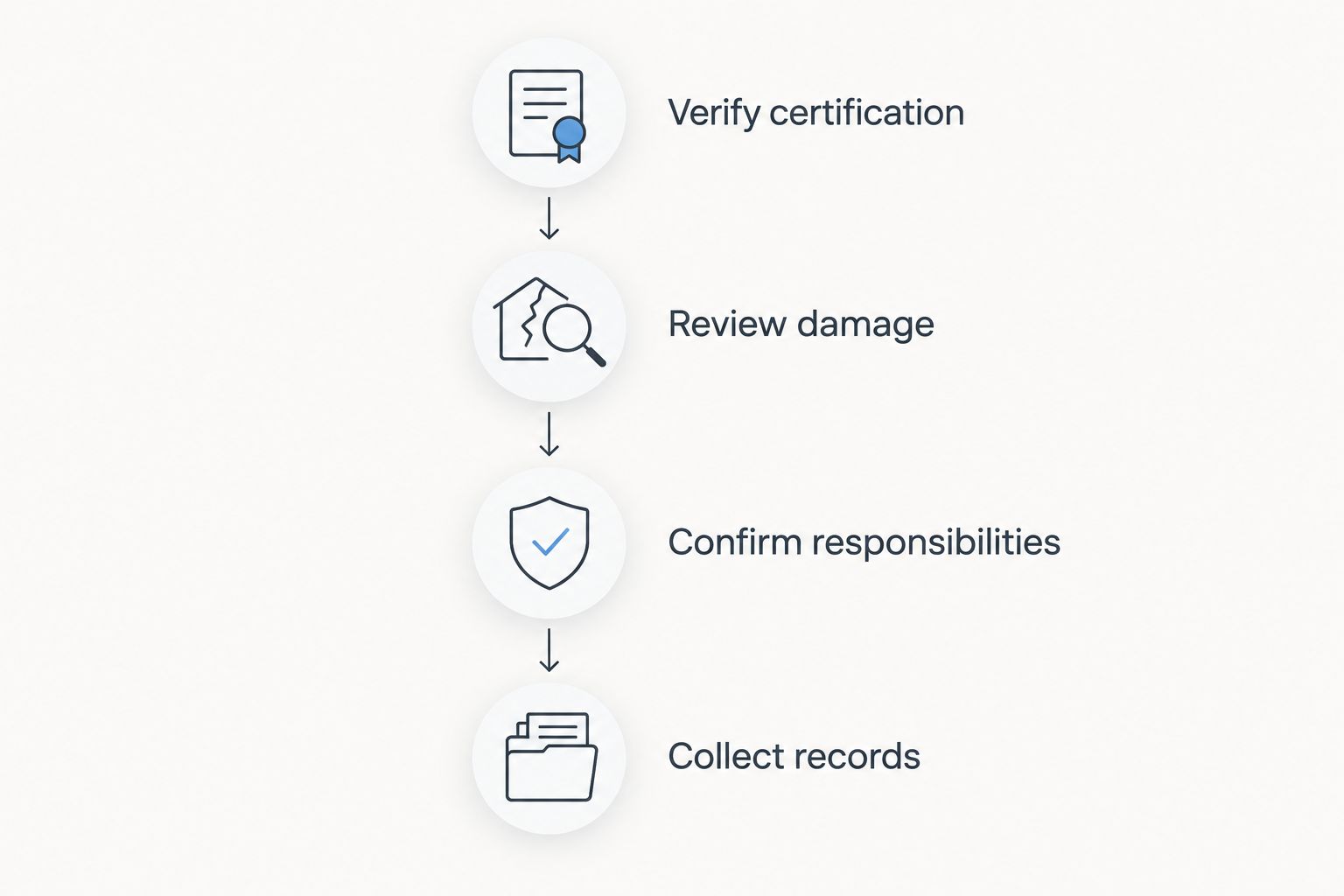
Use this sequence to turn a shortlist into a repair decision. It separates manufacturer approval from the practical question of who will complete your particular repair.
Verify certification
Check the manufacturer’s current collision-center directory and match the location details. Ask the center to explain the certification relevant to your vehicle; do not treat an insurer-network listing as manufacturer approval.
Review damage
Give the center your vehicle details, photographs, claim information, and warning messages. Ask what requires an in-person inspection and whether the vehicle needs professional transport rather than driving.
Confirm responsibilities
Identify the provider responsible for structural work, glass replacement, diagnostics, and calibration when required. Ask who communicates with you if additional damage changes the estimate.
Collect records
Request the written estimate, approved changes, and applicable completion records. Keep these documents with your vehicle history rather than relying on a verbal summary at pickup.
Ask 2 questions before signing: What work does this location perform itself? What documentation will I receive when the repair is complete? These questions expose gaps without requiring you to become a collision technician.
Discuss your collision repair
Ask about your vehicle, factory certification, auto glass replacement, and insurance-claim assistance.
How we ranked these repair-center options
The ranking uses vehicle-specific certification, high-voltage procedures, structural capability, diagnostics, and repair documentation. Local service coordination determines the first shortlist option; confirmed vehicle fit determines the final choice.
No inspection results, customer scores, repair-time measurements, or statewide performance dataset support a numerical leaderboard here. The useful distinction is the repair need each option serves, not an unsupported claim that one business outperforms every California competitor.
For manufacturer-focused research, use the guide to certified collision shops for Mercedes-Benz and BMW, then confirm the relevant approval directly for your vehicle and location.
Which collision repair center should you choose?
Choose the center that confirms current manufacturer approval, explains your damage-specific procedures, and identifies who performs every required operation. That is the default recommendation for EV and hybrid collision repair in 2026.
Start locally when the qualifications fit. Select an EV-focused certified center for battery-electric repair requirements, a hybrid-qualified center for hybrid-system coordination, or a structural specialist when the assessed damage requires that capability.
Before authorization, collect 3 documents: the written estimate, the repair authorization, and a written explanation of outsourced work if another provider is involved. These documents make your decision clearer than a badge or broad service claim alone.
FAQ
What’s the best EV and hybrid certified collision repair center in California?
The best choice is a center with current manufacturer certification and confirmed capability for your vehicle’s specific damage. MB Collision Group is a Southern California option to evaluate, with exact EV and hybrid approvals verified at the selected location.
Does factory certification cover every electric car and hybrid?
No, factory certification does not establish approval for every manufacturer or vehicle. Verify the current certification for the actual location and ask how it applies to your model.
Is an insurance-preferred shop the same as a factory-certified shop?
No, insurer-network participation and manufacturer certification are different qualifications. Check both separately and choose based on the required repair procedures.
Can a regular body shop repair a hybrid after an accident?
Choose a body shop only after it confirms capability for your hybrid’s required collision and high-voltage procedures. General body-repair experience does not establish model-specific hybrid qualifications.
Do EV collision repairs always require battery replacement?
No, an accident does not automatically establish a need for battery replacement. The repair assessment and manufacturer procedures determine the appropriate inspection and action.
Should I drive my electric car to the body shop after a crash?
Do not drive a vehicle that shows signs of an unsafe condition after a crash. Tell the repair center about warning messages, leaks, visible damage, or unusual behavior and obtain professional transport guidance.
What should I ask before approving EV collision repairs in 2026?
Ask which manufacturer certification applies, who performs the required work, and which completion records you receive. Confirm responsibilities for structural repairs, diagnostics, glass, and calibration where relevant.
One last thing
Ask who is responsible for the whole repair, not just the body panels. A vehicle can pass through multiple providers for specialized work, but you still need a clear point of contact and an explanation of final verification. Establish that responsibility before authorizing repairs.