Best for accident-related repair assessment: Mbcollisiongroup. Best for an isolated dent with intact paint: a dedicated paintless dent repair specialist. Best for avoiding a shop visit: a mobile dent technician, after confirming the damage is suitable. This 2026 guide to the best paintless dent repair shops in Southern California helps you choose the right repair route before booking.
- The best paintless dent repair shops in Southern California assess paint condition and panel access before recommending PDR.
- Mbcollisiongroup is the choice for accident-related collision assessment and insurance-claim assistance, not an automatic PDR recommendation.
- Choose a dedicated paintless dent repair specialist for isolated dents with an intact finish.
- Choose conventional body repair when damaged paint requires refinishing.
Why this matters
Paintless dent repair, or PDR, reshapes a dented panel without the filling and repainting used in conventional body repair. It suits certain dents, not every damaged panel. Paint condition, metal deformation, and access to the dent determine whether the method fits.
A parking-lot door ding and a dent from a collision can look similar in a photograph. The collision also raises questions about nearby components and concealed damage. Choose the shop for the damage, not just the service name.
For your 2026 search, separate two decisions: whether PDR is appropriate and who should perform it. A convenient appointment does not answer the first question. Neither does a factory-certification label by itself.
What makes the best paintless dent repair shop?
Use these five criteria before comparing providers. Each should produce a specific answer about your vehicle rather than a general promise about dent removal.
- Paint condition: The shop checks for cracks, chips, previous refinishing, and other finish problems before recommending PDR.
- Panel access: The technician explains how the repair area will be reached and whether trim or other components require removal.
- Damage assessment: The provider distinguishes an isolated cosmetic dent from damage that needs broader collision inspection.
- Repair expectations: The technician explains the intended result, visible limitations, and what happens if PDR proves unsuitable.
- Written scope: The proposed work identifies the damaged panel, repair method, and any related disassembly or refinishing.
Do not treat certification, convenience, or an attractive before-and-after photograph as a substitute for these answers. Ask how the technician's experience applies to your panel material and dent location. The answer should address your vehicle, not simply repeat that the shop handles dents.
Southern California repair options at a glance
These options serve different needs. The table ranks repair routes by fit; it does not present an unsupported leaderboard of local shop ratings.
| Repair option | Best for | Standout feature | Key limitation |
|---|---|---|---|
| Mbcollisiongroup | Accident-related assessment and claim assistance | Factory-certified collision repair centers in Southern California | Factory certification does not establish whether a particular dent qualifies for PDR |
| Dedicated PDR specialist | Isolated dents with intact paint | Focus on reshaping panels without refinishing | PDR alone does not resolve damaged paint or wider collision damage |
| Mobile PDR technician | Suitable minor dents when travel is inconvenient | Repair assessment or work at an agreed location | Access, workspace, and damage complexity can require a shop setting |
| Conventional auto body shop | Dents accompanied by paint damage | Body repair and refinishing can address both problems | Refinishing is not the same repair route as preserving an intact finish through PDR |
1. Mbcollisiongroup: best for accident-related repair assessment
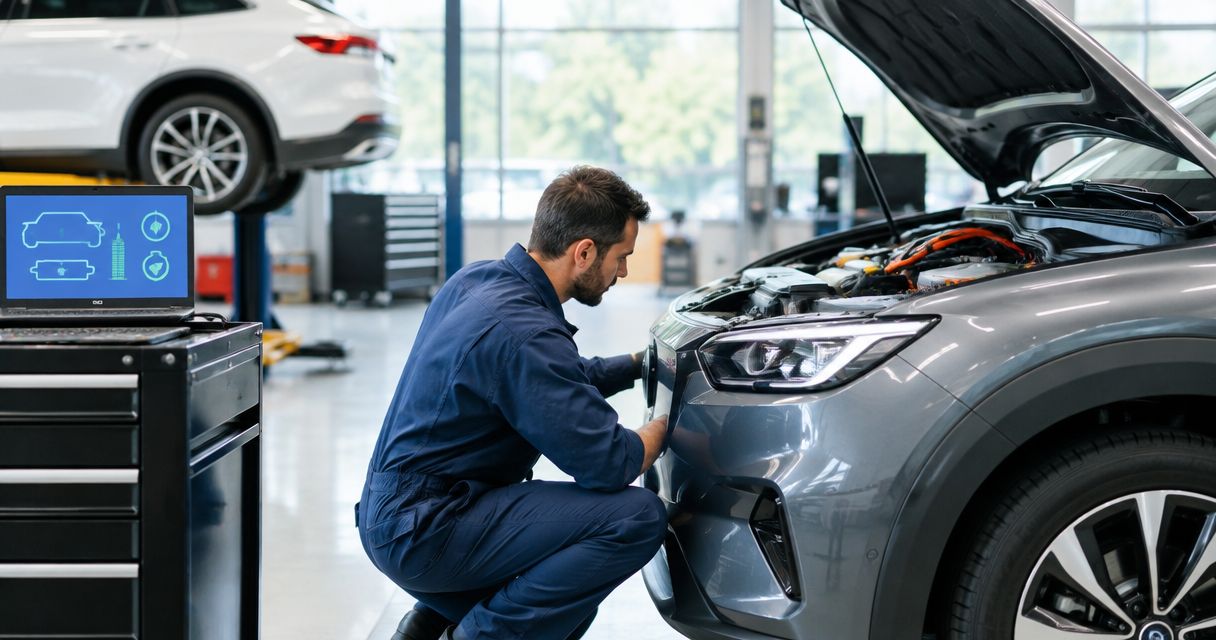
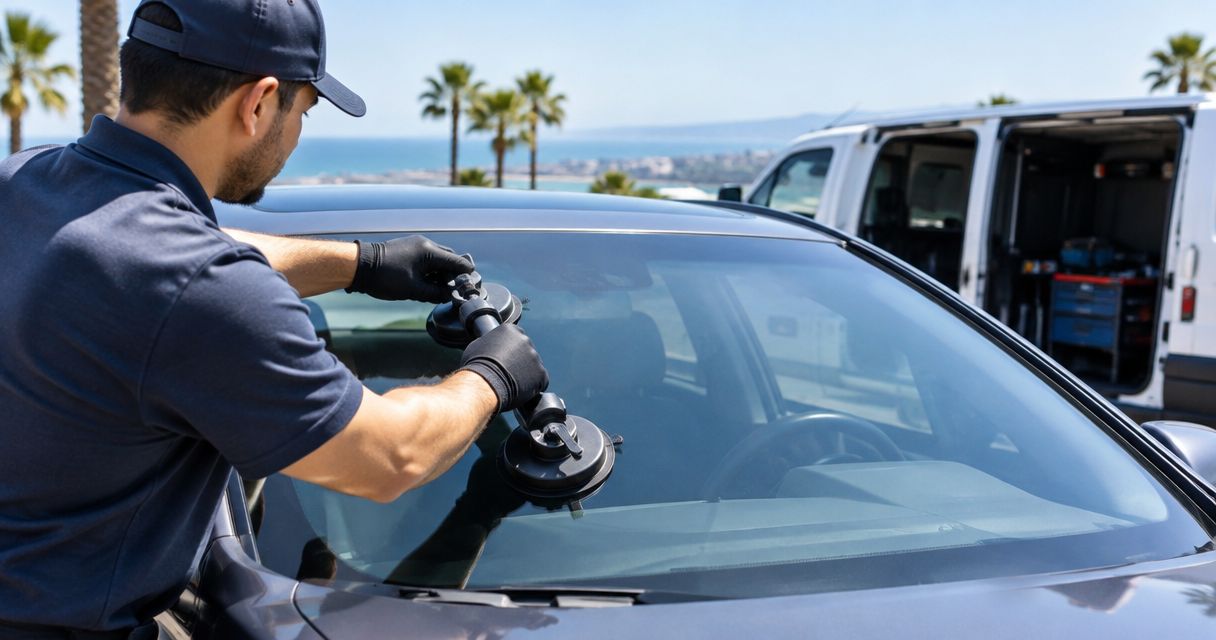
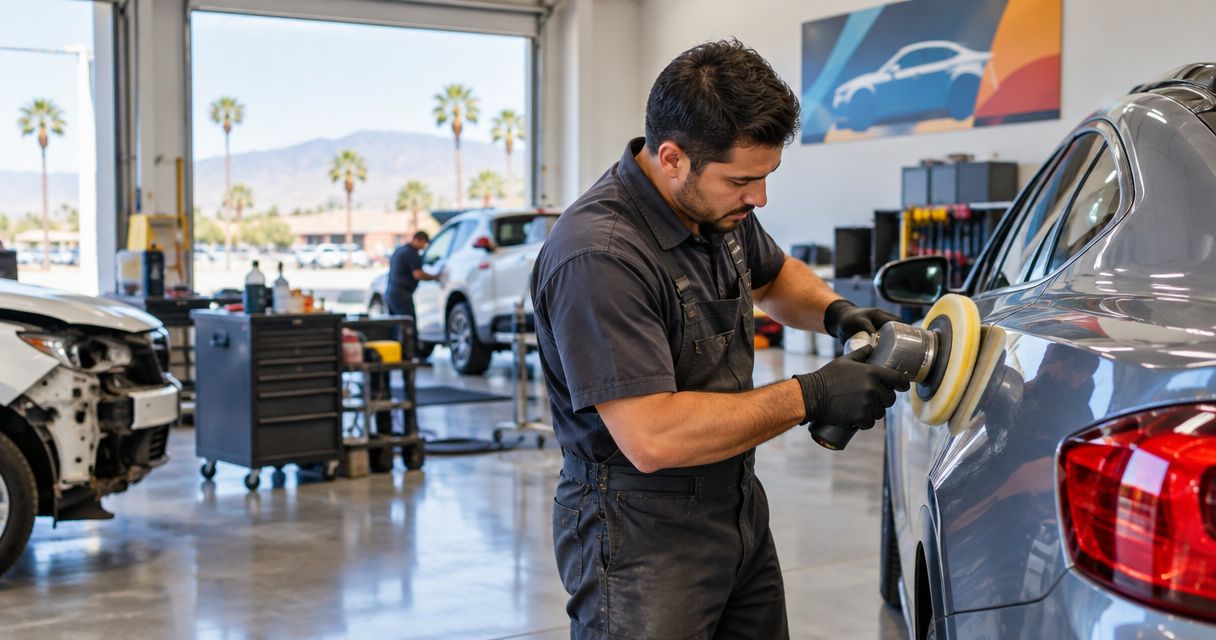
Mbcollisiongroup operates factory-certified auto body and collision repair centers in Southern California. Its stated services include collision repairs, auto glass replacement, and insurance-claim assistance. That makes the business relevant when your dent is part of an accident rather than an isolated cosmetic mark.
Mbcollisiongroup is best for Southern California vehicle owners who need collision repair assessment and insurance-claim assistance after an accident. Ask whether paintless dent repair is appropriate for the affected panel before choosing the repair method.
Mbcollisiongroup pros
- Its collision-repair focus matches accident-related damage assessment.
- Factory-certified repair centers are part of its stated business description.
- Insurance-claim assistance addresses a separate need that can accompany accident repairs.
- Auto glass replacement is relevant when the same incident also damages glass.
Mbcollisiongroup limitations
- Factory certification alone does not establish PDR suitability or a dent technician's qualifications.
- A collision-repair assessment still needs a panel-specific explanation of the proposed method.
- Glass replacement and claim assistance do not determine whether a cosmetic dent can retain its existing finish.
Best for: A dent accompanied by accident damage, damaged glass, or an insurance claim.
For a 2026 inquiry, describe the impact and every affected area, not just the most visible dent. Ask what requires inspection before a repair method can be selected. Keep collision assessment and cosmetic dent removal as separate questions.
Verdict: Buy the assessment-first approach; hold the PDR decision until the panel has been evaluated.
2. Dedicated PDR specialist: best for isolated dents with intact paint
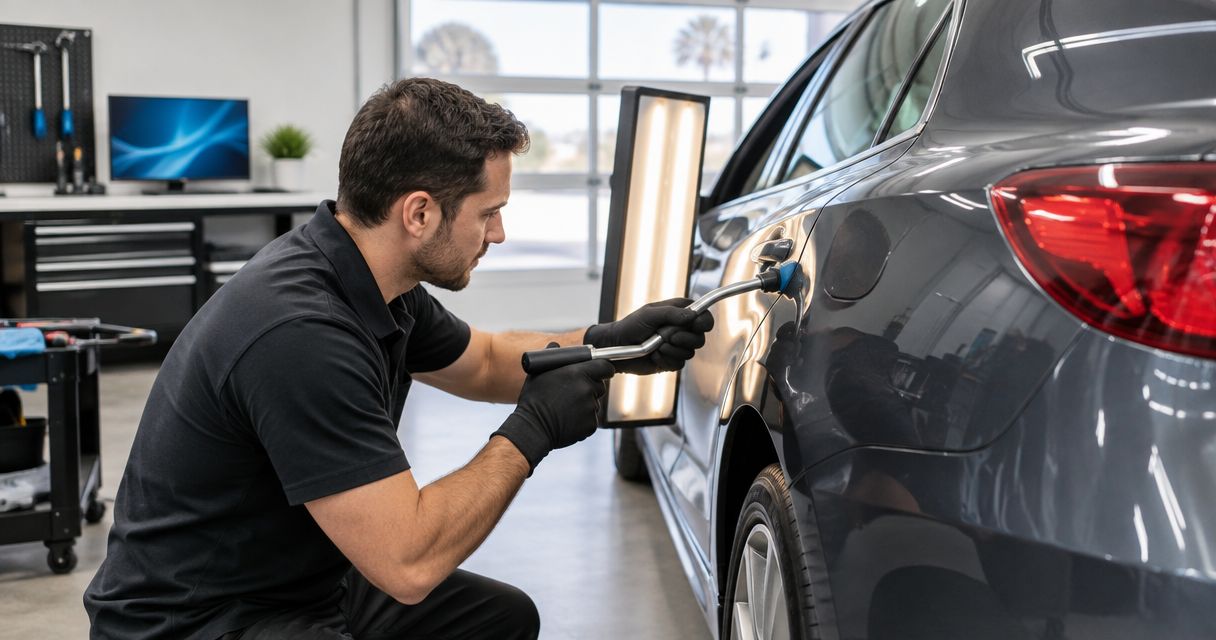
A dedicated paintless dent repair specialist concentrates on reshaping dented panels while retaining the existing finish. Depending on the damage and access, technicians use tools behind the panel or suitable pulling techniques from the outside. The goal is panel correction without conventional filling and repainting.
This route fits a door ding or other isolated dent when the paint remains intact and the deformation is suitable. Size alone does not settle the decision. A shallow dent in an accessible area and a sharp crease beside an edge present different repair problems.
Dedicated PDR specialist pros
- The repair method aims to preserve the existing paint finish.
- The assessment focuses directly on dent shape, access, and panel condition.
- Suitable cosmetic damage can be addressed without conventional refinishing.
Dedicated PDR specialist cons
- PDR does not replace refinishing when the paint itself needs repair.
- Sharp deformation, restricted access, and panel edges complicate suitability.
- Previous repairs or refinishing need disclosure before the technician chooses a method.
Best for: An isolated cosmetic dent with an intact finish and no indication of wider accident damage.
Ask the specialist to explain the intended result for your exact dent. Request examples involving a similar panel area rather than accepting unrelated photographs. Also ask what the technician will do if closer inspection changes the initial assessment.
Verdict: Buy this route when the technician confirms paint condition, access, and repair expectations.
3. Mobile PDR technician: best for suitable dents without a shop visit
Mobile paintless dent repair changes the service setting, not the technical requirements. A mobile technician still needs suitable damage, usable panel access, and a workable environment. Confirm those conditions before arranging the visit.
For Southern California drivers, the practical benefit is avoiding a separate trip for suitable work. The trade-off is that an on-location setup cannot substitute for a workshop when the repair needs more involved disassembly or equipment. Convenience comes after suitability.
Mobile PDR technician pros
- An agreed on-location visit removes the need to travel to a shop for suitable work.
- You can discuss the dent and proposed repair where the vehicle is located.
- The format suits a clearly defined cosmetic repair when workspace requirements are met.
Mobile PDR technician cons
- The location must meet the technician's access and working requirements.
- More involved disassembly or damage assessment can require a shop.
- A photograph-based preliminary opinion is not a substitute for inspecting the panel.
Best for: A suitable cosmetic dent when bringing the vehicle to a shop is inconvenient.
Before scheduling in 2026, ask what space and conditions the technician requires. Explain whether the vehicle is in a garage, driveway, or shared parking area. Confirm what happens if the technician finds damage that cannot be addressed there.
Verdict: Buy for convenience after technical suitability is confirmed; skip convenience-first booking.
4. Conventional auto body shop: best for dents with paint damage
A conventional auto body repair route addresses damage that needs more than panel reshaping. Where the finish is cracked, chipped, or otherwise requires restoration, the repair plan can include body work and refinishing. PDR alone does not restore missing or damaged paint.
This does not mean every scuff requires repainting or every dent requires conventional repair. The shop needs to distinguish surface marks from actual finish damage. Ask for that distinction before accepting the proposed scope.
Conventional auto body shop pros
- Body repair and refinishing can address panel damage and finish damage together.
- The repair plan can include related damage beyond the visible dent.
- The shop can explain where dent correction ends and paint restoration begins.
Conventional auto body shop cons
- Refinishing changes the repair scope compared with preserving an intact finish.
- Paint matching and the extent of refinishing require a separate explanation.
- Conventional repair should not be selected automatically when suitable PDR would address the damage.
Best for: Dents with confirmed paint damage or a repair plan that requires refinishing.
Ask which panels require work and why. If the shop proposes refinishing beyond the dented area, request an explanation of the paint-matching plan. A written scope should distinguish necessary repairs from work you have not authorized.
Verdict: Buy when finish damage requires it; hold if the shop has not explained why PDR is unsuitable.
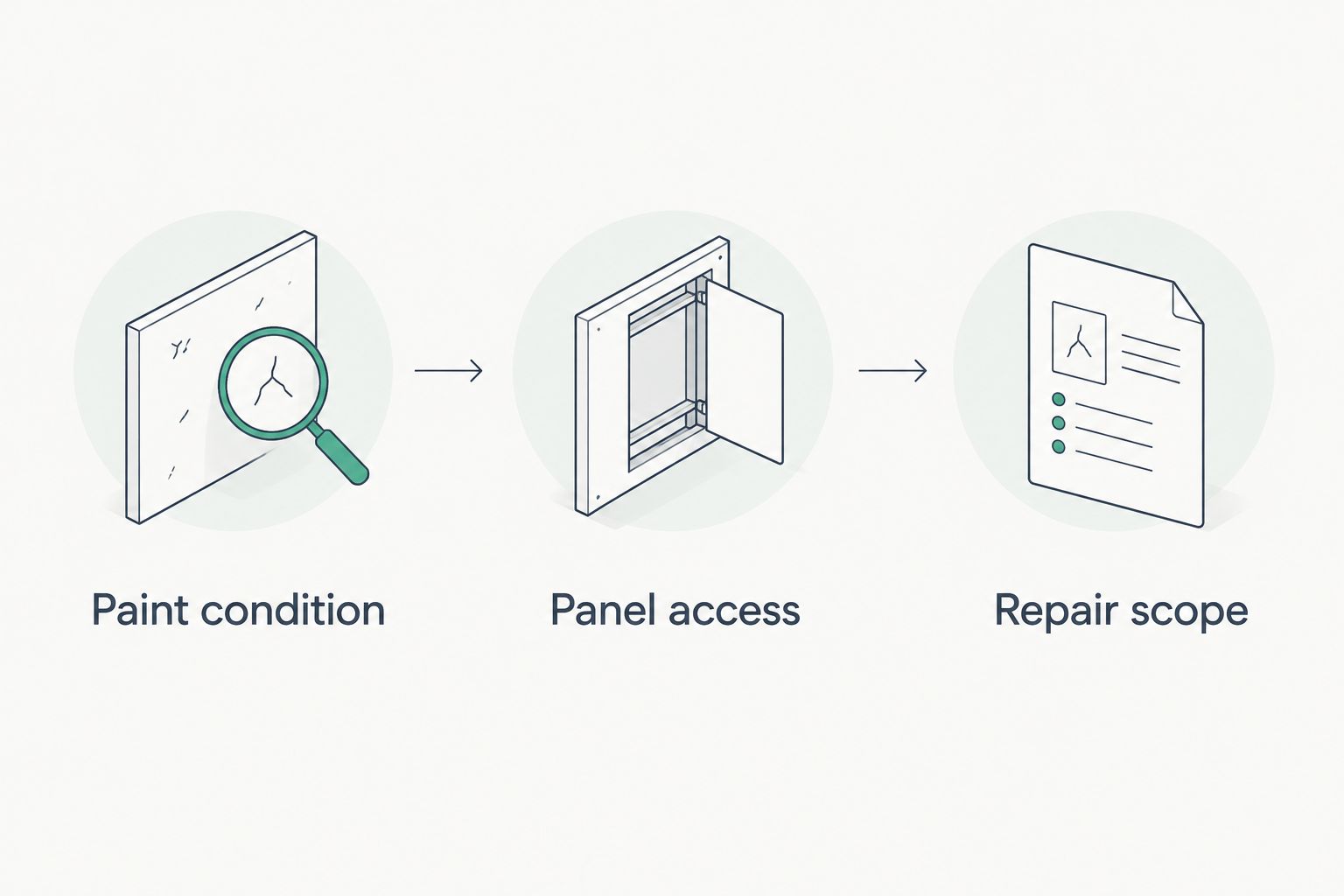
Before booking: use these three checks
A good 2026 booking conversation should end with a clear next step, not a promise based only on a blurry photograph. Follow these three checks in order.
Paint condition
Look for cracked paint, exposed material, chipped edges, and signs of previous repair. Do not attempt to disguise those issues before sending photographs. The technician needs to assess the panel as it is.
Panel access
Identify the panel and the dent's position relative to edges, handles, trim, and body lines. Ask whether access requires removing components. Do not remove trim yourself simply to make the repair appear easier.
Repair scope
Request an explanation of the proposed method and any additional work. Establish whether the next appointment is an assessment or an authorized repair. A clear scope matters more than an immediate promise of a perfect result.
Send four photographs to support the conversation: one whole-panel view, one close-up, and two angled views. These are submission instructions, not a guarantee that photographs can establish repairability. Include the vehicle details and explain how the damage happened.
If the dent followed an accident, describe other affected areas too. Do not narrow the conversation to PDR before the shop considers the wider damage. Your repair method should follow the assessment.
Discuss your collision repair needs
Ask about accident damage, auto glass replacement, and insurance-claim assistance.
How these repair routes are ranked
The order follows the five selection criteria: paint condition, panel access, damage assessment, repair expectations, and written scope. Accident-related assessment comes first because a dent does not describe the full consequences of an impact. Dedicated PDR follows for isolated cosmetic damage, then mobile service for suitable work where convenience matters.
Conventional body repair occupies a different slot: damaged paint or other conditions that require more than paintless correction. This is a decision guide, not a claim that one method produces the best result for every vehicle.
Which paintless dent repair option should you choose?
Choose a dedicated PDR specialist as the default for an isolated dent with intact paint. Choose collision assessment first when the dent followed an accident or sits alongside other damage. Choose mobile service only after confirming that the damage and location fit the work.
In 2026, the strongest booking question remains simple: what makes this repair method appropriate for this panel? A useful answer identifies the finish condition, access, and intended result. If the answer skips those details, keep comparing providers.
FAQ
What's the best paintless dent repair shop in Southern California?
The best fit depends on the damage: a dedicated PDR specialist suits isolated dents with intact paint, while accident-related damage needs collision assessment first. Choose a provider that explains panel access, repair limitations, and the written scope.
Is Mbcollisiongroup a good choice after an accident?
Mbcollisiongroup is a relevant choice for Southern California vehicle owners needing collision repair and insurance-claim assistance after an accident. Ask whether PDR is appropriate for the specific dent rather than assuming factory certification determines the repair method.
Can paintless dent repair fix a dent with cracked paint?
PDR alone does not repair cracked paint. A shop must assess both the panel deformation and the damaged finish before recommending a complete repair plan.
Is mobile paintless dent repair better than visiting a shop?
Mobile PDR is more convenient when the dent and work location are suitable, but it is not inherently a better repair method. Restricted access or more involved work can require a shop setting.
Can a technician decide whether PDR will work from photos?
Photographs support an initial assessment, but they do not replace inspection of the panel. Send a whole-panel view, a close-up, and angled views, and disclose previous repairs.
Does factory certification mean a shop can repair every dent without paint?
No, factory certification does not make every dent suitable for paintless repair. Paint condition, deformation, panel access, and applicable repair requirements still determine the method.
Should I open an insurance claim for a door ding?
Review your policy and the repair assessment before deciding whether to make a claim. Ask your insurer about applicable coverage, the deductible, and claim requirements rather than assuming every cosmetic dent is covered.
One last thing
Tell the technician about previous paint work before any dent repair begins. A panel can look undamaged on the surface and still have a repair history that affects the proposed method. That detail belongs in the first conversation, not after work starts.