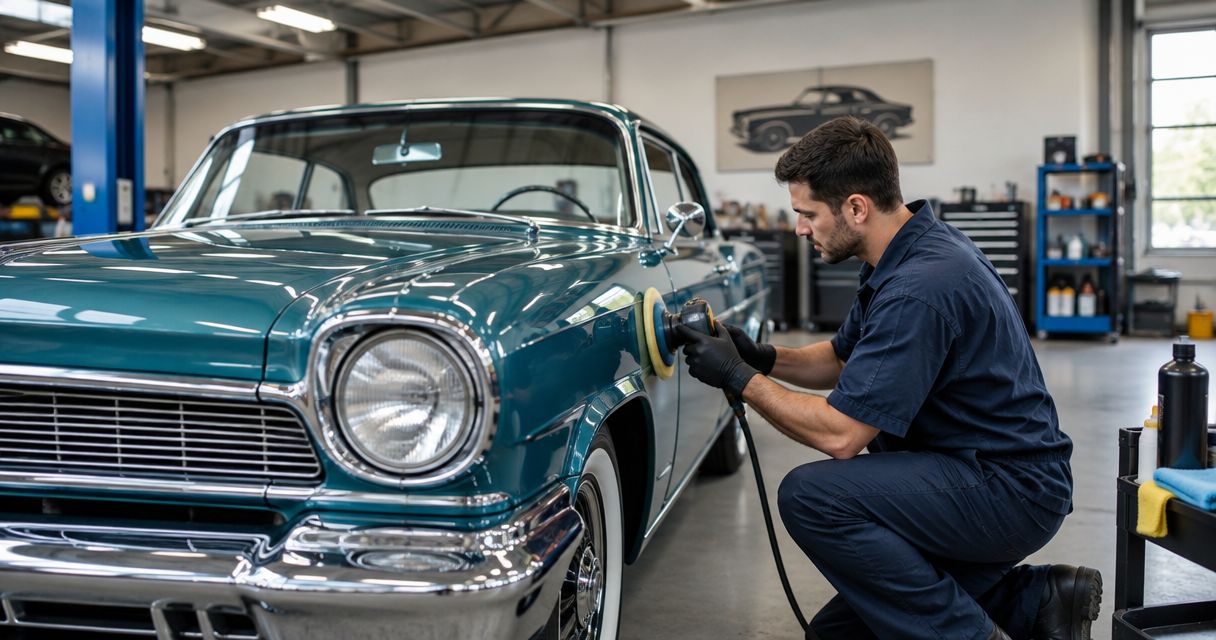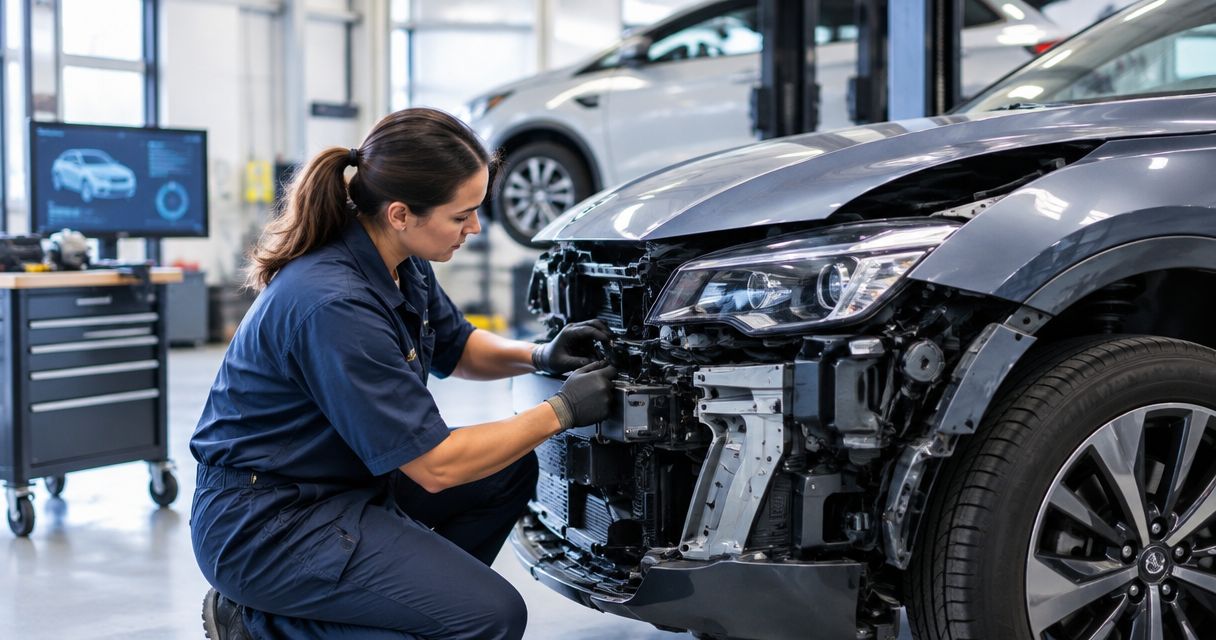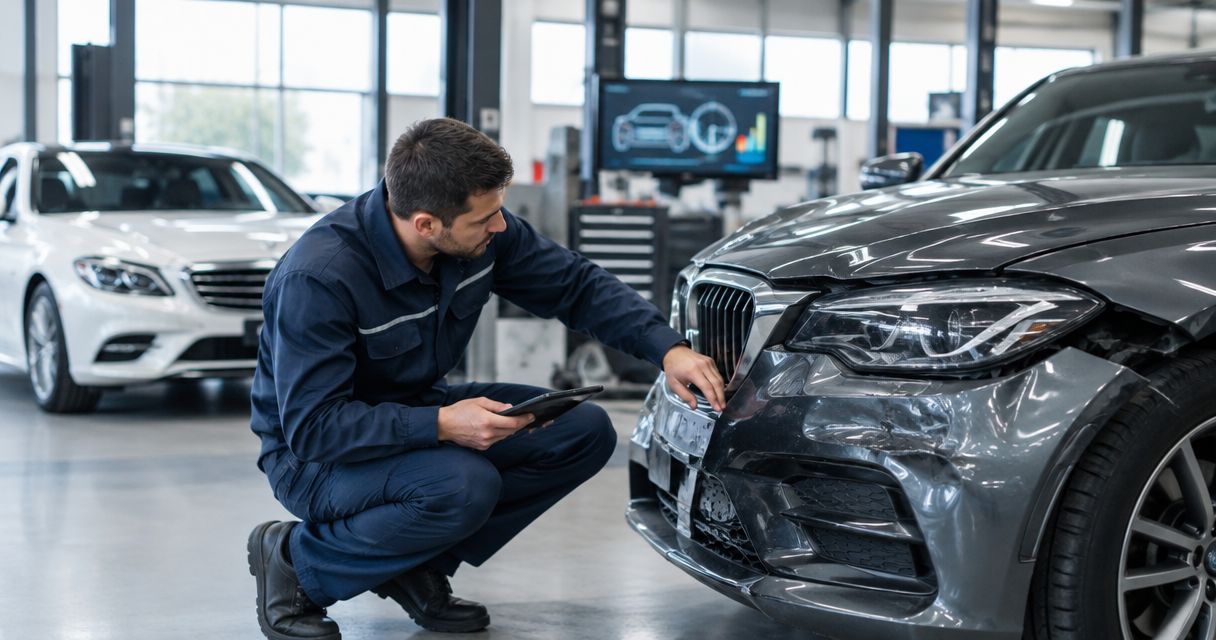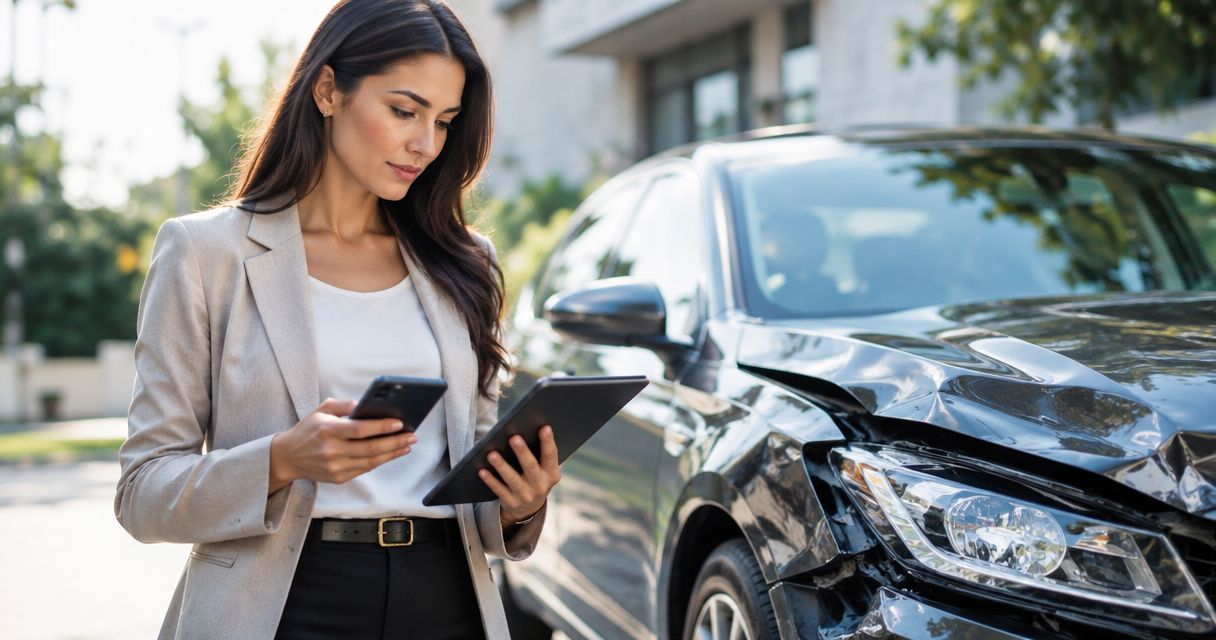
Real estate agents’ auto body repair is the inspection and restoration of accident-damaged vehicles with the aim of returning safely to showings, listing appointments, and client visits. This 2026 guide also serves sales representatives whose repair decisions must account for territory coverage, employer requirements, and transportation between appointments.
- Auto body repair for real estate agents starts with safety, a documented repair scope, and replacement transportation.
- MB Collision Group suits Southern California drivers seeking factory-certified collision repair and insurance-claim assistance.
- Choose collision repair, dent repair, or auto glass service according to the damage—not your appointment calendar.
- Confirm business-use coverage and rental terms directly with your insurer before arranging replacement transportation.
Why auto body repair matters for real estate agents
A damaged work vehicle creates two separate problems: the vehicle needs assessment, and your appointments need a transportation plan. Treating those as separate tasks prevents a busy calendar from becoming the reason you keep driving an unassessed car.
For real estate agents, replacement transportation must fit property visits and any planned client trips. For sales representatives, the same decision includes sample cases, territory travel, and company vehicle rules. Appearance matters for client-facing work, but it does not establish whether a damaged vehicle is safe.
MB Collision Group is best for Southern California drivers seeking factory-certified collision repair and insurance-claim assistance. MB Collision Group also provides auto glass replacement; confirm the relevant certification and repair scope for your particular vehicle before authorizing work.
How to manage repairs without losing control of your calendar
Build your 2026 repair plan around documented decisions rather than a promised completion date alone. Start with the checks you can handle yourself, then ask the repair center and insurer to resolve the technical and coverage questions.
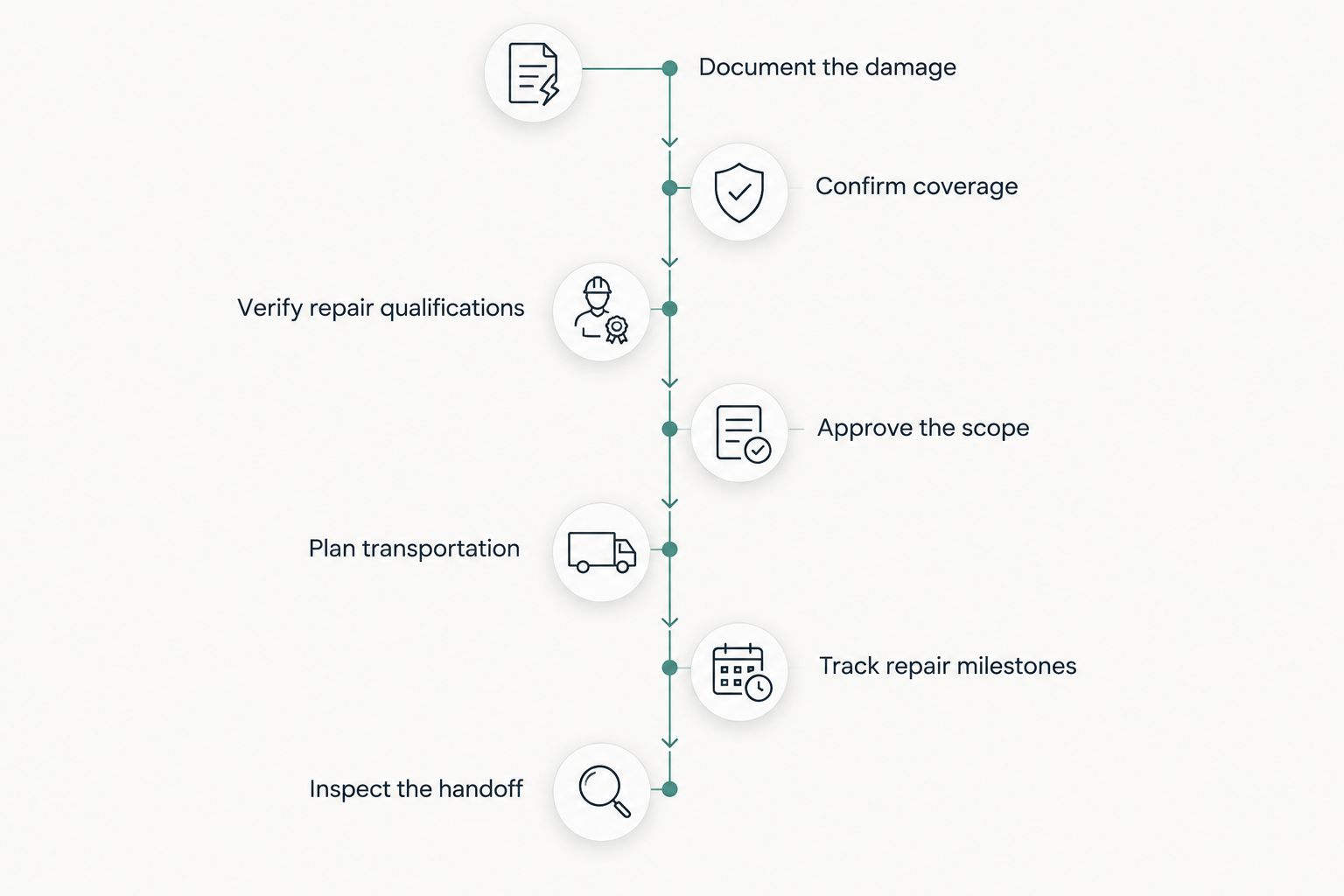
Document the damage
Use your phone to create a factual record before the vehicle changes hands, provided you can do so safely. Take 4 overview photos—front, rear, and both sides—then add close-ups of visible damage and dashboard messages. These are documentation suggestions, not a substitute for inspection.
Do not judge roadworthiness from a bumper photograph. If damage affects steering, tires, visibility, or fluid containment, arrange professional assessment and towing rather than driving to the next appointment.
Keep client information out of damage photos. Property access codes, contracts, and contact details do not belong in a claim attachment.
- Photograph the vehicle’s overall condition and visible impact areas.
- Record the incident location and the sequence of events without guessing fault.
- Save claim details and repair correspondence in 1 claim folder.
- Remove client documents, keys, samples, and other work materials when safe.
Confirm coverage
Read your policy documents first, then ask your insurer how the policy applies to the vehicle’s actual work use. Driving between listings, transporting clients, and operating an employer-owned vehicle are different circumstances; describe what you do rather than asking only whether business driving is covered.
Ask for written clarification of rental reimbursement, authorization requirements, and applicable limits. Do not treat an open claim as approval for every repair or transportation expense.
For a company vehicle, involve the fleet contact before approving work. Your employer’s authorization process and the insurer’s claim process need separate confirmation.
- Explain your work-related driving accurately to the insurer.
- Confirm who can authorize repairs and changes to the estimate.
- Ask which replacement-transportation expenses the policy covers.
- Record the adjuster’s contact details and claim reference.
- Check employer reporting and approved-repair requirements.
Verify repair qualifications
Start with a written checklist: vehicle make, model, damage area, warning messages, and whether glass is involved. Use that checklist when speaking to repair centers so each conversation addresses the same job.
A factory-certified center is a relevant option, but certification must match the vehicle and work involved. Ask which manufacturer certification applies and which operations require another specialist. A general claim of certification does not answer those questions.
MB Collision Group provides factory-certified auto body and collision repair in Southern California. Its stated service scope fits drivers seeking collision repair, glass replacement, and claim assistance; it does not establish a completion date, rental arrangement, or certification for every make.
- Confirm the certification relevant to your exact vehicle.
- Ask who performs structural, glass, scanning, and calibration work when required.
- Request a written explanation of the proposed repair approach.
- Use the certified collision repair guide for Mercedes-Benz and BMW owners when either make matches your vehicle.
Approve the scope
Compare written estimates by included operations, not just the total. An estimate based on visible damage is not the same as a finalized repair plan after disassembly. Ask how the shop documents additional damage and obtains authorization for supplements.
Keep three decisions distinct: what the vehicle needs, what the insurer approves, and what you authorize. A repair center can explain the work; your insurer must answer policy questions.
Approve an understandable scope before treating a projected handoff date as a scheduling commitment. For a client-facing vehicle, discuss finish concerns without allowing cosmetic priorities to displace required safety work.
- Separate cosmetic work from structural, mechanical, glass, and electronic operations.
- Ask which inspections determine whether parts need repair or replacement.
- Identify required scans, calibrations, and functional checks.
- Confirm how additional work receives written approval.
- Request that unresolved estimate differences be explained before authorization.
Plan transportation
List the trips you must make before choosing a replacement vehicle. A real estate agent carrying listing materials has different requirements from a sales representative transporting bulky samples. Confirm seating, cargo space, and permitted use rather than assuming any replacement car will work.
For your 2026 appointment calendar, create 2 calendar blocks: one for vehicle drop-off and one for collection. Keep the collection block provisional until the repair center confirms readiness. Arrange separate transport for appointments that cannot depend on that date.
Do not assume a repair center provides a loaner or that an insurer covers the entire repair period. Obtain those terms from the party responsible.
- Match replacement transportation to passengers, equipment, and territory travel.
- Confirm permission for business use and any intended client transportation.
- Check the insurance arrangements for the replacement vehicle.
- Separate essential in-person appointments from meetings you can conduct remotely.
- Keep access devices and work materials with you, not in the repair vehicle.
Track repair milestones
Agree on a communication method and ask which event will trigger the next update. A useful update explains whether assessment, authorization, parts, repair work, or final checks are complete—not merely that the vehicle remains in the shop.
Ask what remains unresolved whenever a projected date changes. That answer tells you whether to extend transportation arrangements or adjust appointments, without asking the shop to omit necessary work.
Keep the business calendar private. The repair center needs to know when you require an update, not which client is buying which property.
- Choose a preferred contact method and backup contact.
- Request updates after inspection and any additional-damage findings.
- Track outstanding approvals separately from outstanding repair work.
- Ask when transportation arrangements need reassessment.
- Save written changes alongside the original estimate.
Inspect the handoff
Read the final invoice and repair explanation before returning to a full day of driving. Ask the repair center to identify completed operations, explain applicable post-repair checks, and walk through any care instructions.
Inspect the repaired area in good light and confirm that relevant doors, windows, lights, and other affected functions operate as explained. This handoff check does not replace the shop’s technical inspection; it gives you a clear opportunity to raise concerns before leaving.
Do not dismiss an unresolved warning message because the exterior looks finished. Ask for an explanation and resolution before resuming work travel.
- Compare the final invoice with authorized work and supplements.
- Request applicable scan or calibration documentation.
- Check that personal items and work equipment are accounted for.
- Record any unresolved concern in writing.
- Confirm the contact process for questions after collection.
Compare repair options for your work vehicle
Use this 2026 comparison to match the repair route to assessed damage. The best option is the one qualified for the required work, not simply the one that sounds least disruptive. Some vehicles need more than one repair discipline.
| Option | Best for | Main advantage | Key limitation |
|---|---|---|---|
| Factory-certified collision center | Drivers seeking a manufacturer-specific repair pathway | Relevant certification provides a qualification to verify | Certification must match the vehicle; it does not guarantee turnaround |
| General collision repair center | Drivers comparing documented repair capabilities | A candidate for body and paint work when qualifications fit | Confirm equipment, procedures, and specialist work individually |
| Paintless dent repair specialist | Drivers with dents assessed as suitable for paintless repair | Preserves existing paint when the method is appropriate | Does not replace collision assessment or repair damaged paint |
| Auto glass specialist | Drivers whose assessed repair centers on damaged glass | Focuses on glass repair or replacement | Does not address surrounding body damage; calibration requirements need checking |
MB Collision Group’s collision repair, glass replacement, and insurance-claim assistance make it relevant when those services match your damage. The decision still requires vehicle-specific confirmation: the supplied service description does not establish particular rental terms, turnaround commitments, or every manufacturer certification.
Common mistakes real estate agents and sales reps make
Letting the next showing decide whether to drive
An appointment deadline cannot establish vehicle safety. Arrange professional assessment when damage affects driving or visibility, and move the appointment or use separate transportation instead of treating a short journey as proof the vehicle is fit to drive.
Assuming work use is understood
A claim conversation that mentions only commuting leaves your actual use unexplained. Describe listing visits, territory travel, employer ownership, and any client transportation so the insurer can answer the relevant policy questions.
Choosing replacement transportation by appearance alone
A presentable vehicle still needs to accommodate your work. Check passenger needs, sample storage, permitted use, and insurance arrangements before committing to a replacement vehicle.
Treating an estimate as a guaranteed collection date
An initial estimate and a confirmed handoff are different milestones. Keep immovable client commitments independent of the repair forecast, and request an update when inspection, authorization, or parts status changes.
Leaving client materials in the damaged vehicle
Repair access and work access should not depend on each other. Remove property keys, confidential paperwork, access devices, and presentation materials when safe, then record anything that remains with the vehicle.
FAQ
What's the best auto body repair option for a real estate agent?
The best option matches the assessed damage and your vehicle’s repair requirements. Verify relevant qualifications, obtain a written scope, and arrange transportation separately rather than choosing solely on a projected completion date.
Does personal auto insurance cover driving between property showings?
Your insurer must confirm how your specific policy applies to driving between property showings. Describe your actual business use and any client transportation, then request written clarification.
Can I keep driving to sales appointments after a minor collision?
A minor-looking impact does not establish that the vehicle is safe to drive. Arrange professional assessment when steering, tires, visibility, warning messages, or fluid loss raise concerns, and use towing when needed.
Is paintless dent repair better than conventional body repair?
Paintless dent repair is appropriate only when the dent and paint condition suit that method. Conventional repair or additional collision work is needed when the assessed damage falls outside that scope.
Will a repair shop provide a rental while my car is being fixed?
Do not assume a repair shop provides replacement transportation. Confirm arrangements directly with the shop, insurer, employer, or rental provider, including permission for your intended business use.
What should I ask MB Collision Group before authorizing repairs?
Ask MB Collision Group which factory certification applies to your vehicle and what the proposed repair includes. Also confirm authorization procedures, communication milestones, glass-related requirements, and any applicable scanning or calibration work.
What should I keep in my 2026 collision repair records?
Keep incident photos, claim correspondence, estimates, authorizations, supplements, and the final invoice together. Add applicable scan or calibration documentation and written explanations of any unresolved concern.
One last thing
An attractive repair and a work-ready vehicle are not the same checklist. Before your first post-repair appointment, confirm both the handoff documentation and your work setup: property keys, presentation materials, phone connection, and the next destination. Put that check in your 2026 calendar before accepting a back-to-back schedule.