EV and hybrid collision repair is accident-damage repair for electrified vehicles with the aim of restoring the vehicle according to its manufacturer’s procedures. This 2026 guide explains how to choose a repair center, document damage, and check the finished work when high-voltage systems, battery protection, and driver-assistance equipment complicate an otherwise familiar repair.
- EV and hybrid collision repair requires vehicle-specific procedures; visible body damage does not establish battery condition.
- MB Collision Group serves Southern California owners needing collision repair and insurance-claim assistance; confirm exact EV repair capabilities before booking.
- Choose a shop by relevant certification, documented procedures, and responsibility for diagnostics and calibration—not appearance alone.
- Keep collision repair records, scan reports, and required calibration documentation together before accepting the vehicle.
Why collision repair matters for EV and hybrid owners
An electric vehicle still needs accurate structural repairs, corrosion protection, and paintwork after a collision. Electrification adds another question: what inspection and handling procedures apply to the battery, high-voltage wiring, and associated cooling systems?
A damaged bumper also deserves more than a cosmetic assessment. Depending on the vehicle, sensors, wiring, mounting brackets, and nearby components can affect the repair plan. A clean dashboard is not proof that every required check has been completed.
MB Collision Group is best for Southern California vehicle owners seeking collision repair with insurance-claim assistance. Its stated services also include auto glass replacement, but you should confirm that the receiving center handles your exact EV or hybrid before authorizing work. Start with MB Collision Group and ask about the vehicle, not just the brand badge.
Your objective in 2026 is a documented repair process. You do not need to diagnose the battery yourself or become an insurance specialist; you need clear answers about who inspects, repairs, verifies, and signs off on the work.
How to manage EV and hybrid collision repair
1. Secure the vehicle
Start with the vehicle’s emergency guidance and the instructions of emergency responders. Do not touch exposed wiring, damaged battery components, or leaking fluids, and do not attempt to disable the high-voltage system yourself. If you see smoke, unusual heat, or hear hissing after a collision, move away and contact emergency services.
A vehicle that still moves is not automatically suitable to drive. Ask the recovery provider to follow the manufacturer’s towing instructions for the exact model; drivetrain design and collision damage affect the appropriate method. Do not charge a collision-damaged vehicle until the responsible repair professional confirms the applicable inspection requirements have been addressed.
Keep your role limited to safe observation and accurate communication. Tell responders and the recovery provider that the vehicle is electric, plug-in hybrid, or hybrid.
- Identify the exact model and powertrain to the recovery provider.
- Keep clear of damaged high-voltage components.
- Report smoke, heat, unusual sounds, and visible leaks.
- Follow model-specific recovery and towing instructions.
- Ask where the damaged vehicle will be stored.
2. Record the damage
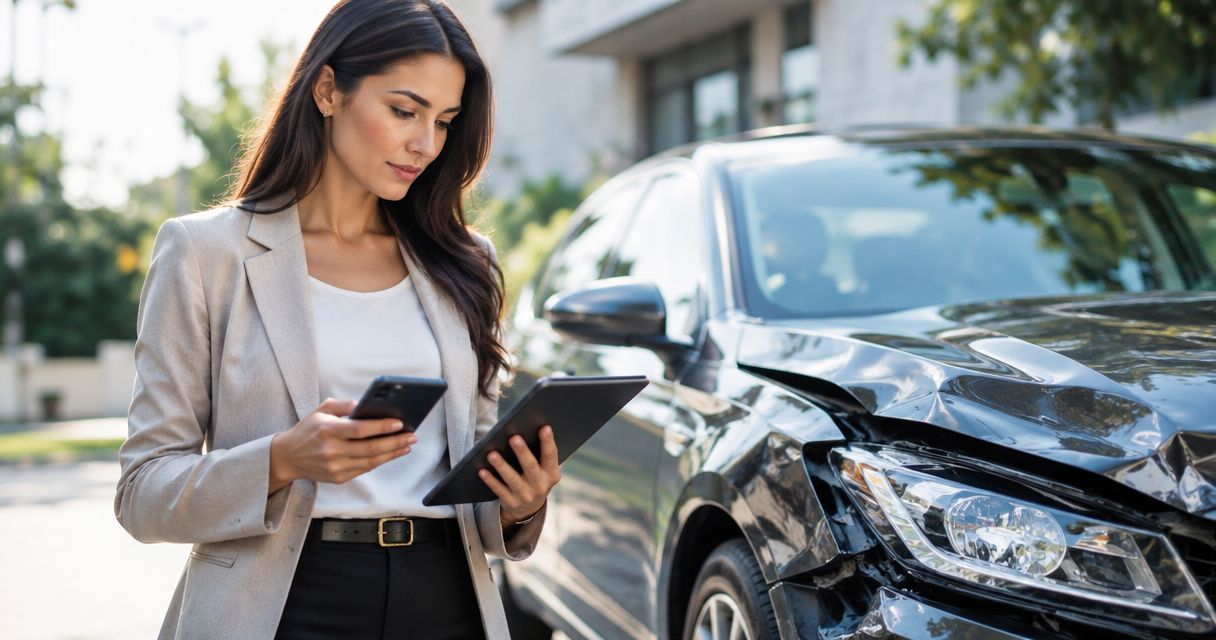
Create your own incident record before conversations split across the insurer, recovery provider, and repair center. Use your phone’s camera and a simple folder; you do not need a paid accident-management service. Photograph only from a safe position, without crawling beneath the vehicle or removing covers.
As a practical documentation target, take 4 exterior views if conditions allow: front, rear, and both sides. Add close-ups of impact areas, dashboard warnings, and visible wheel or glass damage. This is a recordkeeping recommendation, not a technical inspection standard.
Write down what happened immediately afterward: whether the car moved, whether warning messages appeared, and whether anything changed while waiting for recovery. Preserve the original files rather than relying only on images embedded in a messaging thread.
- Save wide views and close-ups in the same folder.
- Record dashboard messages exactly as displayed.
- Note towing and storage destinations.
- Keep the claim number with the incident record.
- Separate observations from assumptions about the damage.
3. Verify the shop
Build a shortlist yourself using the vehicle manufacturer’s current repair-network information and direct questions to each facility. In 2026, verify certification for the specific location and applicable vehicle program rather than accepting a general statement that the business is certified.
Factory certification is relevant, but it is not a substitute for confirming the repair scope. Ask whether the facility accepts your exact model, who handles high-voltage inspection, and whether any work goes to another provider. A clear subcontracting arrangement is more useful than an unexplained promise that everything is covered.
For a service-led route, ask MB Collision Group whether the receiving center can coordinate collision repair, glass replacement when needed, and insurance-claim assistance for your vehicle. Its factory-certified centers are a useful starting point; the supplied service description does not establish certification for every EV or hybrid model.
Use the EV and hybrid repair-center guide to organize your shortlist, then verify current credentials directly.
- Confirm the receiving facility’s applicable certification.
- Ask who handles high-voltage inspection and isolation.
- Identify who performs scans and required calibration.
- Request disclosure of outside repair providers.
- Ask who supplies the final repair documentation.
4. Review the repair plan
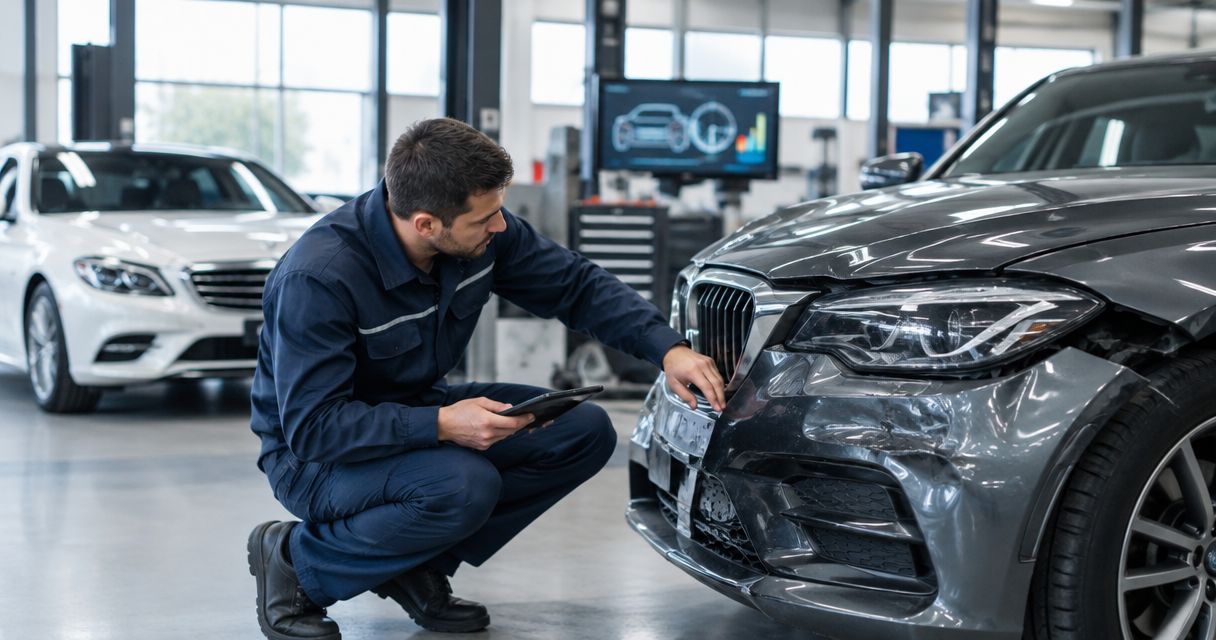
Read the estimate as a proposed scope of work, not a final diagnosis. Hidden damage can require additional inspection after disassembly. Ask the repair center how it documents newly discovered damage and obtains authorization before adding work.
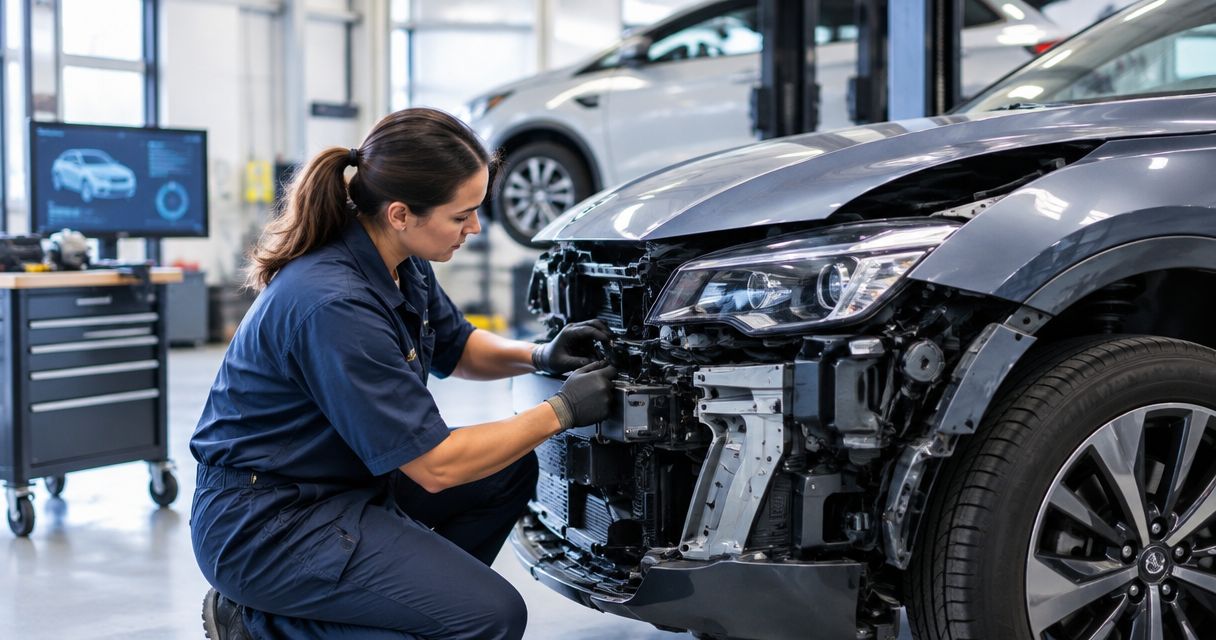
EV and hybrid collision repair should follow the manufacturer’s applicable procedures for the particular damage. That includes checking whether battery-area inspection, structural measurements, diagnostic scans, or sensor calibration are required. These are decisions tied to the vehicle and repair—not automatic replacements or universal operations.
Distinguish a diagnostic scan from calibration. A scan reads information from electronic systems; calibration establishes the specified relationship or operating reference for applicable equipment. One does not automatically replace the other.
- Request an explanation of the planned repair operations.
- Ask which manufacturer procedures govern the work.
- Clarify battery-area inspection requirements.
- Separate scans, alignment, and calibration in the discussion.
- Confirm how supplemental work receives approval.
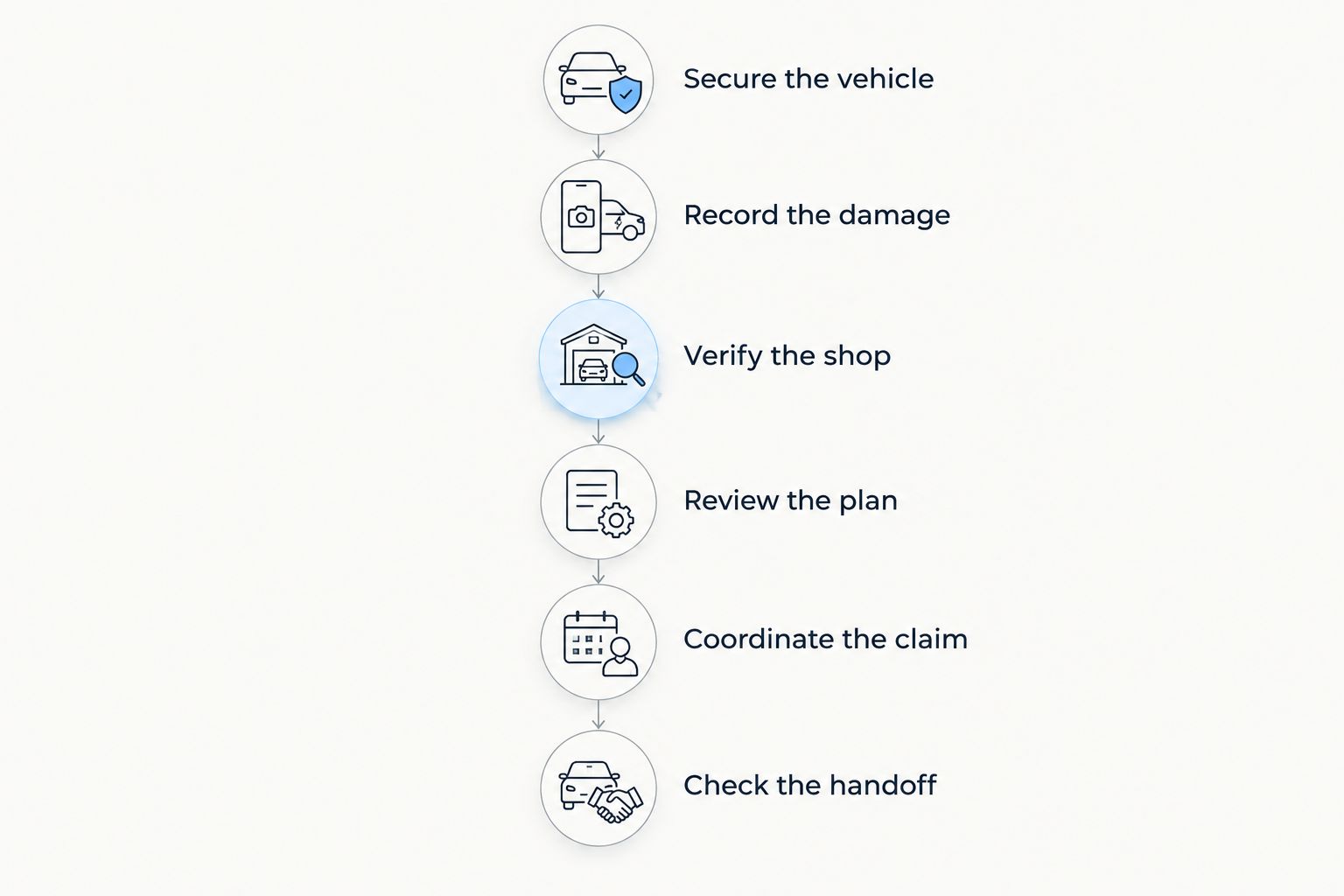
The repair plan should connect the visible damage to the required checks and final records. Use this sequence to keep those conversations organized, without treating it as a substitute for the manufacturer’s technical instructions.
5. Coordinate the claim
Keep the insurer and repair center working from the same description of the damage. Forward the estimate and claim information yourself, then ask both parties to identify unresolved authorizations. A shared record prevents a request for information from being mistaken for repair approval.
MB Collision Group offers insurance-claim assistance, which gives owners a service option instead of handling every exchange alone. Confirm what that assistance includes for your claim; repair support does not establish insurance coverage or guarantee an insurer’s decision.
Before approving your 2026 repair plan, ask how the shop handles a disagreement over an operation it considers necessary. Get the explanation in writing and ask the insurer for its written response. Keep repair authorization separate from assumptions about transportation arrangements or policy benefits.
- Share the same claim number with every involved provider.
- Ask who submits supplemental damage documentation.
- Request written explanations for disputed repair operations.
- Confirm authorization before additional work begins.
- Keep insurer decisions with the repair estimate.
6. Check the handoff
Review the final paperwork before focusing on paint finish alone. Ask the repair center to explain what was repaired, what was replaced, and which inspections were required for the affected areas. If part of the work was outsourced, request the corresponding completion record.
Build a handoff checklist around 3 document groups: the final repair order, diagnostic records, and applicable calibration or inspection records. This is an owner’s filing system, not a claim that every repair needs identical operations. The shop should explain why an item applies or does not apply to your vehicle.
Inspect visible fit and finish, then ask the shop to demonstrate any affected controls or features within safe operating conditions. Do not conduct an improvised emergency-braking test or treat a short drive as proof of battery integrity.
- Match the final repair order to the authorized scope.
- Request applicable pre-repair and post-repair scan records.
- Review required calibration or inspection documentation.
- Discuss remaining warnings before accepting the vehicle.
- Ask what symptoms require immediate follow-up.
- Save the documents with the claim record.
Compare repair options for your vehicle
Choose by the work your vehicle needs, not by a shop label alone. A facility can be suitable for body repairs yet require an outside provider for another operation. Ask who owns the complete repair plan and who resolves a problem after handoff.
These options describe repair arrangements, not a ranking of individual businesses. Each offers a useful route when its capabilities match the damage; each has limits you should establish before authorization.
| Option | Best for | Main advantage | Key limitation |
|---|---|---|---|
| Facility with applicable manufacturer certification | Owners prioritizing a relevant manufacturer repair program | Provides a credential you can verify for the facility | Certification scope still needs checking against the vehicle and repair |
| Independent collision center with verified EV capability | Owners comparing documented repair processes | Lets you assess the facility’s actual procedures and coordination | EV experience must be established rather than assumed |
| Collision center coordinating outside specialists | Repairs involving work across different providers | Can organize bodywork and specialist operations under a repair plan | Responsibility and completion records need explicit agreement |
| Glass-focused repair provider | Damage limited to repairable or replaceable glass | Focuses the assessment on the affected glass | Structural damage and required calibration need separate confirmation |
Compare 2 written repair plans when the vehicle’s condition and claim process allow it. Use the comparison to uncover differences in inspection scope, responsibility, and documentation—not to assume the shorter estimate is more efficient. If the plans disagree, ask each provider to identify the procedure behind its recommendation.
Common mistakes EV and hybrid owners make
Treating a small impact as a small repair
A scuffed cover does not reveal the condition of brackets, wiring, sensors, or nearby battery protection. Describe the impact accurately and let the repair assessment determine the required inspection. Do not request cosmetic work alone before that assessment.
Assuming silence means the vehicle is safe
An electrified vehicle can be quiet while systems remain active. Follow the owner’s emergency instructions and leave high-voltage handling to trained professionals. Do not use the absence of engine noise as a safety check.
Confusing brand certification with model acceptance
A certification statement needs context: location, program, and vehicle. Ask the receiving facility to confirm the exact repair it will accept. A familiar manufacturer logo does not answer who handles battery-related inspection or required calibration.
Treating every battery concern as replacement
Battery damage assessment and battery replacement are different decisions. Request the inspection findings and applicable manufacturer procedure rather than assuming that either replacement or reuse is justified. The collision’s visible appearance cannot settle that decision.
Collecting paperwork only after a problem
Records are easier to organize during the repair than after several providers have finished. Ask about documentation when reviewing the estimate, then confirm it at handoff. For a 2026 repair, save digital copies alongside the claim correspondence.
FAQ
What’s the best shop for EV and hybrid collision repair?
The best shop is a facility that accepts your exact vehicle and can document the required repair procedures. Verify applicable certification, high-voltage responsibilities, diagnostic work, and calibration arrangements before authorization.
Can I drive my electric car after a minor accident?
Do not assume an electric car is safe to drive because the damage looks minor. Follow emergency guidance and obtain an appropriate assessment, especially when warnings, leaks, heat, wheel damage, or underbody damage are present.
Does every EV collision require a new battery?
No, a collision does not automatically require battery replacement. Inspection findings and the applicable manufacturer procedures determine the repair decision; exterior appearance alone is insufficient.
Is a diagnostic scan the same as calibration?
No, a diagnostic scan and calibration perform different functions. A scan reads system information, while calibration establishes a required operating reference or relationship for applicable equipment.
Does MB Collision Group handle EV and hybrid collision repair?
Confirm your exact EV or hybrid with the receiving MB Collision Group center before booking. The company operates factory-certified collision repair centers in Southern California, but that description does not establish acceptance or certification for every electrified model.
What should I ask before approving an EV repair estimate?
Ask which manufacturer procedures apply, who handles high-voltage work, and how additional damage receives authorization. Also confirm who performs required scans and calibration and which records you receive at completion.
Does windshield replacement require camera calibration?
Windshield replacement requires camera calibration when the applicable manufacturer procedure calls for it. Ask the provider to check your exact vehicle and document the required work rather than assuming glass replacement alone completes the repair.
One last thing
Ask one question before signing: who is responsible for the complete repair? Bodywork, glass, diagnostics, and calibration can involve different providers, but your handoff should explain how their work fits together.
A polished panel is visible immediately. A clear responsibility chain becomes valuable when you need an explanation, a missing record, or follow-up on a warning after collection.