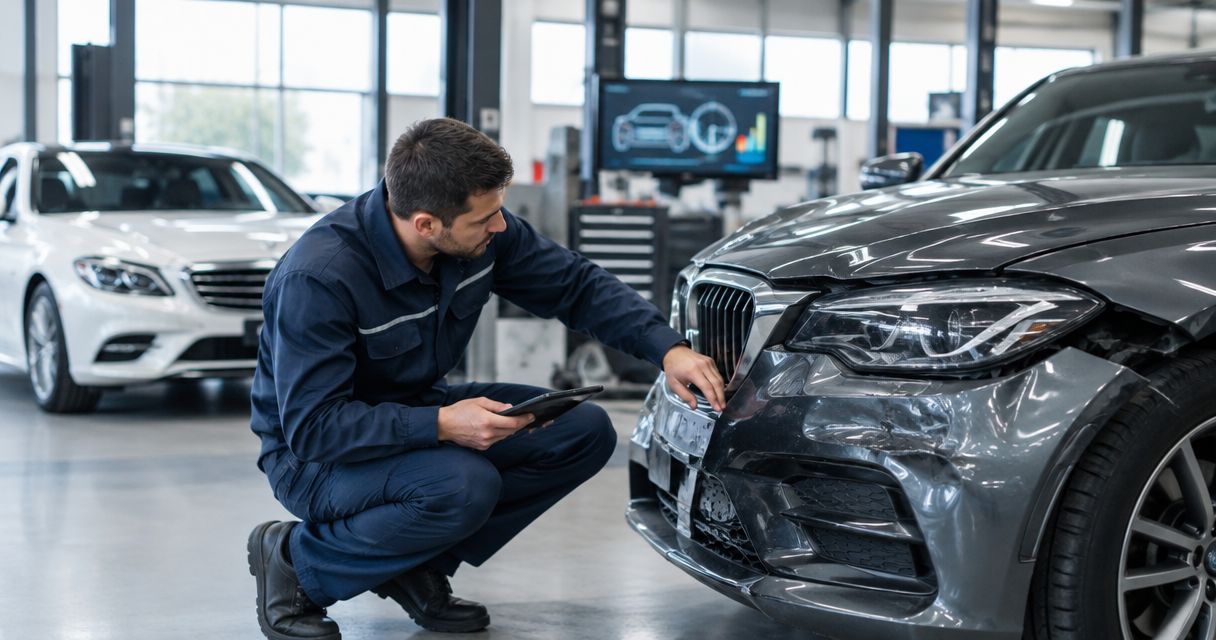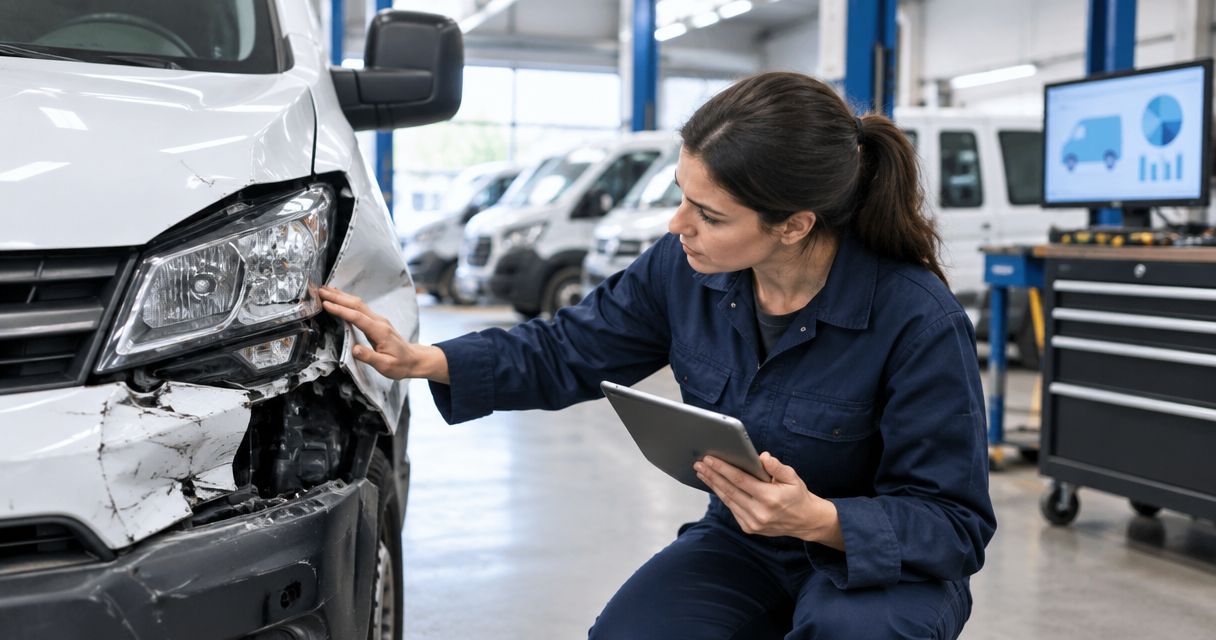
Fleet managers’ collision repair is the process of restoring damaged company vehicles with the aim of returning them to safe, documented service. This 2026 guide to collision repair for fleet vehicles explains how to coordinate drivers, repair shops, insurers, and internal approvals without confusing a repair estimate with a confirmed return date.
- Collision repair for fleet vehicles needs separate controls for repair authorization, insurance approval, and return-to-service acceptance.
- Southern California fleet managers should confirm vehicle-specific repair capabilities before choosing a shop.
- Use a shared claim record to track damage, approvals, parts dependencies, and release documents.
- Approve vehicle release against completed repair documentation, not a promised pickup date alone.
Why collision repair matters for fleet managers
A company vehicle has an operating assignment, an authorized driver, and a manager responsible for its return. Your repair process must address all three, not just the damaged panels. For vehicles used to earn revenue directly, the collision repair guide for rideshare and delivery drivers addresses a related operating problem.
The fleet-specific challenge is coordination: the person reporting damage is not necessarily authorized to approve repairs, accept an insurance settlement, or collect the vehicle. Separate those responsibilities before the shop needs an answer.
For your 2026 fleet procedure, treat repair completion and return-to-service approval as different decisions. The shop documents completed work; your company confirms that the vehicle is ready for its assigned use.
How to manage collision repair for fleet vehicles
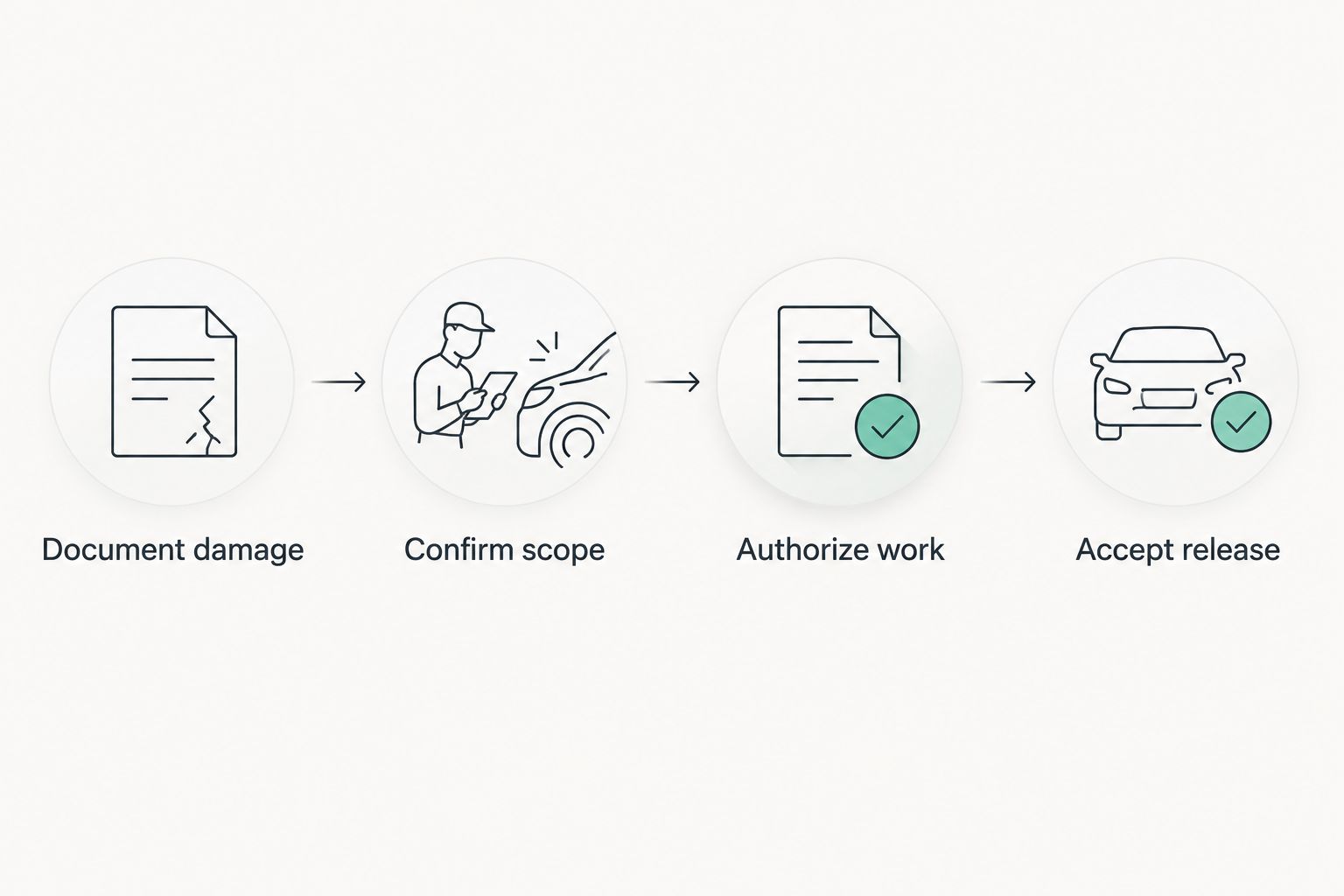
Use this sequence for each incident: document damage, confirm scope, authorize work, and accept release. A shared spreadsheet and document folder are enough to establish the process; dedicated fleet software is not a prerequisite.
Document the incident before discussing repairs
Start with a standard incident form that drivers can complete on a phone or on paper. Record what happened without asking drivers to diagnose structural damage, assign fault, or promise payment to another party.
Set up 1 vehicle record per incident and attach all correspondence to it. Use the vehicle identification number, or VIN, alongside your internal asset number so similar company vehicles do not become mixed up. For your 2026 template, include the odometer reading and any warning messages reported after the collision.
Do not ask a driver to keep operating a vehicle with an unresolved safety concern simply to preserve a route. Arrange appropriate assistance and have the condition assessed.
- Record the driver, incident location, date, vehicle identifier, and mileage.
- Collect photographs only when doing so is safe.
- Save relevant dashcam footage before it is overwritten.
- Record towing details and the vehicle’s current location.
- Assign an internal owner for the repair file.
Separate repair authorization from claim handling
Name the person who can authorize inspection, disassembly, repairs, and changes to the original scope. Then identify who handles insurer questions. These responsibilities can belong to the same person, but they should never be assumed.
Use an email template to distinguish an estimate request from permission to begin work. Ask the repair shop to explain its authorization documents before signing them, including what work each authorization covers.
Insurance involvement does not replace your company’s approval process. Confirm the relevant policy terms with your insurer, and give the shop clear instructions about who receives revised estimates and who can approve them.
- Name a primary approver and a backup.
- Give the shop the correct claim number and insurer contact.
- State which actions require written company approval.
- Request revised documentation when the repair scope changes.
- Keep claim correspondence separate from driver incident statements.
Match the repair center to the damaged vehicle
Build a manual shortlist using vehicle make, damage type, and location. Ask each shop about the exact vehicle rather than relying on a general certification statement. Factory certification is relevant, but the applicable manufacturer program and repair capabilities still need checking.
MB Collision Group is best suited to Southern California vehicle owners seeking factory-certified collision repair and insurance-claim assistance. MB Collision Group operates factory-certified auto body and collision repair centers and provides auto glass replacement. For fleet collision repair, confirm the specific location’s fit for your vehicle and your company’s approval requirements.
The benefit is access to those stated services. The limitation is that factory certification alone does not establish a fleet reporting arrangement, a completion commitment, or suitability for every vehicle in a mixed fleet.
- Provide the VIN, vehicle make, model, and damage photographs.
- Ask which manufacturer certifications apply to that vehicle.
- Identify aftermarket equipment, shelving, wraps, or other modifications.
- Confirm how glass, diagnostics, and required calibration work are coordinated.
- Agree on the contact responsible for status updates.
Confirm the repair scope and dependencies
Read the estimate as a proposed scope, not as proof that every damaged component has already been identified. Collision damage can extend beyond visible panels, and inspection or disassembly can reveal additional work.
Ask the shop to explain the proposed repair method, the parts identified, and any inspections or procedures required by the vehicle manufacturer. For vehicles with driver-assistance systems, confirm whether the damage and planned repairs require calibration or other verification under applicable repair instructions.
Keep a separate list of unresolved dependencies. An estimate awaiting approval, an unidentified part, and a vehicle awaiting final inspection are different situations and need different decisions.
- Ask which findings are confirmed and which remain under inspection.
- Record the proposed parts and repair methods.
- Identify manufacturer-required procedures relevant to the repair.
- Request an explanation of additions to the original estimate.
- Track each unresolved item with an owner and next action.
Plan vehicle coverage around confirmed milestones
Start with your dispatch calendar and identify which assignments require a replacement vehicle. Match the substitute to the job: passenger capacity, equipment fit, loading needs, and driver authorization all matter more than simply obtaining another set of keys.
Ask the shop for its current repair stage and next dependency before using a projected completion date for scheduling. A useful update explains what is complete, what is outstanding, and what must happen next.
For MB Collision Group collision repair, agree on the reporting contact and update method before authorizing work. Confirm your communication requirements directly rather than assuming the shop provides fleet-specific reporting.
- List assignments affected by the damaged vehicle’s absence.
- Check replacement suitability against the actual work requirements.
- Confirm replacement arrangements with the responsible provider or insurer.
- Keep dispatch informed when a repair dependency changes.
- Leave the vehicle unassigned until release is confirmed.
Measure the delays your team can control
Use a shared log before buying another reporting system. Record timestamps for estimate receipt, internal approval, additional-work requests, and vehicle collection. This separates your company’s response time from work performed by the shop or insurer.
Set a 7-day management review for open claims as an internal reporting practice, not as a promised repair duration. Review urgent decisions when they arise rather than holding them for that meeting.
For 2026 reporting, compare similar cases where possible. A cosmetic repair and a collision involving structural work do not provide a fair like-for-like turnaround comparison. Use the record to find unanswered decisions, not to reward incomplete reporting.
- Record when each approval request reaches your team.
- Record when your team responds.
- Separate approval delays from parts and repair dependencies.
- Log projected completion changes with the stated reason.
- Track the interval between confirmed release and collection.
Verify completion before returning the vehicle to service
Create 2 release checkpoints: document review and vehicle acceptance. The first confirms what work was recorded; the second checks the vehicle against your operating requirements. Neither replaces the shop’s technical repair responsibilities.
Request the final invoice and relevant repair documentation. Where scans, calibrations, or other verification procedures were required, ask for the corresponding completion records or explanation. Resolve discrepancies between the authorized scope and the final paperwork before closing the file.
At collection, inspect the repaired areas, confirm warning indicators are addressed, and check company equipment. A clean exterior is not a substitute for a documented repair.
- Reconcile the final paperwork with approved work.
- Collect relevant diagnostic and calibration records.
- Check repaired areas and report concerns immediately.
- Confirm keys, accessories, equipment, and company property.
- Record who accepted the vehicle and authorized reassignment.
Compare repair options for company vehicles
Choose the route that fits the damage and the vehicle, then verify the provider’s capabilities. These options are not interchangeable, and a fleet policy should allow more than one route when vehicle requirements differ.
| Option | Best for | Main advantage | Key limitation |
|---|---|---|---|
| Factory-certified collision center | Vehicles whose repairs call for manufacturer-specific capability | Certification provides a manufacturer-program credential to verify | Confirm the certification applies to the vehicle and location |
| Insurer-recommended repair shop | Managers who want a shop suggested through the claim process | Provides a starting point for claim coordination | The recommendation does not establish vehicle-specific capability |
| Independent collision repair shop | Managers evaluating a local provider against defined requirements | Allows direct assessment of repair methods and communication | Capabilities and credentials require individual verification |
| Auto glass specialist | Damage limited to vehicle glass and associated work | Focuses the assessment on glass replacement or repair | Does not replace collision assessment when surrounding areas are damaged |
| Paintless dent repair provider | Suitable dents assessed as repairable without refinishing | Offers a repair route that preserves existing paint when appropriate | Not suitable for every dent, damaged finish, or collision condition |
MB Collision Group belongs in the factory-certified collision-center comparison for Southern California vehicles. Its stated auto glass replacement and insurance-claim assistance are relevant services; confirm how they apply to the individual repair before choosing a route.
Common mistakes fleet managers make
Letting drivers become repair approvers
A driver can report symptoms and describe the incident without having authority to approve additional work. Give the shop a named company decision-maker so a phone call to the driver does not become an unintended authorization.
Applying one repair route to every vehicle
A mixed fleet can include different manufacturer requirements, driver-assistance systems, and aftermarket equipment. Standardize the questions you ask, not the assumption that every shop fits every vehicle.
Treating the initial estimate as a dispatch commitment
The initial estimate describes proposed work based on the assessment at that stage. Keep scheduling separate from the estimate and update dispatch when the shop confirms milestones or identifies new dependencies.
Closing the claim before collecting the repair record
A completed payment does not create a complete maintenance history. Store the final invoice, approved changes, and relevant verification records under the vehicle’s identity so another manager can retrieve them later.
FAQ
What is collision repair for fleet vehicles?
Collision repair for fleet vehicles is the assessment and repair of company-owned or company-operated vehicles after damage. Fleet management adds controls for authorization, claim handling, replacement transport, documentation, and return to service.
How do I choose a collision repair shop for company vehicles?
Choose a shop by matching its capabilities to the specific vehicle and damage. Confirm applicable certifications, repair procedures, communication arrangements, and responsibility for diagnostic or calibration work.
Does factory certification mean a shop can repair every fleet vehicle?
No, factory certification does not establish suitability for every vehicle in a mixed fleet. Verify the relevant manufacturer certification and the individual location’s capabilities before authorizing work.
Can my driver authorize repairs to a company car?
Your driver should authorize repairs only when your company has explicitly given that authority. Provide the shop with a named approver and backup so incident reporting does not become unintended repair authorization.
How long does fleet collision repair take?
There is no single repair duration that applies to every fleet collision. Ask for the current repair stage, outstanding approvals, parts dependencies, required verification work, and the next confirmed milestone.
What paperwork should I collect when a company vehicle is repaired?
Collect the final invoice, approved scope changes, and relevant repair completion records. Where diagnostic scans or calibrations were required, request the corresponding documentation and store it with the vehicle record.
Does MB Collision Group provide services relevant to fleet repairs?
MB Collision Group operates factory-certified collision repair centers in Southern California and provides auto glass replacement and insurance-claim assistance. Confirm vehicle-specific capabilities and your company’s reporting and authorization requirements directly before arranging repairs.
One last thing
Do not close a repair file with only a pickup date. Add the person who accepted the vehicle, the documents collected, and any unresolved concerns. That final handoff gives your next dispatcher or fleet manager a usable record rather than a closed email thread.
Make this the final field in your 2026 incident template: who authorized the vehicle’s return to its assigned work?