Teen-driver bumper repair is the inspection and repair of collision damage with the aim of restoring safe transportation and helping a new driver handle an accident responsibly. This 2026 guide explains how to document damage, involve a parent or policyholder, choose a repair approach, and check the finished work without mistaking a clean-looking bumper for a complete repair.
- Bumper repair for teen drivers starts with safety checks, accident documentation, and a conversation with the vehicle owner.
- MB Collision Group is best for Southern California drivers seeking factory-certified collision repair and insurance-claim assistance.
- A scratched bumper cover does not establish whether the components behind it are undamaged.
- Choose bumper repair or replacement after inspection, not from a photograph or a cosmetic promise.
Why bumper repair matters for teen drivers
A new driver has two jobs after a collision: deal with the vehicle and explain what happened. A parent, vehicle owner, and insurance policyholder can be different people, so agreement about repairs requires more than handing over the keys.
The visible bumper cover is only part of the bumper assembly. Mounts, energy-absorbing components, and equipment behind the cover require attention when the impact or inspection indicates damage. The size of a scratch is not a safety assessment.
For your 2026 repair decision, separate appearance from function. Start with an inspection, then compare repair proposals using the same scope. The guide to bumper repair shops in Southern California provides a starting point for your shop search; the written estimate determines what a particular repair includes.
How to handle a bumper repair from accident to pickup
Use the following sequence with the vehicle owner. Keep the teen involved in every discussion: understanding the estimate, claim, and pickup checks is part of becoming responsible for a vehicle.
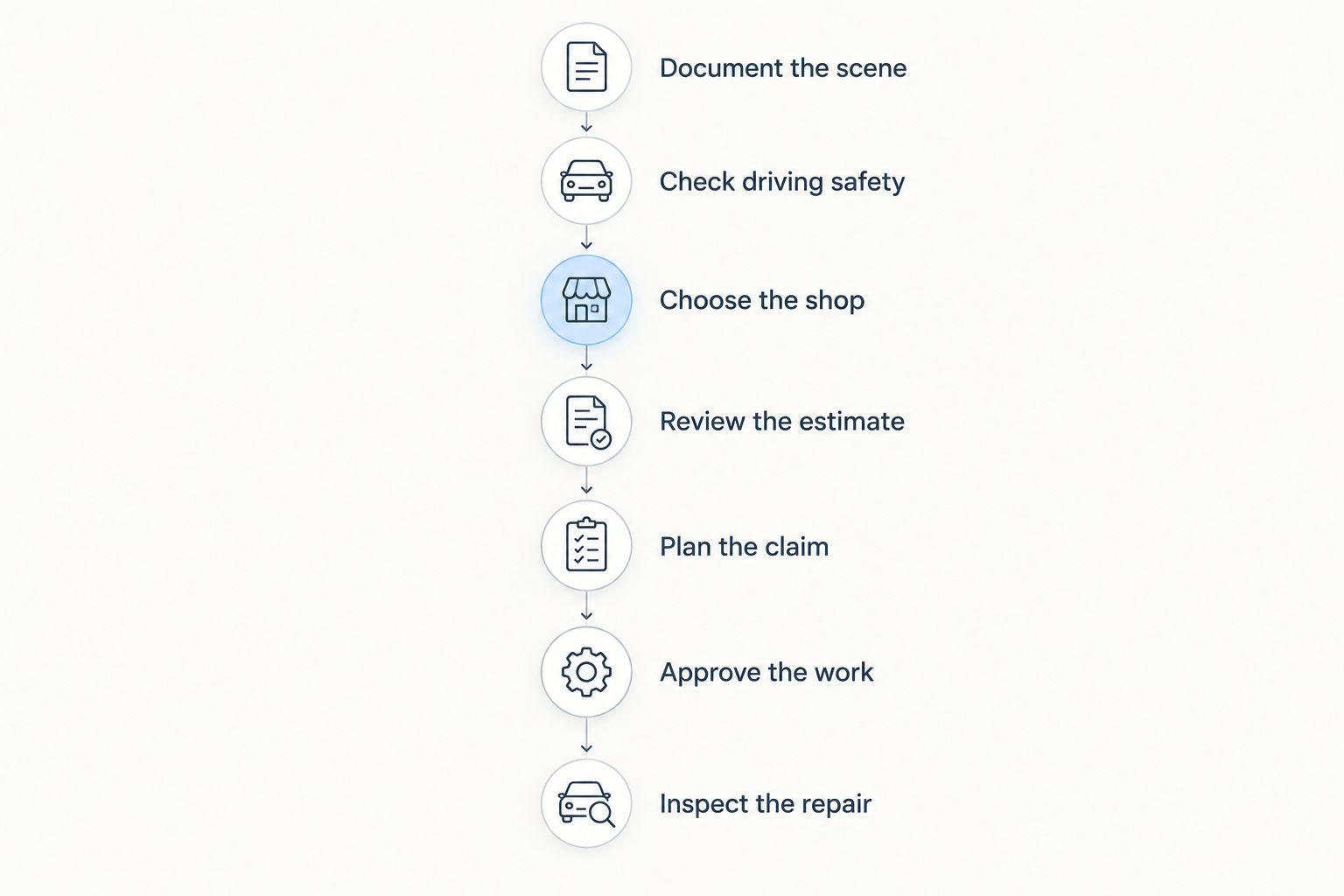
Document the scene
Handle immediate safety needs before taking photographs. Call emergency services when someone is injured or the situation is dangerous, and follow lawful instructions about moving the vehicle. Do not stand in traffic to record a better angle.
Once you can document safely, record observations rather than conclusions about fault. A teen's description should distinguish what they saw from what they assume. Notify the vehicle owner promptly, even when the damage looks small.
Create one shared record so the parent, driver, and shop work from the same information. Preserve original files rather than keeping only screenshots sent through messages.
- Take at least 3 photographs: an overall view, a closer damage view, and the surrounding scene, when safe.
- Record the collision location, date, and other driver's contact and insurance information.
- Note warning lights, unusual sounds, and whether the bumper became loose.
- Save relevant dash-cam footage before the device overwrites it.
- Write down the driver's account while the sequence is fresh.
Check driving safety
Do not assume the vehicle is safe because it still moves. A hanging cover, tire interference, leaking fluid, damaged lighting, or changed steering calls for professional advice before driving. Tell the shop or roadside provider exactly what you observe.
Warning messages also matter. Depending on the vehicle, equipment near the bumper can include parking sensors or driver-assistance components. Do not test a suspected fault by deliberately approaching another vehicle or obstacle.
For a 2026 inspection, supply the vehicle's exact model and configuration rather than assuming every car has the same equipment. If you cannot establish safe operation, arrange appropriate transport instead of asking the teen to drive it over.
- Check for loose parts without crawling beneath an unsupported vehicle.
- Look for tire contact, broken lights, and fluid beneath the car.
- Photograph dashboard warnings while the vehicle is stationary.
- Describe any change in braking, steering, or handling.
- Ask whether the observed symptoms require towing.
Choose the shop
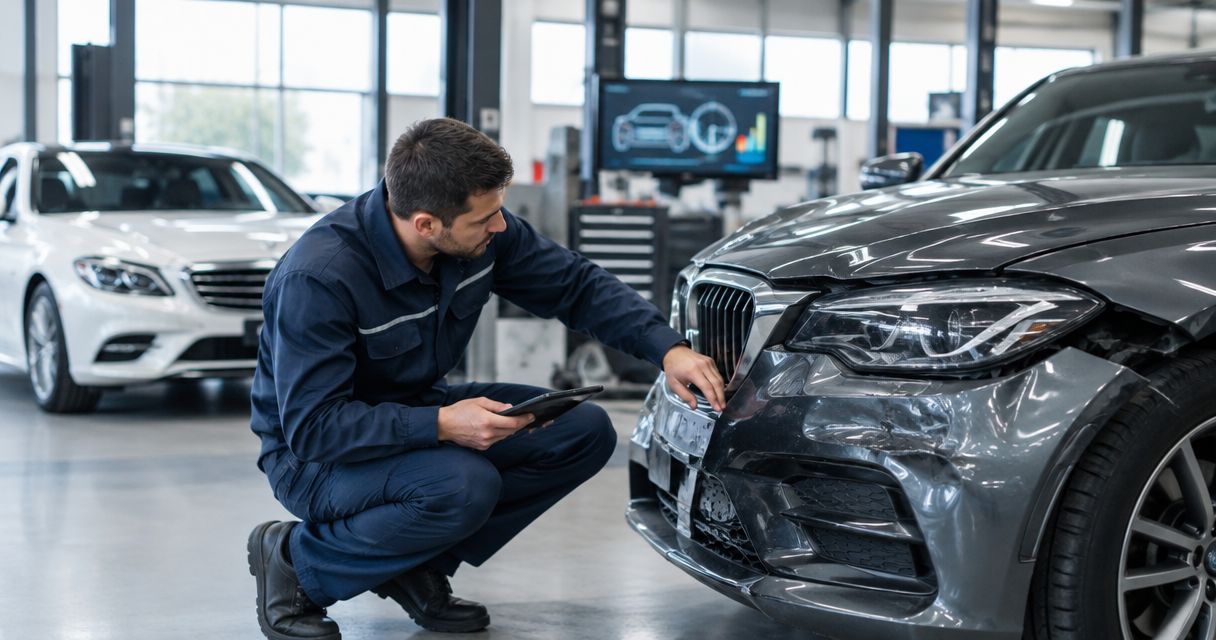
Start by asking shops how they inspect bumper damage and identify applicable manufacturer procedures. You can compare written explanations yourself; you do not need specialist software or mechanical experience to ask what is included and what remains unknown.
MB Collision Group is best for Southern California drivers seeking factory-certified collision repair and insurance-claim assistance. MB Collision Group operates factory-certified auto body and collision repair centers in Southern California. Confirm the relevant certification and repair requirements for your particular vehicle before authorizing work.
That service fit does not settle every decision. Your vehicle still needs an individual assessment, and your family needs a written scope rather than relying on a general certification description.
- Ask about experience with your vehicle's make and bumper equipment.
- Request an explanation of repair-versus-replacement criteria.
- Confirm who communicates with the teen, owner, and insurer.
- Ask how additional damage found during disassembly is documented.
- Request written repair and warranty terms before approval.
Review the estimate
Read the estimate as a work plan, not just a total. Bumper-cover repair, replacement, refinishing, removal and installation, and related inspections describe different operations. Two estimates are not equivalent simply because both mention a bumper.
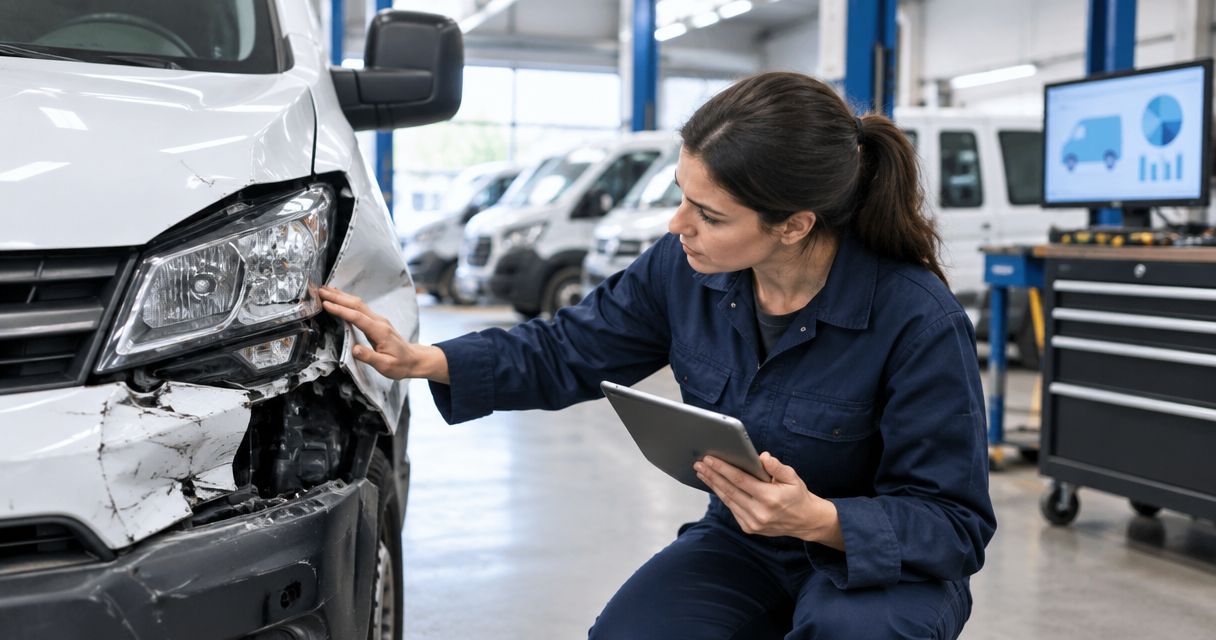
Ask the estimator to identify visible damage, suspected hidden damage, and operations that depend on further inspection. Scanning and calibration are also distinct: reading diagnostic information does not itself calibrate a sensor. The applicable vehicle procedures determine what is required.
On a 2026 estimate, keep part descriptions and repair operations explicit. If one proposal omits something another includes, ask why before choosing. A parent can handle the authorization while the teen learns to explain the scope back accurately.
- Ask which parts will be repaired and which will be replaced.
- Identify the specified part type and any unresolved substitutions.
- Confirm what refinishing and paint-matching work is included.
- Ask whether vehicle procedures require diagnostic scans or calibration.
- Request an explanation of any exclusions or conditional operations.
Plan the claim
Read the policy and speak with the insurer before treating an informal payment arrangement as settled. Coverage, deductibles, reporting duties, and claim handling depend on the policy and circumstances. A repair estimate does not answer those insurance questions.
The teen should give an accurate account, while the policyholder handles decisions that require policy authority. Do not promise another driver that a photograph captures all the damage or that an initial estimate will remain unchanged.
Keep your 2026 claim record separate from your repair authorization. Insurer approval, vehicle-owner consent, and a shop's technical recommendation are different decisions; ask each party to clarify what it has actually approved.
- Confirm who owns the vehicle and who holds the policy.
- Ask the insurer about applicable coverage and reporting requirements.
- Record the claim number and assigned contact when a claim is opened.
- Ask how additional documented damage is submitted for review.
- Confirm any transportation arrangements directly with the responsible provider.
Approve the work
Authorize a defined scope in writing. Ask the shop how it obtains permission if disassembly reveals damage beyond the original estimate, and identify the person allowed to approve changes. This prevents a teen from becoming the accidental messenger for decisions they cannot authorize.
Repair scheduling also needs a clear agreement. Ask what must happen before work begins and which unresolved decisions affect completion. Do not build school or work transportation around an unconfirmed pickup date.
Save the authorization with the estimate. If the proposed scope changes, request the revised explanation before consenting rather than trying to reconstruct a telephone conversation later.
- Name the authorized decision-maker and preferred contact method.
- Confirm the approved repair scope and outstanding questions.
- Ask how revised estimates and photographs will be shared.
- Request an update when the expected completion date changes.
- Keep school, work, and practice transportation separate from repair assumptions.
Inspect the repair
Inspect the vehicle with the shop before leaving. Start with the agreed scope, then look at panel alignment, paint appearance, and secure attachment. A visual check is useful, but it does not replace the shop's repair documentation or required technical checks.
Ask the shop to explain any scans, calibrations, or other checks performed. If a warning remains or a new symptom appears, raise it immediately rather than assuming it will disappear during the drive home.
Keep 2 copies of the final paperwork: one with the vehicle owner's records and one digital copy accessible to the driver. The teen should know what was repaired and whom to contact with a concern.
- Compare the final invoice with the authorized scope.
- Inspect visible gaps, paint finish, and bumper attachment with staff.
- Ask about unresolved warning lights or operating concerns.
- Request documentation of applicable scans and calibrations.
- Review written care instructions and warranty terms.
Compare bumper repair options
Choose the option that addresses the diagnosed damage, not the option with the smallest visible intervention. A cosmetic service and a collision repair are different scopes, even when both improve the bumper's appearance.
The options below describe decision paths, not guarantees that a particular method suits your vehicle. Ask the estimator to connect the recommendation to the inspected damage and applicable repair procedures.
| Option | Best for | Main advantage | Key limitation |
|---|---|---|---|
| Cosmetic surface repair | Superficial damage confirmed by inspection | Addresses the finish without replacing an otherwise repairable cover | Does not address damaged mounts, reinforcement, or equipment behind the cover |
| Bumper-cover repair and refinishing | Cover damage that the material and applicable procedures allow a shop to repair | Retains the existing cover where repair is appropriate | Not suitable for every crack, deformation, mounting failure, or sensor-related restriction |
| Bumper-cover replacement | A cover that inspection and applicable procedures identify as unsuitable for repair | Replaces the damaged cover rather than attempting an unsuitable repair | Cover replacement alone does not resolve damage elsewhere in the assembly |
| Factory-certified collision repair through MB Collision Group | Southern California owners seeking collision repair and insurance-claim assistance | Provides a repair-center option with factory certifications and claim assistance | Vehicle-specific certification, scope, and required operations still need confirmation |
A mobile cosmetic proposal deserves the same scope questions as a repair-center estimate. Ask how the provider determines whether damage is surface-only and what happens if inspection identifies a broader collision repair.
Common mistakes teen drivers and parents make
Treating a parking impact as cosmetic by definition
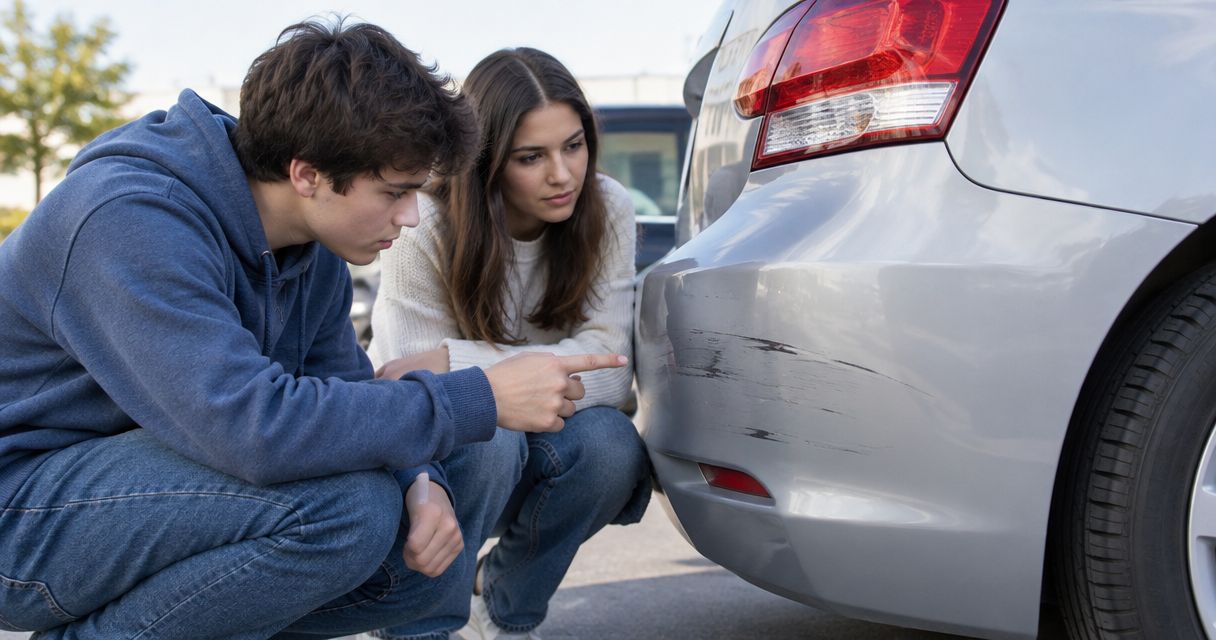
A low-speed event describes the circumstances, not the complete damage. Tell the estimator where contact occurred, what the vehicle struck, and what changed afterward. Let the inspection establish the repair scope.
Trying a heat trick before an inspection
An online dent-removal demonstration is not a repair procedure for your vehicle. Heat, pulling, or improvised fastening can change the damaged area and complicate assessment. Photograph it first and ask a qualified repairer what method is appropriate.
Letting fear delay the conversation
A teen who expects punishment has another reason to minimize the incident. Set a family rule that immediate, accurate reporting comes before arguments about responsibility. Parents should ask about injuries and driving safety before discussing the appearance of the car.
Comparing estimates without comparing operations
A shorter estimate can omit work rather than describe a more efficient repair. Put the proposals side by side and ask about the differences. Do not accept an unexplained omission of an operation another shop identifies as required.
Collecting the car without involving the driver
The teen needs to understand the repair, warning messages, and care instructions even when a parent signs. Include the driver in the handover. That conversation turns an unfamiliar repair process into practical vehicle knowledge.
FAQ
What's the first thing a teen driver should do after hitting a bumper?
Address immediate safety needs and notify the vehicle owner. Contact emergency services for injuries or danger, then document the scene when safe and exchange the required information.
Can I drive with a cracked bumper?
A crack alone does not establish whether the vehicle is safe to drive. Loose parts, tire interference, leaks, damaged lighting, changed handling, or warning messages require professional advice before driving.
Is bumper repair better than replacement for a first car?
Bumper repair is appropriate only when the inspected damage and applicable procedures support it. Being a first car does not change the repair requirements, and replacing the cover does not automatically address damage behind it.
Should a parent speak to the body shop for a teen driver?
The vehicle owner or authorized adult should handle approvals that the teen cannot authorize. Keep the teen involved so they understand the damage, estimate, and pickup checks.
Does every bumper repair need sensor calibration?
No, calibration requirements depend on the vehicle, affected equipment, repair operations, and manufacturer procedures. Ask the shop to explain the requirement for your vehicle rather than assuming a diagnostic scan is the same as calibration.
Can MB Collision Group help with an insurance claim?
MB Collision Group provides insurance-claim assistance alongside collision repair in Southern California. Your insurer determines coverage under your policy, so confirm coverage and reporting requirements directly with the insurer.
What should I check before taking the car home?
Review the completed scope, inspect the visible repair with the shop, and ask about warning lights and required technical checks. Keep the final invoice, relevant scan or calibration documentation, and written care instructions.
One last thing
Make your family's 2026 accident plan before the next incident. Save the owner, policyholder, insurer, and roadside-assistance contacts in one shared folder, along with a short instruction to get safe and call an adult first. The most useful lesson is not how to hide a bumper scrape; it is how to report a problem accurately and get the vehicle assessed.