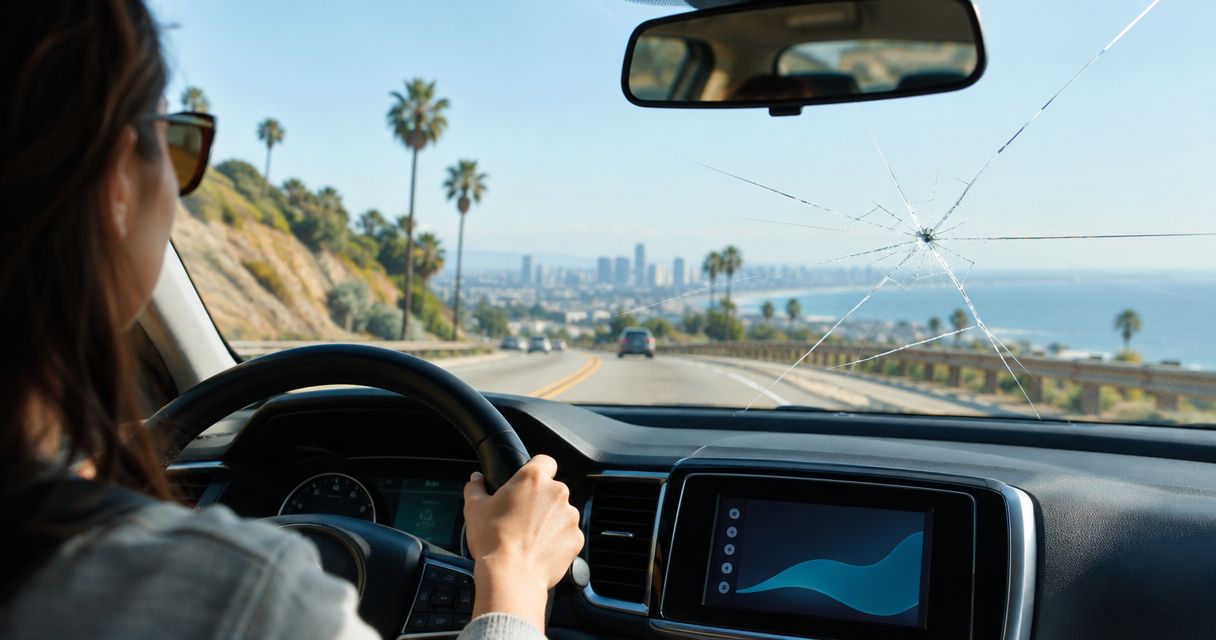
You can drive with a cracked windshield in California only if the damage does not impair your vision; California Vehicle Code §26710 prohibits highway driving when a defective windshield or rear window impairs the driver's view. A small crack is not automatically legal, and an appointment for replacement does not authorize you to drive with obstructed visibility.
- Can you drive with a cracked windshield in California? Only when damage does not impair your vision.
- California Vehicle Code §26710 addresses impaired visibility, not a universal permitted crack length.
- A 48-hour repair notice is not permission to keep driving normally.
- MB Collision Group provides auto glass replacement and insurance-claim assistance in Southern California.
Can you drive with a cracked windshield in California?
California's rule turns on impaired vision, not simply whether a crack exists. California Vehicle Code §26710 makes highway operation unlawful when a windshield or rear window is defective enough to impair the driver's vision to the front or rear.
For your 2026 decision, separate the legal question from the repair question. A glass technician evaluates the damage and repair options; the statute establishes the visibility requirement for driving.
MB Collision Group provides auto glass replacement and collision repair in Southern California. An inspection helps establish the repair scope, but scheduling one does not establish that your vehicle is safe to drive there.
| Windshield condition | What it means for driving | Your next move |
|---|---|---|
| Damage interrupts your view of traffic, pedestrians, or signals | Impaired visibility falls within the statutory prohibition | Stop somewhere safe and arrange repair without driving the obstructed vehicle |
| Damage appears outside your normal viewing area | Location alone does not establish legality or glass condition | Arrange a glass assessment rather than assuming it is harmless |
| Cracks create glare or visual distortion | Visibility matters under actual driving conditions | Do not continue when you cannot see clearly |
| Damage followed a collision | Glass damage does not establish the condition of the rest of the vehicle | Assess collision damage as well as the windshield |
A passenger-side crack is not an automatic exception. You still need a clear view across the windshield when turning, checking intersections, and watching for people approaching from either side.
Why this matters
A windshield problem is not just a question of avoiding a citation. Your ability to recognize a pedestrian, read a signal, or judge another vehicle's movement depends on an unobstructed view.
The same damage can look different against bright sunlight, oncoming headlights, or a wet road. Judge visibility under the conditions you will encounter, not only while the car is parked in shade.
In 2026, the practical decision remains straightforward: arrange an assessment promptly, and do not drive when the damage impairs your view. Insurance approval and appointment timing do not change that standard.
Does California allow cracks below a certain size?
California Vehicle Code §26710 does not provide a universal permitted crack length. Treat claims that every crack below a particular measurement is legal as an unreliable shortcut.
Repair guidelines and traffic law answer different questions. A technician considers whether damaged glass is suitable for repair, while the driving rule addresses whether the defective glass impairs your vision.
A small damaged area directly in your sightline deserves attention even if a larger crack sits elsewhere. Neither location nor length, considered alone, is a complete driving assessment.
Avoid using a coin, ruler, or online photo as a legal clearance test. Describe the damage to a qualified glass provider and explain whether you see distortion, reflected light, branching cracks, or interference with traffic visibility.
What happens if an officer issues a windshield repair notice?
California Vehicle Code §26710 authorizes an officer to issue written notice directing the owner or driver to make repairs within 48 hours. The statute also restricts operation afterward except as necessary to comply with that notice.
The 48-hour notice is not an unrestricted grace period. It does not convert a windshield that impairs visibility into a lawful choice for commuting, errands, or a planned road trip.
If you receive a notice in 2026, read the actual paperwork before making arrangements. Follow its repair and proof-of-correction instructions, and distinguish the repair deadline from any separate court or administrative deadline shown on your documents.
Keep the repair invoice and any required correction documentation. A shop receipt records the work performed; follow the issuing authority's instructions for establishing that the violation has been corrected.
Do not assume that making a reservation closes the matter. Arrange the work, complete the required correction process, and retain the records.
Why the driving and repair decision varies
Windshield damage needs an individual assessment because the visible crack is only part of the problem. These factors explain why two seemingly similar cracks can lead to different recommendations:
- Sightline: Damage across the area you use to watch traffic directly affects the visibility question.
- Distortion and glare: Cracks and damaged glass can interfere with what you see even without completely blocking an object.
- Damage pattern: A localized chip and branching cracks require different technical assessments.
- Edge involvement: Damage near the windshield edge affects a technician's evaluation of the glass and repair suitability.
- Vehicle equipment: Windshield-mounted cameras and related driver-assistance systems affect replacement procedures.
- Collision involvement: A crash can require inspection beyond the glass, including surrounding body damage.
These are assessment factors, not permission slips. An apparently favorable detail, such as damage on the passenger side, does not cancel an actual visibility problem.
Should you repair the windshield or replace it?
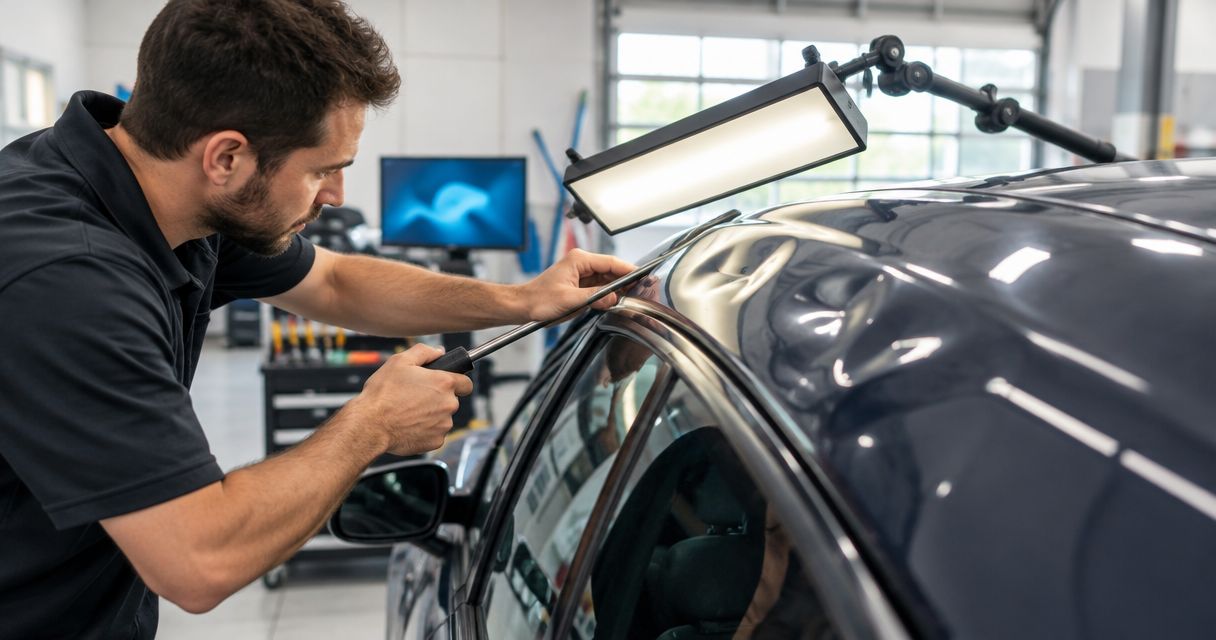
Have the glass inspected before choosing repair or replacement. Repair suitability depends on the damage, its location, and applicable technical guidance; replacement becomes the relevant option when the windshield is not suitable for repair.
For a 2026 appointment, describe any cameras or sensors near the windshield and whether the damage followed an accident. Ask the provider to explain the proposed procedure rather than selecting an option solely from a photograph.
| Option | Best for | Benefit | Limitation |
|---|---|---|---|
| Windshield repair | Damage a qualified technician determines is repairable | Retains the existing windshield | Not every crack or chip qualifies; a visible mark can remain |
| Windshield replacement | Damage that is unsuitable for repair | Replaces the damaged glass | Requires proper installation and any vehicle-specific procedures |
Ask what result to expect from a repair. Filling damaged glass does not promise that every visible trace will disappear, and appearance is not the only criterion for an acceptable result.
For replacement, ask how the shop determines the correct glass and whether the vehicle manufacturer's procedures require camera calibration. Windshield replacement does not mean every vehicle needs the same calibration process.
MB Collision Group is a fit for Southern California vehicle owners seeking auto glass replacement and insurance-claim assistance. Confirm the requirements for your specific vehicle before authorizing work; factory certification does not substitute for checking the applicable repair procedure.
What should you do before driving anywhere?
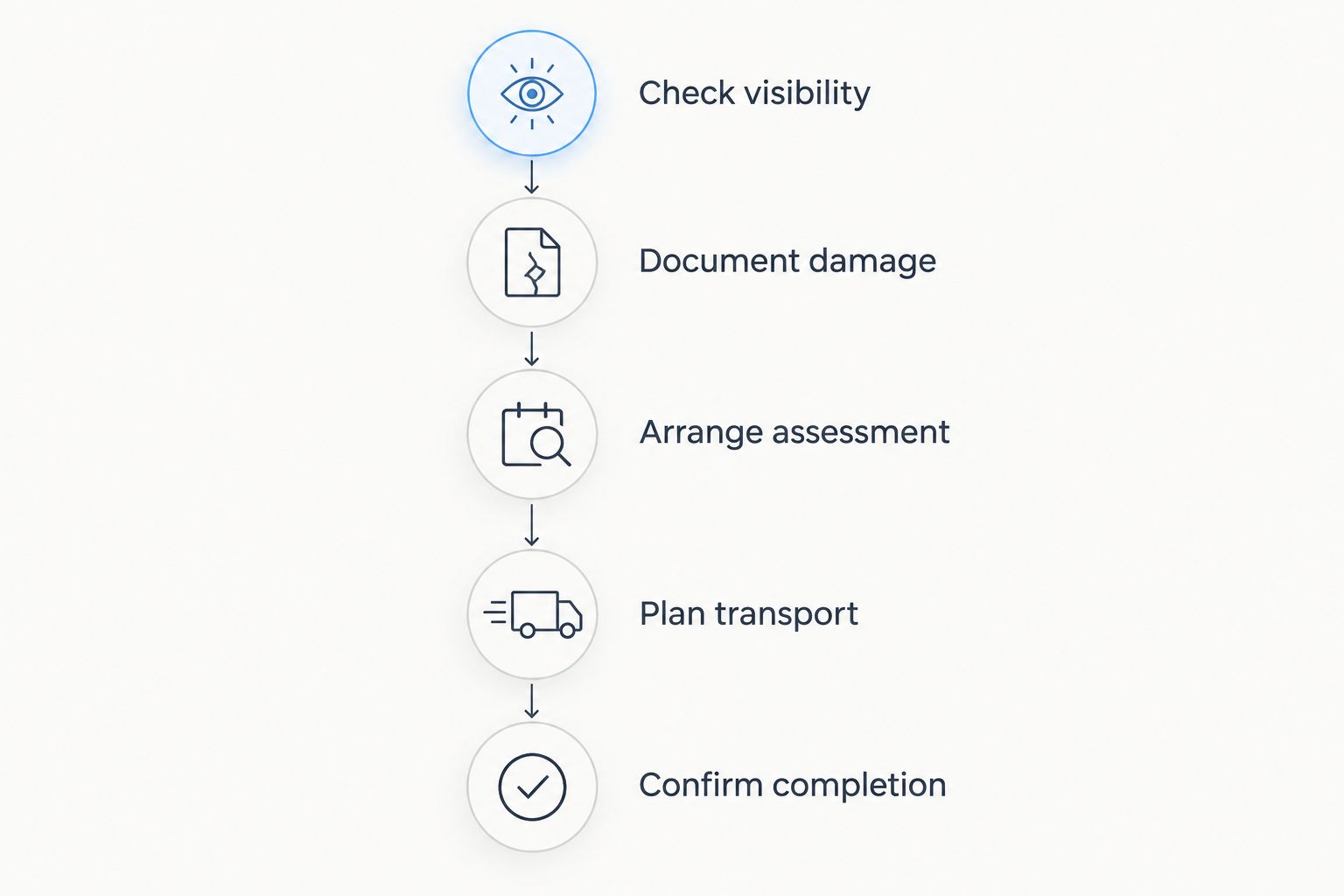
Start with visibility, then organize the repair. Do not make a test drive to discover whether a crack interferes with your view.
- Check visibility. From the parked driver's seat, look for blocked sightlines, distortion, and distracting reflections. Do not treat this check as a professional safety inspection.
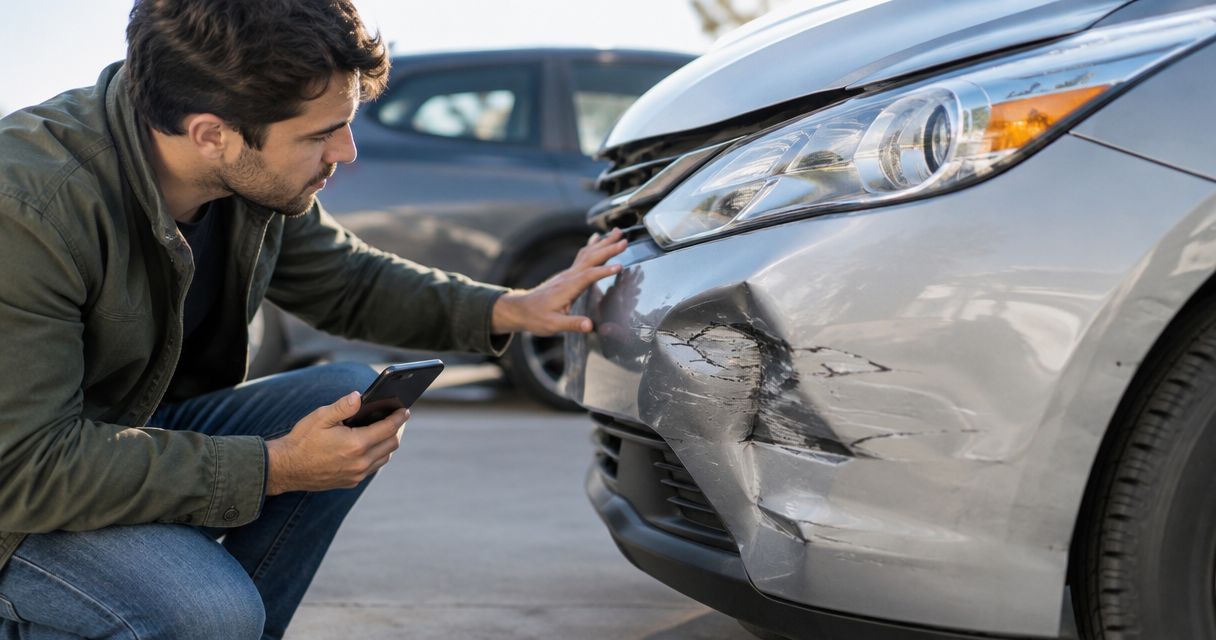
- Document damage. Photograph the glass while parked, including a wider view that shows the damage's location. Record whether it followed a collision.
- Arrange assessment. Describe the damage and ask whether the provider needs an in-person inspection. Explain any visibility problem before discussing transportation.
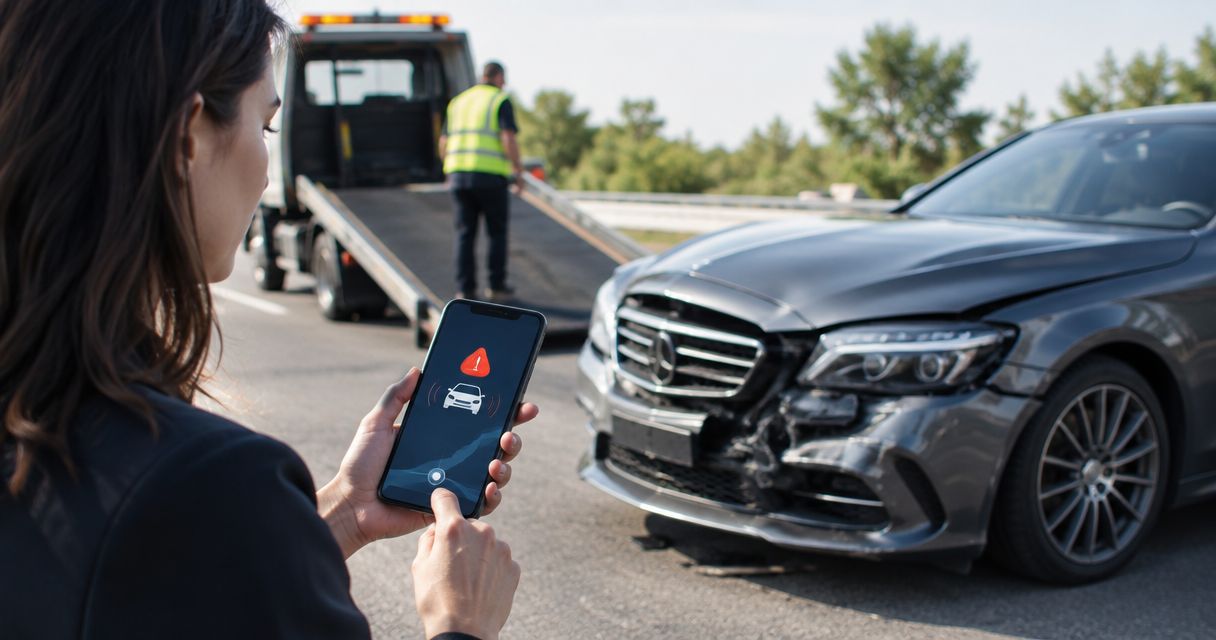
- Plan transport. If visibility is impaired, arrange an alternative to driving the vehicle. Ask about service arrangements or towing rather than assuming either is included.
- Confirm completion. Obtain the invoice, any applicable calibration documentation, and instructions about when the vehicle can be driven after installation.
The order matters: transportation comes after you identify the visibility problem, not after you commit to driving to an appointment.
After replacement, follow the installer's safe-drive-away instructions. Adhesive requirements and installation conditions determine when the vehicle is ready; finishing the paperwork does not establish that timing.
Will insurance cover a cracked windshield?
Coverage depends on your policy and the cause of damage. Comprehensive coverage commonly addresses glass damage from events such as flying debris, while collision-related glass damage needs to be evaluated in the context of the accident and applicable coverage.
Do not assume that every California policy includes deductible-free glass replacement. Ask your insurer which coverage applies, what deductible applies, and whether authorization or supporting documents are required.
For your 2026 claim, preserve photographs, the incident description, the repair estimate, and correspondence. Give the repair provider and insurer consistent information about how the damage occurred.
MB Collision Group offers insurance-claim assistance alongside auto glass replacement. That assistance does not establish coverage or change the terms of your policy.
If the insurer's initial estimate differs from the repair assessment, ask which operations or damage items account for the difference. Resolve the scope through documentation rather than assuming either document includes every required operation.
Can you drive to a windshield replacement appointment?
A replacement appointment does not exempt you from California's impaired-visibility rule. If the windshield prevents you from seeing clearly, arrange transport or ask whether an appropriate service arrangement is available.
If an officer has issued a notice, follow its restrictions and the applicable law. Do not interpret permission to comply with a repair notice as permission to drive an unsafe vehicle under any conditions.
Does a passenger-side crack make driving legal?
A passenger-side crack does not automatically make driving legal in California. Damage outside your straight-ahead sightline can still affect the view you need at intersections or produce distracting distortion.
Tell the technician where the crack sits and how it affects your view. Avoid describing it as harmless solely because it is not directly in front of the steering wheel.
Do windshield cameras need attention after replacement?
Windshield-mounted driver-assistance cameras require the vehicle-specific procedures specified by the manufacturer. Ask whether calibration is required for your vehicle and how completion will be documented.
Do not assume that an absent dashboard warning proves every procedure is complete. Installation, calibration requirements, and safe-drive-away instructions are separate items to confirm.
FAQ
Can I drive with a cracked windshield in California in 2026?
You cannot lawfully drive on a highway when a defective windshield impairs your vision. California Vehicle Code §26710 bases the restriction on impaired visibility rather than a universal permitted crack length.
Is a small windshield crack automatically legal?
A small windshield crack is not automatically legal. Its effect on your vision matters, and its suitability for repair requires a separate technical assessment.
Do I have 48 hours to fix a cracked windshield?
California Vehicle Code §26710 authorizes an officer to issue a written notice directing repairs within 48 hours. That notice is not blanket permission to continue normal driving with impaired visibility.
Can I drive to work while waiting for windshield replacement?
Waiting for replacement does not authorize driving with impaired visibility. Arrange alternative transportation if the damage prevents you from seeing clearly.
Will insurance replace my windshield without a deductible?
Deductible-free replacement depends on your policy, not simply on being in California. Confirm glass coverage, the applicable deductible, and claim requirements with your insurer.
Can a windshield repair leave a visible mark?
A windshield repair can leave a visible mark. Ask the technician what appearance to expect and whether the damage is suitable for repair.
Does every windshield replacement require camera calibration?
Not every windshield replacement has the same calibration requirements. Follow the vehicle manufacturer's procedures for the equipment fitted to your vehicle.
One last thing
The useful question is not whether you can still see through the crack; it is whether the damage interferes with everything you need to see. Check for distortion and reflections as well as an obvious obstruction.
Before returning to your normal route, close the practical gaps: confirm the repair is complete, follow installation instructions, and finish any citation-correction requirements. A clear windshield, completed repair paperwork, and an insurance decision are different parts of the process.