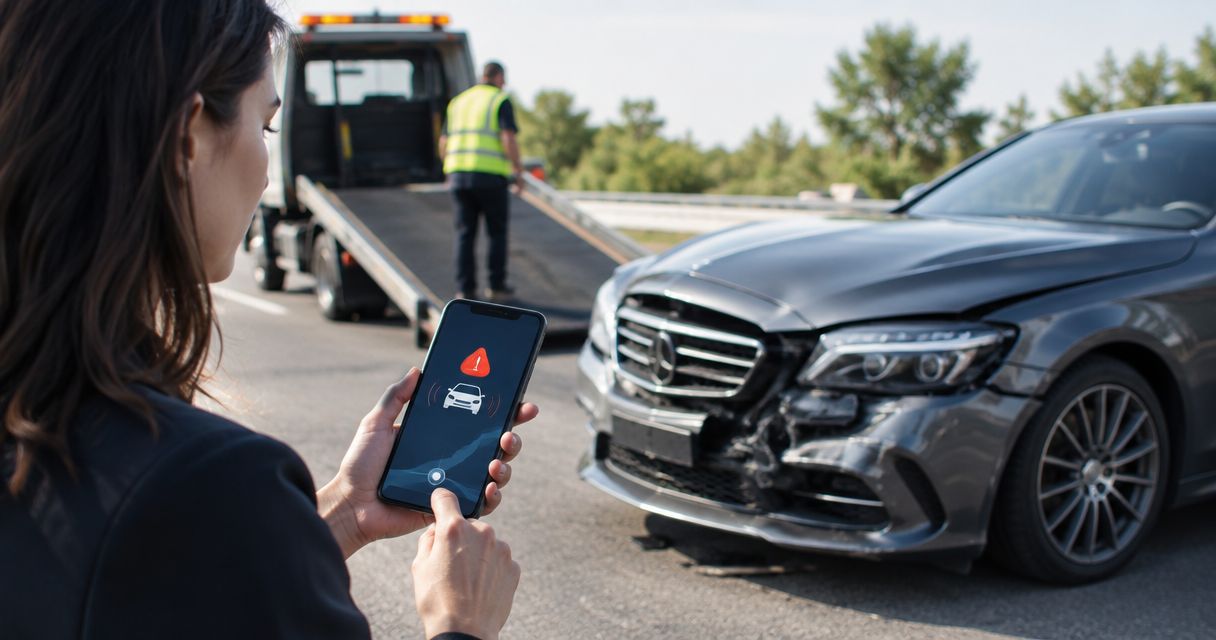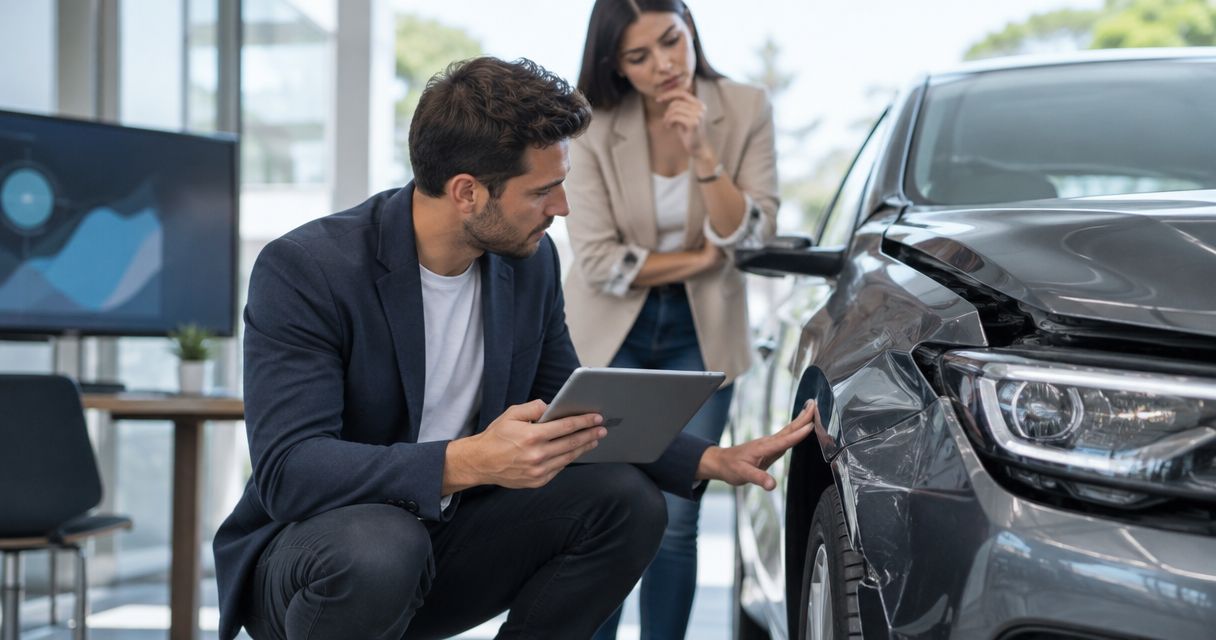
Bumper repair takes as long as the inspected damage, required repair procedures, and final checks demand; a surface scuff and damage behind the bumper cover do not have the same schedule. Your vehicle’s total time at the shop also includes any parts, authorization, and scheduling delays—not just the hours spent repairing it.
- How long does bumper repair take? Get a completion estimate based on inspection, not the appearance of the damage.
- Bumper repair labor time is not the same as total vehicle downtime.
- MB Collision Group serves Southern California drivers needing collision repair and insurance-claim assistance.
- Confirm whether the pickup estimate includes paint, reassembly, and any required sensor checks.
How long does bumper repair take?
The useful answer is a vehicle-specific completion estimate, not a universal number of hours or days. A shop needs to establish what is damaged, what can be repaired, and which procedures apply before it can give you a dependable schedule.
For drivers arranging bumper repair in 2026, distinguish the repair operation from the entire visit. An estimate’s labor hours describe work; they do not automatically translate into consecutive hours on the calendar.
MB Collision Group operates factory-certified collision repair centers in Southern California and provides insurance-claim assistance. Ask for a schedule tied to your vehicle’s inspected repair scope rather than an assumed turnaround based on a photograph.
| Repair situation | Best for | What the work addresses | Scheduling limitation |
|---|---|---|---|
| Surface repair | Damage confirmed as limited to the finish | Restores the affected surface without assuming replacement is necessary | Preparation and refinishing still require their own process |
| Bumper-cover repair | A cover judged repairable under applicable procedures | Retains the cover while addressing repairable damage | Suitability depends on damage location, material, and manufacturer instructions |
| Bumper-cover replacement | A cover that requires replacement | Replaces the damaged outer component | Replacement does not resolve separate damage behind the cover |
| Repair involving underlying components | Damage extending beyond the cover | Addresses affected supports, attachments, or related components | The scope must be established before the schedule is reliable |
These are repair situations, not interchangeable packages. Choose the procedure the damage requires; do not choose a procedure simply because its preliminary schedule looks shorter.
Why this matters
You need a pickup date to plan commuting, school runs, and other commitments. A vague promise creates problems when it leaves out an unresolved part order or an inspection that has not happened yet.
A useful 2026 repair plan identifies both the expected completion date and what that date depends on. Ask whether the estimate assumes an uncomplicated inspection, confirmed parts, or insurer authorization that is still pending.
Also separate permission to drive from permission to wait. A bumper that looks mostly intact can still have loose attachments or damage that needs inspection; appearance alone does not establish that the vehicle is safe to use.
Surface damage: confirm whether refinishing is needed
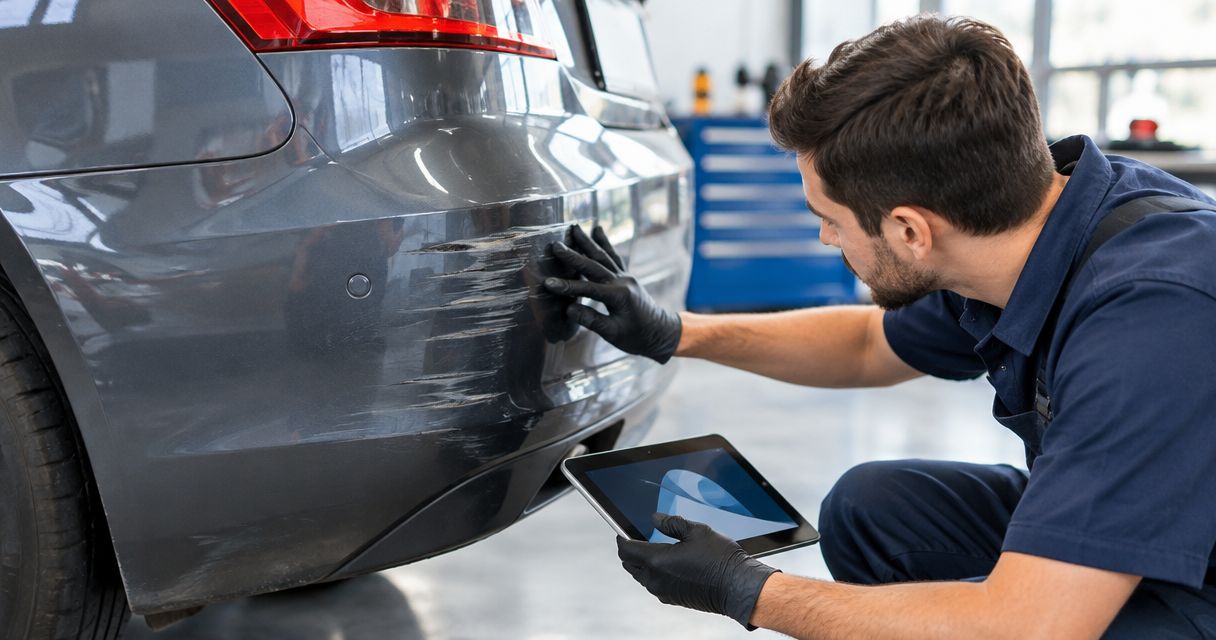
A scrape confined to the finish has a different repair scope from a cracked cover or damaged attachment. The important distinction is what the inspection confirms, not how small the mark looks in a phone photo.
Ask whether the proposed work includes surface preparation, color application, clearcoat, and any removal needed for access. A description such as “touch up the bumper” is too vague to explain what the shop intends to do or when it expects to finish.
The advantage of a genuinely surface-limited repair is its narrower scope. The limitation is that a visible scuff does not prove the damage stops at the paint, especially after an impact.
Best for: Damage an inspection confirms is limited to the finish. Request the actual repair scope before treating it as a quick cosmetic visit.
Bumper-cover repair: suitability comes before speed
The outer bumper cover is not the entire bumper assembly. Repairing that cover addresses only the damage included in the repair plan; it does not establish the condition of the components behind it.
A repairable cover can require removal, material repair, preparation, refinishing, and reinstallation. Manufacturer instructions and the location of the damage matter, particularly where the cover interacts with driver-assistance equipment.
The advantage is retaining a component that is suitable for repair. The limitation is that not every crack, deformation, or damaged mounting area has an acceptable repair method.
Best for: A bumper cover the shop confirms can be repaired under the applicable procedures. Ask what finding supports repair rather than replacement.
Bumper-cover replacement: a new cover is not a finished repair
Replacement involves more than exchanging the visible outer piece. Depending on the vehicle and damage, the job includes transferring components, refinishing, checking fit, and completing required inspections or electronic procedures.
Ask the shop to distinguish the replacement cover from any additional damaged components. A cover, mounting bracket, absorber, and reinforcement serve different functions; replacing one does not automatically address the others.
The advantage of replacement is that it addresses a cover that should not be repaired. The limitation is that the replacement decision alone does not establish the total job duration.
Best for: Damage for which the applicable repair plan calls for a replacement cover. Base the pickup estimate on the complete operation, not just installation.
Why bumper repair time varies
The useful scheduling question is: What must happen before the next stage can begin? That identifies the actual constraint instead of treating every delay as repair labor.
- Damage extent: A surface mark and damaged underlying components require different work. Inspection establishes which situation applies.
- Repair method: Repairing a cover and replacing it involve different operations. The chosen method must match the damage and applicable instructions.
- Refinishing requirements: Preparation, coating application, and the specified drying or curing process are separate from body repair.
- Parts coordination: When replacement components are required, the repair schedule depends on coordinating the correct parts with the work.
- Insurance authorization: An insurer-funded repair can involve review of the initial estimate or additional documented damage. Ask which authorization, if any, remains unresolved.
- Vehicle-specific checks: Sensors, wiring, and driver-assistance equipment can add inspection or calibration requirements when the manufacturer’s procedures call for them.
For a bumper repair scheduled in 2026, ask which of these factors is already confirmed. A date based on completed inspection and resolved dependencies is more useful than a date that assumes everything will proceed without changes.
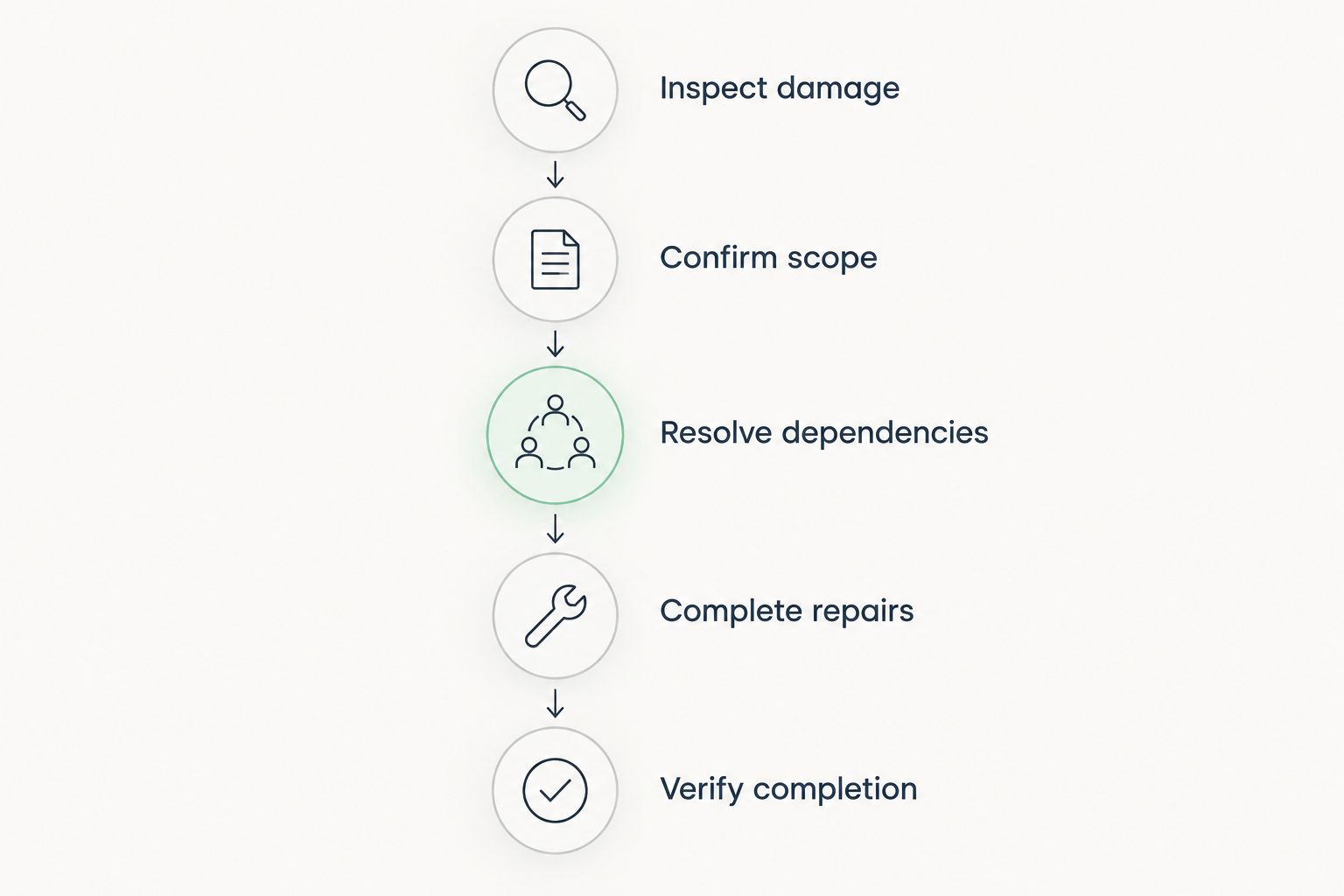
How do you get a useful bumper repair timeline?
Ask the shop to explain the job as a sequence. You do not need a technical lecture; you need to know the current stage, the next dependency, and what will trigger an update.
- Inspect damage. Establish whether the assessment is visual only or includes the access needed to evaluate the affected area. Ask whether further disassembly is expected.
- Confirm scope. Identify the repair or replacement decision, refinishing work, and any additional components involved. Separate confirmed work from items still under evaluation.
- Resolve dependencies. Confirm the status of required parts and any outstanding authorization. Ask what prevents the repair from moving ahead today.
- Complete repairs. Have the shop explain the remaining body, paint, and reassembly stages. Request an update if the scope changes.
- Verify completion. Confirm that the applicable inspections and vehicle-specific procedures are complete before collecting the car. A finished appearance is not the only completion criterion.
If insurance is involved, give the shop the claim information and clarify who is communicating with the adjuster. The guide to connecting an insurance adjuster to your repair estimate addresses that coordination step.
Can bumper repair be completed the same day?
Same-day completion requires the full repair scope and shop schedule to support it. Do not treat a small visible mark as proof that inspection, repair, refinishing, and release can all happen during the same visit.
Ask what the same-day commitment covers. An inspection appointment, an estimate, and a completed repair are different outcomes; clarify which one you are booking before arranging transportation.
If you need the vehicle back for a fixed commitment, say so before authorizing the work. Ask whether the shop can meet that requirement without leaving required work unfinished, rather than requesting a shorter process after disassembly begins.
Does insurance make bumper repair take longer?
Insurance adds coordination when the repair requires an insurer’s review or authorization. It does not determine the physical repair method, and you should not assume every insured repair encounters the same delay.
Ask whether the shop is waiting for an initial decision, a response to additional damage, or something unrelated to the claim. Those are different issues and require different follow-up.
A useful status update names the unresolved decision and the next action. “Waiting on insurance” is less actionable than knowing which document or approval is outstanding and who is handling it.
When should you arrange transportation?
Arrange transportation around the expected drop-off and release dates, not the estimate’s labor-hour total. Confirm whether the shop expects to keep the vehicle continuously or whether the initial visit is only for assessment.
For your 2026 transportation plan, ask when the completion estimate will be reviewed. That gives you a clear point to reassess arrangements if inspection changes the scope.
MB Collision Group is suited to Southern California drivers who need bumper collision repair and insurance-claim assistance together. Its factory-certified repair-center description does not establish a completion time for your particular vehicle; that requires an inspected repair plan.
FAQ
How long does bumper repair take from drop-off to pickup?
Bumper repair takes the time required for inspection, the approved repair scope, refinishing, reassembly, and applicable final checks. Ask for a drop-off-to-pickup estimate that also accounts for unresolved parts or authorization dependencies.
Can you tell how long bumper repair will take from a photo?
A photo cannot establish the full bumper repair timeline because it does not show every attachment or component behind the cover. Treat a photo-based schedule as preliminary until the shop confirms the damage scope.
Is bumper repair faster than bumper replacement?
Bumper repair is not automatically faster than bumper replacement. The appropriate method, refinishing work, required components, and vehicle-specific procedures determine the complete schedule.
Does every bumper repair need sensor calibration?
Not every bumper repair requires sensor calibration. The vehicle’s equipment, the work performed, and the manufacturer’s procedures determine the required checks or calibration.
Can I drive my car while waiting for bumper repair?
Do not assume your car is safe to drive based on the bumper’s appearance. Have the damage assessed, especially if components are loose, lights are damaged, or driver-assistance warnings appear.
What should I ask MB Collision Group before booking bumper repair?
Ask MB Collision Group whether the initial visit is for assessment or repair, what the completion estimate includes, and which dependencies remain unresolved. Confirm when you will receive an updated pickup estimate if the inspected scope changes.
What should I check when I collect my car after bumper repair?
Review the completed work and ask whether all applicable inspections and required vehicle-specific procedures are finished. Also request any refinishing-care instructions that apply to the repair.
One last thing
Ask what the pickup date depends on—not just what the pickup date is. A date with clear conditions gives you a better planning tool than an unconditional promise made before the damage is understood.
Before authorizing a bumper repair in 2026, request a written scope and ask when the schedule becomes firm. Keep the repair completion date separate from any paint-care instructions that apply afterward; collecting the car and caring for a refinished surface are different questions.