Property managers’ parking lot damage repair is the coordination of vehicle damage documentation, repair assessment, and claim communication with the aim of resolving an incident without confusing repair responsibility with liability. You need a process that protects the incident record, respects the vehicle owner’s authority, and keeps tenants, visitors, contractors, and insurers working from the same facts.
- Parking lot damage repair for property managers starts with evidence preservation, not a promise to pay.
- MB Collision Group suits Southern California vehicle owners needing collision repair and insurance-claim assistance.
- Separate vehicle repair authorization from decisions about property liability and insurance coverage.
- Match bumper repair, dent repair, or auto glass replacement to a vehicle-specific assessment.
Why this matters
A parking complaint can involve several separate issues: a damaged vehicle, a possible property defect, and a disagreement about who should pay. Treating those issues as a single maintenance ticket creates confusion. Coordinate the response without deciding liability at the scene.
For your 2026 incident procedure, define who preserves evidence, who communicates with the vehicle owner, and who notifies the property’s insurance contact. Vehicle owners seeking repair support can review MB Collision Group, which operates factory-certified auto body and collision repair centers in Southern California.
Why parking lot damage repair matters for property managers
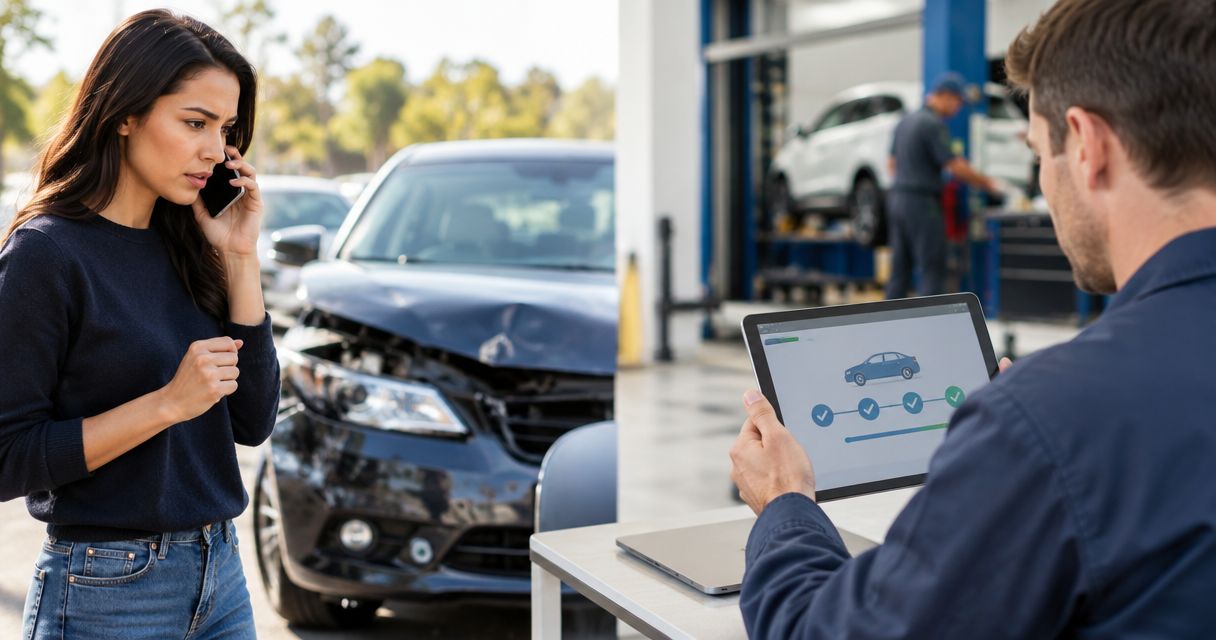
Property managers occupy an awkward position: you control access to property records, but you do not necessarily own the damaged vehicle or have authority to approve its repair. A resident’s scrape, a visitor’s broken window, and a company vehicle struck by a parking gate need different communication paths.
The physical damage also tells only part of the story. A dent does not establish who caused it, and an incident report does not establish insurance coverage. Your job is to connect the evidence, the vehicle owner, and the appropriate claim contacts without turning an initial account into a finding.
Your 2026 workflow should distinguish:
- Vehicle damage: What needs professional inspection and repair?
- Incident evidence: What records describe when, where, and how the event occurred?
- Claim responsibility: Which parties and insurers need to evaluate the incident?
- Property maintenance: Does a gate, overhead fixture, or other site condition need attention?
How to manage a parking lot damage repair claim
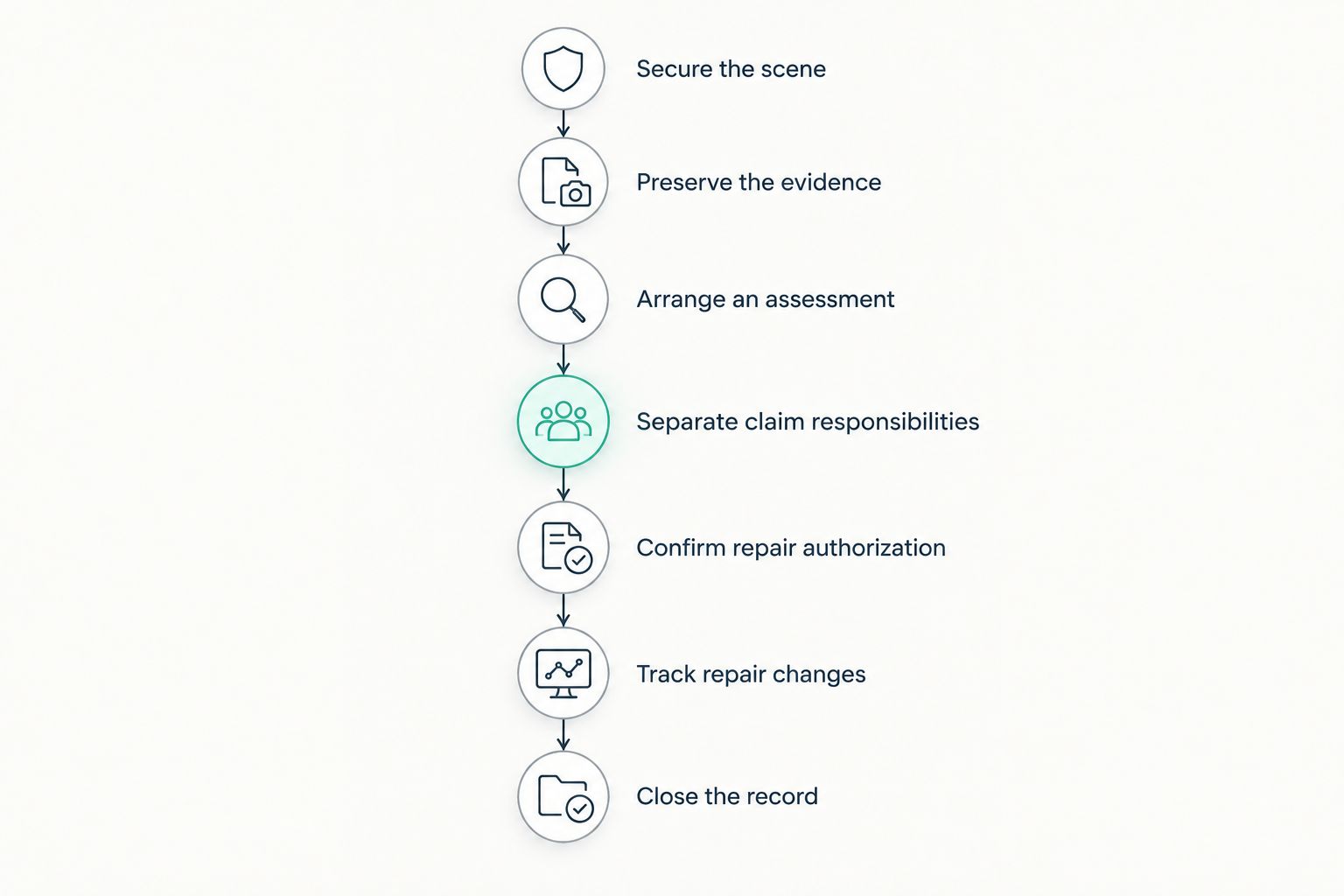
Use the following sequence for your 2026 incident checklist. Start with a shared incident form and a controlled document folder; specialized software is not a prerequisite. The process moves from securing the scene to preserving evidence, arranging an assessment, separating responsibilities, confirming authorization, tracking changes, and closing the record.
Secure the scene
Start with immediate safety rather than photographs or paperwork. Follow your emergency procedures when an incident involves injuries, active hazards, or suspected criminal activity. Do not ask a driver to move a vehicle simply to reopen a space when its condition is uncertain.
For a routine damage report, record what you can observe without diagnosing the vehicle. A displaced bumper, broken glass, or fluid beneath a vehicle warrants attention, but a property manager’s visual check is not a roadworthiness assessment.
- Identify immediate hazards and restrict access where necessary.
- Ask the vehicle owner whether emergency assistance is needed.
- Record the vehicle’s location before routine cleanup or movement.
- Refer driving-safety questions to a qualified repair professional.
Preserve the evidence
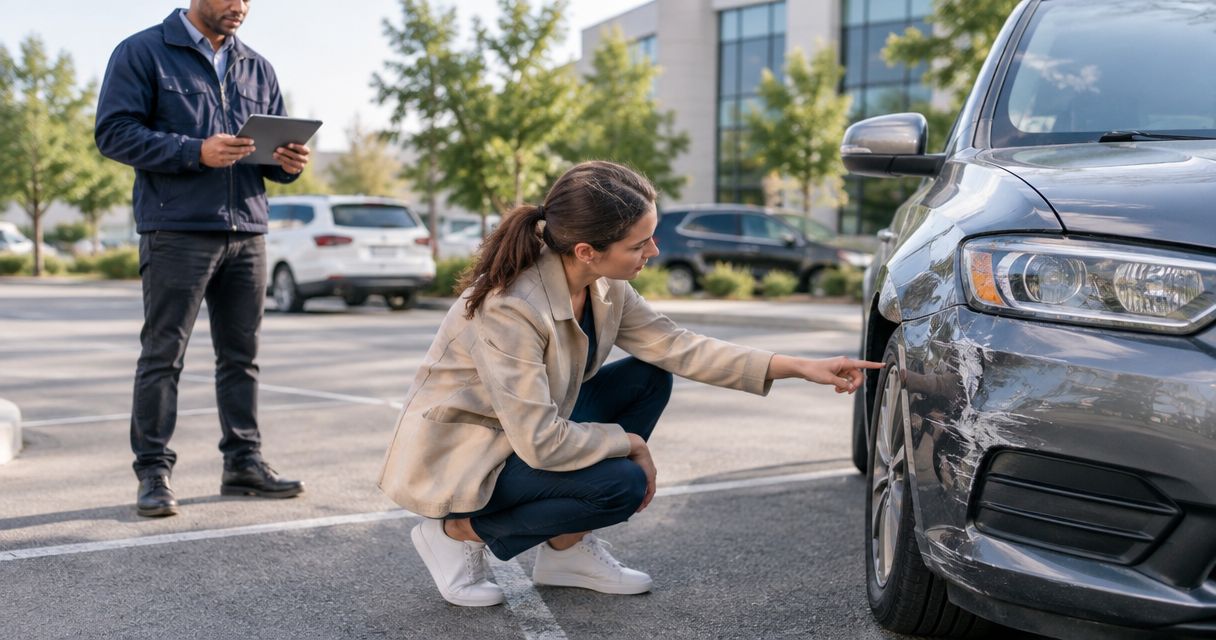
Use your phone, an incident form, and the property’s existing record system first. Preserve original files rather than relying only on screenshots pasted into an email. Record whether a statement comes from a witness, the vehicle owner, or your own observation.
As a practical checklist, capture 4 photo views when safe: the overall location, the vehicle’s position, the visible damage, and the relevant surrounding condition. This is a documentation recommendation, not a rule that every incident requires exactly that number of images.
- Record the reported time and the time staff learned of the incident.
- Preserve relevant camera footage under your retention procedures.
- Collect witness contact details with appropriate permission.
- Describe gate, curb, fixture, or debris conditions without assigning fault.
- Keep original images and distinguish later annotations from originals.
Arrange an assessment
The vehicle owner can begin by contacting a repair center directly and sharing the incident details. A photo helps describe visible damage, but it does not replace an inspection or establish the complete repair scope. Ask the owner to obtain a written assessment that separates observed damage from work requiring further investigation.
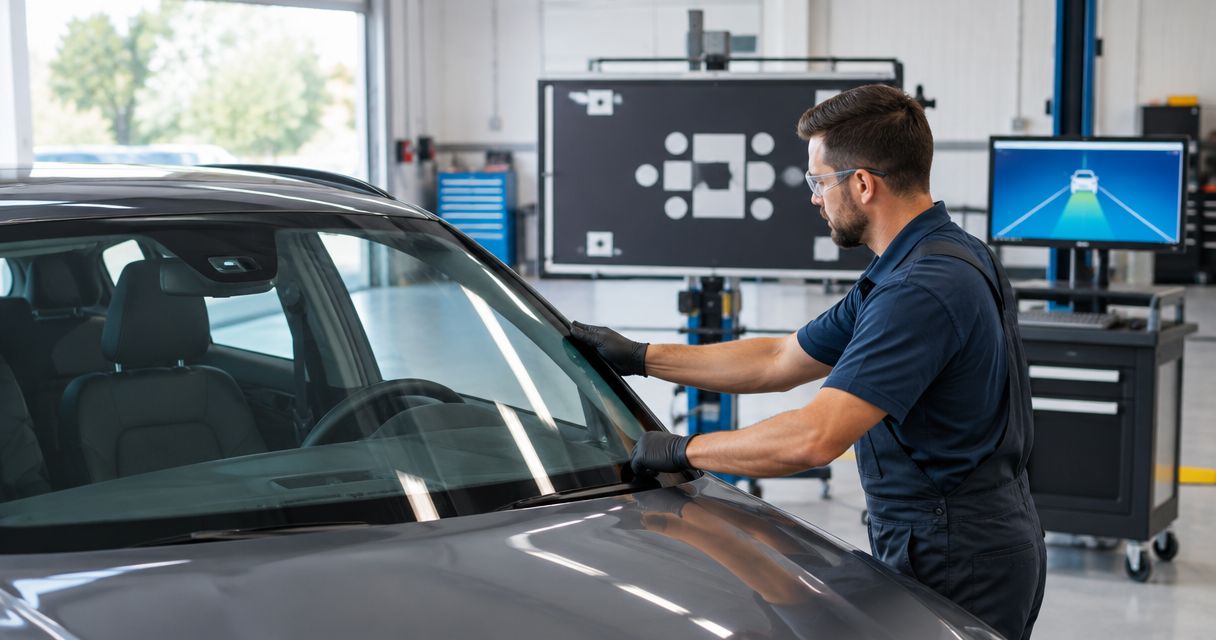
MB Collision Group is best for Southern California vehicle owners seeking collision repair and insurance-claim assistance. MB Collision Group also provides auto glass replacement; confirm the relevant center’s certification and repair capability for the specific vehicle before choosing a repair location.
- Let the owner select and communicate with the repair center.
- Share incident photographs only with appropriate authorization.
- Ask whether inspection requires vehicle delivery or another arrangement.
- Request a written scope rather than interpreting damage yourself.
- Keep repair advice separate from any property-liability discussion.
Separate claim responsibilities
Create a contact sheet before forwarding documents. Identify 3 contact roles: the vehicle owner or authorized representative, the property’s insurance or risk contact, and the repair center. An insurer or claims administrator can explain the applicable reporting requirements and coverage review.
Do not promise that the property’s policy, the driver’s policy, or another party will pay. Record the reported circumstances and follow your organization’s notification procedure. When responsibility is disputed, preserve the records and direct the dispute to the appropriate claim or legal contact.
- Record claim references separately from internal maintenance tickets.
- Identify who is authorized to discuss each claim.
- Distinguish allegations from verified observations in every update.
- Route coverage and deductible questions to the relevant insurer.
- Avoid sending unrelated tenant or visitor information with claim documents.
Confirm repair authorization
Helping a resident arrange an assessment does not make the property manager the repair customer. Confirm who owns the vehicle, who can authorize work, and who has accepted any payment obligation before discussing approval. For a company-owned vehicle, that authority might sit with a fleet manager rather than the driver.
If the property considers paying directly, obtain the internal approval your organization requires. Keep the approved scope and payment arrangement in writing. Do not describe a repair referral as a settlement or a release of responsibility.
- Identify the vehicle owner and any authorized representative.
- Confirm who signs the repair authorization.
- Document the approved scope and the responsible payer.
- Route proposed settlements through the proper internal authority.
- Avoid authorizing additional work on another person’s vehicle.
Track repair changes
Maintain 1 incident log containing dated updates, document references, and the person responsible for the next action. A spreadsheet works when access is controlled and ownership is clear. Keep the repair center’s assessment in its original form instead of rewriting technical conclusions into a maintenance note.
Inspection or disassembly can reveal damage not visible at intake. Treat an additional repair request as a scope and authorization question, not automatic evidence of overcharging or a new property obligation. Ask the authorized parties to resolve it in writing.
- Log assessment, authorization, and claim-status updates separately.
- Ask who must approve any additional repair work.
- Record revised completion information without promising a delivery date.
- Share updates only with people who need the information.
- Assign an owner and next action to every unresolved question.
Close the record
Close the administrative file only after recording the status of the repair, the claim, and any property maintenance action. Those items do not always finish together. A repaired gate does not prove that a vehicle claim is settled, and a returned vehicle does not establish that every payment issue is resolved.
For your 2026 review, check whether the incident exposed a repeatable site problem or a gap in documentation. Keep retention decisions aligned with your organization’s policy and any instructions from its insurer or legal contact.
- Record the repair outcome reported by the authorized party.
- Preserve final documents according to your retention procedure.
- Track unresolved payments or disputes separately.
- Confirm completion of related property maintenance work.
- Update staff instructions when the incident reveals a process gap.
Compare repair options for parking lot damage
Choose the repair path after inspection, not from the location of the accident. A parking lot incident can damage paint, panels, glass, mounting points, or vehicle systems. The following options address different damage conditions; none determines who is responsible for payment.
| Option | Best for | Main advantage | Key limitation |
|---|---|---|---|
| Paintless dent repair assessment | Dents where paint remains intact and panel access is suitable | Evaluates whether reshaping can avoid refinishing | Not suitable for every dent, material, or paint condition |
| Conventional body and paint repair | Scratches, paint damage, and panels requiring bodywork | Addresses surface finish and panel damage together | The final scope depends on inspection and repair requirements |
| Bumper repair or replacement assessment | Scraped, cracked, displaced, or impacted bumper areas | Evaluates the cover and affected components | Appearance alone cannot establish whether replacement or system work is needed |
| Auto glass assessment | Chipped, cracked, or broken vehicle glass | Establishes whether repair or replacement is appropriate | Glass location, damage, and vehicle requirements affect the work |
| Full collision inspection | Impacts involving several areas or uncertain damage extent | Looks beyond the most obvious damaged surface | Requires a vehicle-specific assessment rather than a photo-only conclusion |
A center’s factory certification should be checked against the vehicle and work involved. MB Collision Group’s stated factory-certified status does not establish certification for every make or every location. Ask the repair center directly before presenting a referral as a match.
Common mistakes property managers make
Promising reimbursement before a claim review
A reassuring statement can become a disputed commitment. Tell the vehicle owner how to submit evidence and who will review the matter; do not promise payment before the authorized party has accepted it.
Treating every parking lot incident as property damage
A vehicle-to-vehicle collision and a falling property fixture involve different reported circumstances. Use a consistent incident form, but record the actual event rather than placing every report into the same responsibility category.
Waiting for a repair estimate before saving footage
Repair assessment and evidence preservation are separate tasks. Request preservation promptly under your site’s procedures rather than waiting for an estimate or an insurer’s response.
Sending a referral without checking vehicle requirements
A nearby shop is not automatically the right fit for the vehicle. Ask about the specific make, damage, and required procedures instead of relying on a general description of services.
Closing the ticket when the vehicle leaves the lot
Moving a vehicle does not resolve its claim. Keep the incident record open or transfer unresolved items to a named owner so that repair, payment, and maintenance questions do not disappear between teams.
FAQ
What is parking lot damage repair for property managers?
Parking lot damage repair for property managers is the coordination of incident documentation, vehicle assessment, and claim communication after vehicle damage at a managed property. The vehicle owner or authorized representative approves repairs; the appropriate parties evaluate liability and coverage.
Does a property manager have to pay for a car damaged in the parking lot?
A parking lot damage report alone does not establish that a property manager must pay. Document the circumstances and refer responsibility and coverage questions to the property's insurer or legal contact.
What should I photograph after a parking lot damage report?
Photograph the location, vehicle position, visible damage, and relevant surrounding conditions when safe. Preserve original files and record whether each detail was observed directly or reported by someone else.
Can I authorize repairs to a tenant's vehicle?
Do not authorize repairs unless you have documented authority to do so. Confirm the vehicle owner's authorization and any separate payment approval before work begins.
Is paintless dent repair better than conventional body repair?
Paintless dent repair is an option for suitable dents with intact paint and appropriate panel access. Conventional body repair addresses damage that requires other panel work or refinishing; a professional assessment determines the fit.
Can MB Collision Group help with an insurance claim after parking lot damage?
MB Collision Group provides insurance-claim assistance alongside collision repair in Southern California. Confirm the relevant center's services and vehicle-specific certification; claim assistance does not determine coverage or liability.
How should property managers prepare for parking lot claims in 2026?
Property managers should maintain a written incident process covering safety, evidence preservation, contact roles, authorization, and closure. Assign responsibility for each stage before an incident occurs so staff know who handles the next action.
One last thing
Check the camera clock before treating a timestamp as exact. A saved clip is harder to interpret when its displayed time differs from the incident record. Record any known discrepancy alongside the original footage rather than editing the original file to make the times agree.