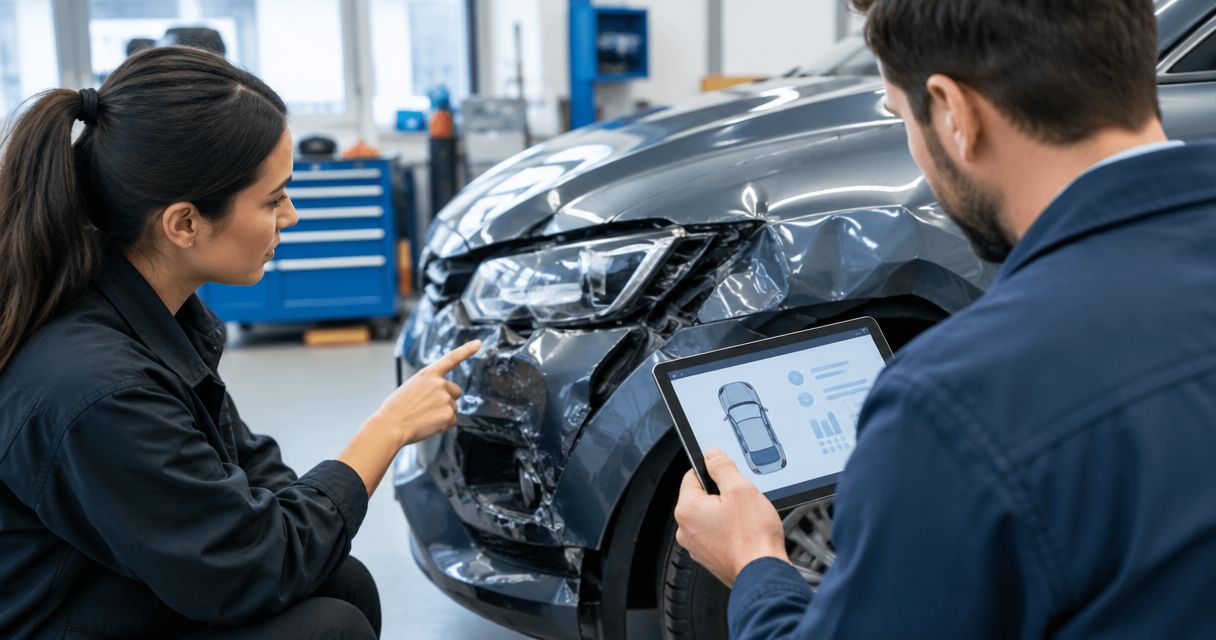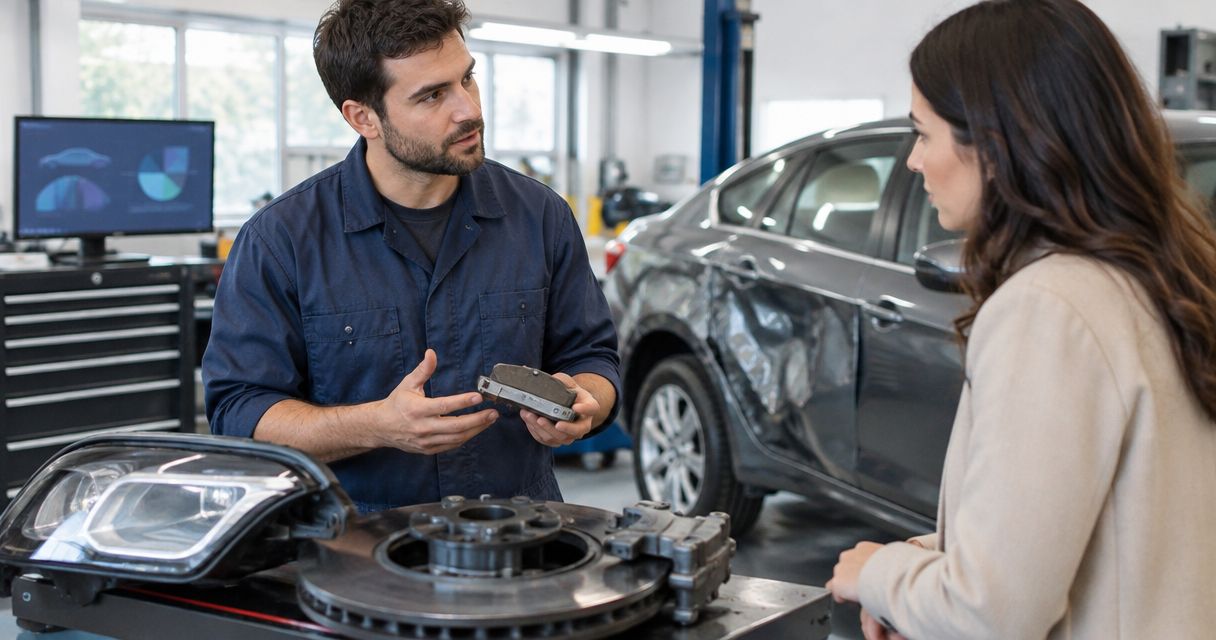
Yes—a body shop can generally refuse to install aftermarket parts, including when it cannot support the proposed repair under applicable repair procedures or its own acceptance policies. That refusal does not automatically require your insurer to pay for original equipment manufacturer (OEM) parts; repair authorization and insurance coverage are separate decisions. For a California claim in 2026, get the shop’s technical reason and the insurer’s coverage position in writing before authorizing a different repair plan.
- Can a body shop refuse to use aftermarket parts? Yes, but refusal alone does not establish insurance coverage for OEM parts.
- California insurance rules address non-OEM replacement parts; ask for the exact part and supporting repair procedure.
- MB Collision Group serves Southern California drivers seeking factory-certified collision repair and insurance-claim assistance.
- Resolve the repair scope and payment responsibility before approving substitutions.
Why this matters
A parts disagreement involves 2 separate decisions: what the repairer agrees to install and what the insurer agrees to cover. Treating those decisions as interchangeable leaves you without a clear repair authorization or payment agreement.
MB Collision Group operates factory-certified collision repair centers in Southern California and provides insurance-claim assistance. MB Collision Group is a fit for Southern California drivers seeking factory-certified collision repair and help with an accident claim. Factory certification alone, however, does not establish that every replacement part must be OEM or that an insurer must approve it.
Can a body shop refuse to use aftermarket parts?
Yes, generally—but an existing repair agreement matters. A shop can decline a proposed job or part substitution. Once you have authorized work, a disagreement must also be evaluated against that authorization, any agreed terms, and applicable repair requirements.
Use these 3 documents to establish what is actually disputed:
- The repair estimate: Identify the replacement part, its description, and whether it is OEM, aftermarket, or recycled.
- The technical support: Request the applicable vehicle manufacturer’s repair procedure or position statement and any documented fit or condition problem.
- The coverage decision: Ask the insurer to identify its policy basis and respond to the shop’s part-specific explanation.
The strongest explanation connects the refusal to your vehicle and the proposed repair. A general statement that aftermarket parts are always unacceptable does not establish a specific technical requirement.
| Situation | What the refusal establishes | What still needs resolution |
|---|---|---|
| Shop declines the job before authorization | The shop will not accept the proposed repair scope | Whether another repairer will accept it |
| Shop rejects a proposed substitute during repairs | The shop disputes that substitution | Revised authorization, technical support, and coverage |
| Owner requests OEM parts | The owner has expressed a preference | Whether the policy covers that choice |
| Insurer’s estimate lists an aftermarket part | The insurer has proposed that part in its estimate | Suitability, disclosure, authorization, and applicable requirements |
What California’s aftermarket-parts rules mean in 2026
California does not impose a blanket ban on aftermarket collision parts. For insurer-required non-OEM replacement crash parts, California Code of Regulations, title 10, section 2695.8(g), addresses identification, disclosure, and assurances concerning quality, safety, fit, and performance.
The regulation also addresses insurer responsibility for modifications necessary to use those parts. Its scope matters: a rule concerning non-OEM replacement crash parts is not a blanket answer for every component installed on a vehicle.
For a California claim in 2026, separate these questions:
- Is the proposed part identified correctly? An estimate should make the proposed replacement understandable.
- Does the repair comply with applicable requirements? The part must be evaluated within the repair, not just by its label.
- What has the owner authorized? California Bureau of Automotive Repair guidance requires authorization for repairs and addresses additional authorization when the scope changes.
- Who accepts responsibility for the disputed work? Obtain the insurer’s and repairer’s positions rather than assuming they agree.
The California Department of Insurance handles insurance complaints. The Bureau of Automotive Repair handles automotive repair complaints. Neither a shop’s preference nor an adjuster’s estimate replaces the requirements governing the other party.
OEM parts: best for meeting a documented manufacturer requirement
An OEM part comes from the vehicle manufacturer’s original-equipment parts channel. Its main advantage in a dispute is a clear connection to a documented manufacturer requirement when the applicable procedure calls for that part.
The limitation is coverage. An OEM requirement and an OEM preference need different explanations. Ask the shop to identify the relevant procedure, its applicability to your vehicle, and the replacement component it addresses.
A manufacturer position statement can support the discussion, but read its scope. A statement about a particular system should not be presented as proof that every cosmetic replacement requires the same treatment.
Your next move is to send the supporting material with the estimate revision. Request a written response to that specific issue rather than asking the adjuster to approve OEM parts in general.
Aftermarket parts: best for consideration when suitability is established
An aftermarket replacement part comes from a source other than the vehicle manufacturer’s original-equipment channel. The aftermarket label alone does not prove that a part is unsuitable; equally, a supplier’s description does not settle whether it works for your repair.
The benefit is an alternative replacement option when it satisfies applicable requirements. The limitation is that suitability must be established for the particular part and application.
Ask what evidence supports the proposed part’s fit and intended use. If the shop identifies a problem, request photographs, measurements where relevant, and the technical explanation supporting rejection.
Do not authorize a disputed part solely because it appears on an insurance estimate. First establish whether the repairer accepts it and whether the proposed repair meets the applicable requirements. An estimate records a proposed scope; it does not resolve every technical question.
Recycled OEM parts: best for evaluation as a separate category
A recycled OEM component is a previously used original-equipment part. It is not the same category as a newly manufactured aftermarket part, so an estimate should not blur those descriptions.
Its original-equipment identity is relevant, but prior use introduces questions about condition, damage, identification, and suitability. Some components also have manufacturer restrictions on reuse.
Ask the shop to evaluate the actual component and applicable instructions. Do not assume that an OEM marking establishes that a used part is acceptable for every repair.
| Part option | Best for | Main advantage | Main limitation |
|---|---|---|---|
| New OEM | Meeting an applicable OEM replacement requirement | Direct connection to the manufacturer’s parts specification | Insurance approval remains separate |
| New aftermarket | Repairs where the proposed alternative meets applicable requirements | Provides another replacement option | Suitability requires part-specific evaluation |
| Recycled OEM | Repairs where reuse is permitted and condition is acceptable | Original-equipment component | Prior condition and reuse restrictions matter |
Why a body shop’s answer varies
The useful question is not whether a shop likes aftermarket parts. It is why the shop accepts or rejects the proposed component for your repair.
- Repair requirements: Applicable manufacturer instructions shape the repair method and component selection.
- Part condition and fit: A damaged, incorrectly identified, or unsuitable component presents a different issue from a general sourcing preference.
- Repair authorization: An unapproved substitution is different from a part clearly included in the scope you accepted.
- Insurance terms: The policy and applicable claims requirements govern coverage, not the shop’s preference alone.
- Existing agreements: A refusal before work begins differs from a disagreement after the shop has accepted an authorized scope.
For a 2026 claim, ask the repairer to identify which factor controls its decision. That explanation gives the adjuster something specific to review and gives you a basis for deciding whether to continue with the shop.
How do you resolve a parts dispute without authorizing the wrong repair?
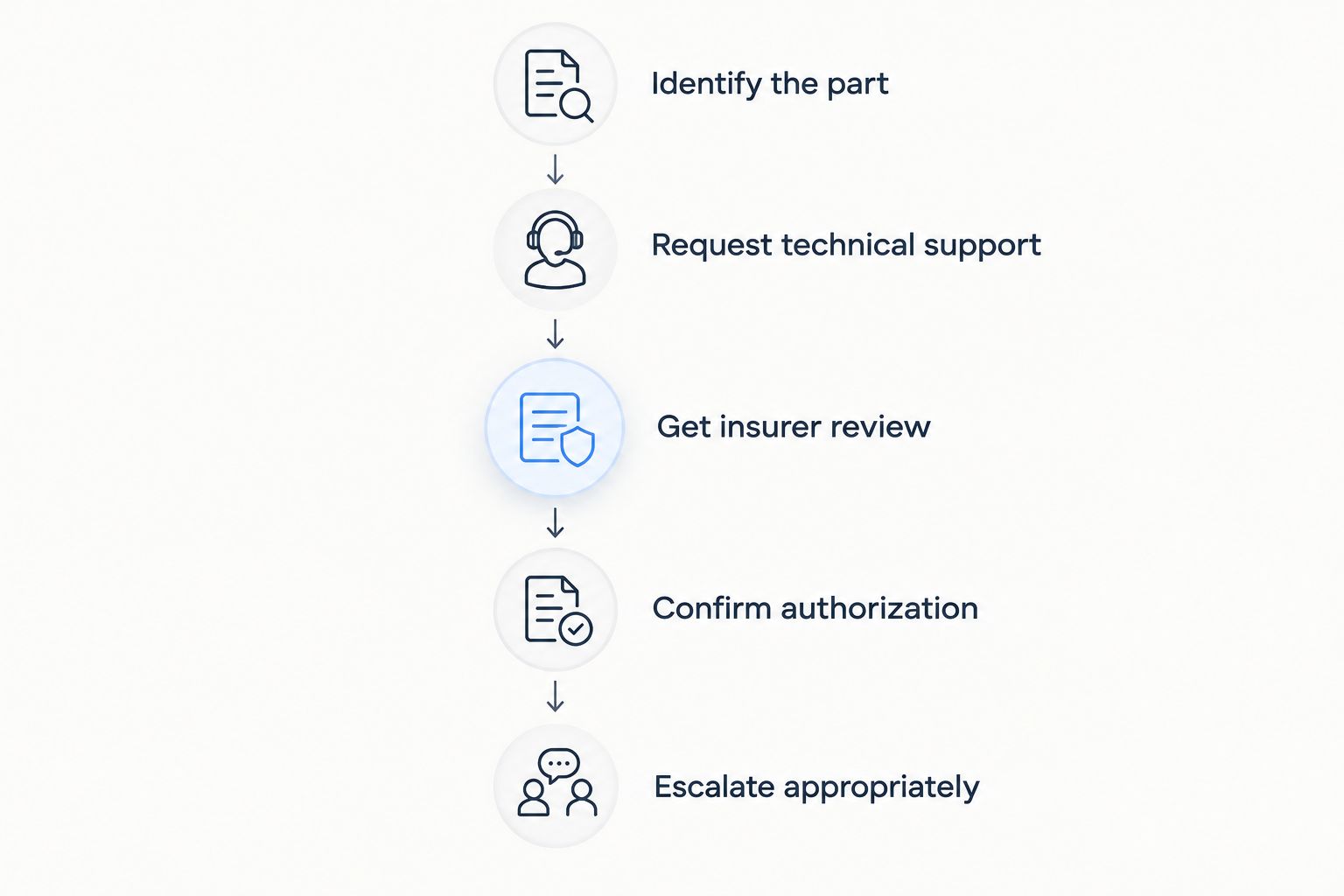
Use these 5 steps before approving a substitution. Keep the discussion centered on the exact component, the applicable repair requirement, and written payment responsibility.
- Identify the part. Match the disputed component to the estimate line. Confirm the proposed category and part identification rather than discussing aftermarket parts as a group.
- Request technical support. Ask the shop for its documented reason for refusal. Distinguish an applicable repair requirement from a shop policy or owner preference.
- Get insurer review. Send the estimate revision and supporting material to the adjuster. Ask for a response addressing the disputed part and the relevant policy provisions.
- Confirm authorization. Review the revised repair scope and responsibility for anything the insurer has not approved. Resolve those points before approving the changed work.
- Escalate appropriately. Use the insurer’s review process for coverage disputes. Direct unresolved insurance or repair complaints to the relevant California regulator.
This sequence keeps a technical disagreement from turning into an undocumented authorization dispute. The guide to connecting an insurance adjuster to your repair estimate explains the estimate handoff in more detail.
Does a factory-certified shop have to use OEM parts?
Factory certification does not establish a universal OEM-only rule. The applicable certification program, vehicle manufacturer’s instructions, component, and repair operation determine the relevant requirements.
MB Collision Group operates factory-certified collision repair centers, but that description does not establish the parts policy for your particular vehicle. Ask which certification applies and what documentation supports the proposed replacement.
For your 2026 repair, request a vehicle-specific explanation rather than relying on the word certified alone. Certification is relevant context; the applicable procedure is the evidence you need for the parts discussion.
Can your insurer make you use a different body shop?
California Insurance Code section 758.5 restricts insurers from requiring repairs at a particular automotive repair dealer. Your right to choose a shop is separate from whether every item in that shop’s estimate is covered.
Choosing the shop does not automatically settle the estimate. If the repairer and insurer disagree, ask each to identify its position in writing before you authorize work that remains disputed.
Do not treat a referral to another repairer as proof that the original shop’s technical explanation is wrong. Compare the proposed repair scopes and supporting requirements, not just the shop names.
What should you ask before moving your vehicle?
Before arranging a transfer, establish what work is complete, what work is authorized, and what obligations remain under your agreement. Request the estimate, photographs, authorizations, and relevant repair documentation.
A different shop needs to assess the vehicle and accept the proposed work independently. Do not assume that changing repairers will resolve the same part-specific disagreement.
If you are evaluating MB Collision Group for collision repair, discuss the disputed component and claim status before arranging the handoff. Insurance-claim assistance supports communication; it does not guarantee that an insurer will accept a particular repair scope.
FAQ
Can a body shop refuse to use aftermarket parts if my insurance approved them?
Yes, a shop can generally decline a proposed part, but existing repair agreements and authorizations matter. Insurance approval does not by itself establish that the repairer has accepted the part or that it meets applicable repair requirements.
Does California require OEM parts after every accident?
No, California does not require OEM parts for every collision repair. Applicable repair requirements, insurance terms, and California rules governing non-OEM replacement crash parts must be evaluated for the disputed component.
Can I request OEM parts instead of aftermarket parts?
Yes, you can request OEM parts. Ask whether the request is supported by an applicable manufacturer requirement or policy provision, and resolve payment responsibility before approving the repair.
Are recycled OEM parts the same as aftermarket parts?
No, recycled OEM parts are previously used original-equipment components, while aftermarket parts come from another manufacturing source. Condition and any restrictions on reuse still need evaluation.
Does a factory-certified body shop automatically use only OEM parts?
No, factory certification alone does not establish an OEM-only policy for every repair. Ask for the applicable certification requirements and vehicle-specific repair instructions.
Who handles a California insurance dispute about aftermarket parts?
The California Department of Insurance handles insurance complaints. A complaint about repair authorization or repair-shop conduct belongs with the California Bureau of Automotive Repair.
Should I approve repairs while the shop and insurer disagree?
Resolve the disputed scope and payment responsibility before authorizing the changed work. Ask both parties for written positions so your approval reflects the repair you actually intend to accept.
One last thing
A part number is more useful than a broad argument about aftermarket quality. It turns a category-level disagreement into a specific question about the component, the vehicle, and the repair procedure.
Before signing a revised authorization in 2026, make sure the disputed estimate line matches the part the shop intends to install. That final check connects the technical discussion to the work you approve.