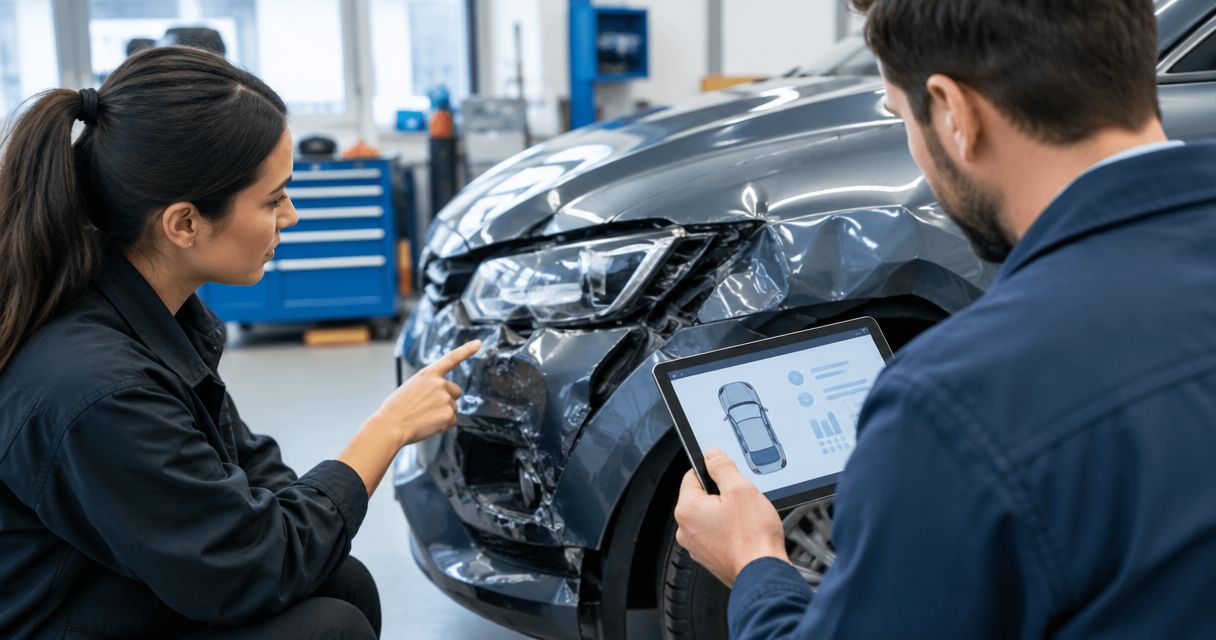
Yes—you can choose your own body shop after a car accident in California; California Insurance Code section 758.5 prohibits an insurer from requiring repairs at a particular shop. Your choice does not automatically make every repair charge payable, so confirm coverage, the repair scope, and any disputed charges before authorizing work.
- Can I choose my own body shop after a car accident? Yes—California protects your choice of repair facility.
- An insurer’s recommended collision repair shop is an option, not a requirement.
- Shop choice and insurance payment are separate decisions; document both before repairs begin.
- MB Collision Group serves Southern California drivers needing factory-certified collision repair and insurance-claim assistance.
Why this matters
After an accident, you face separate decisions: where the vehicle goes, what repairs you authorize, and what the insurer agrees to cover. Treating those decisions as interchangeable creates avoidable disputes. A towing destination is not necessarily your final repair choice, and a claim number is not blanket approval for work.
For a California claim in 2026, choose the repair facility on its qualifications, then resolve the payment details in writing. The guide to connecting an insurance adjuster to your repair estimate explains the handoff between the shop’s repair plan and the insurer’s claim review.
Can I choose my own body shop after a car accident in California?
Yes. California Insurance Code section 758.5 protects your right to select the repair shop. An insurer cannot require you to use a particular facility. The California Department of Insurance’s consumer guidance on auto repair shop choice explains this protection.
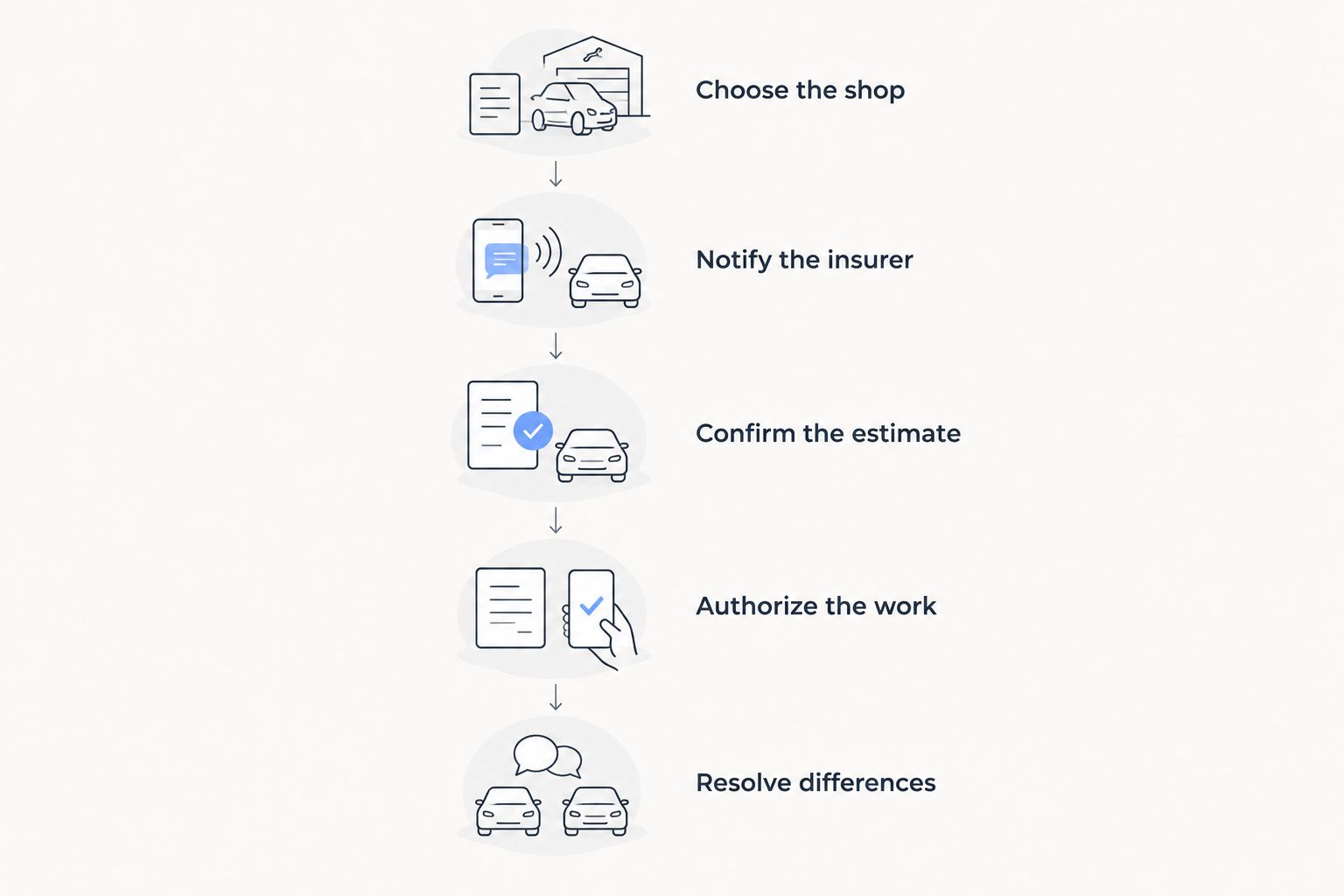
Use the following sequence to exercise that right without confusing shop selection with repair authorization:
- Choose the shop. Check whether the facility handles your vehicle and the damage involved. Confirm any relevant manufacturer certification for the specific location.
- Notify the insurer. Give the adjuster your selected facility’s name and contact information. Ask for the inspection and estimate-submission process.
- Confirm the estimate. Obtain a written repair estimate and identify work that still needs inspection or insurer review.
- Authorize the work. Read the authorization before signing. Separate permission to inspect or disassemble the vehicle from permission to complete repairs.
- Resolve differences. Ask the shop and adjuster to identify disputed items in writing, including the reason for each disagreement.
California Business and Professions Code section 9884.9 addresses written estimates and customer authorization for automotive repairs. Its practical importance is simple: choosing a facility does not replace the need to understand and authorize the work.
Your chosen shop versus an insurer-recommended shop
Neither route establishes repair quality by itself. An insurance-network relationship concerns the shop’s arrangement with the insurer; manufacturer certification concerns the applicable manufacturer’s repair-program requirements. Check each separately.
| Repair route | Best for | Main advantage | Main limitation |
|---|---|---|---|
| Your chosen shop | Drivers prioritizing a particular facility’s qualifications or an existing relationship | You select the facility based on your vehicle and repair needs | You still need agreement on covered work and disputed charges |
| Insurer-recommended shop | Drivers who prefer a facility suggested through the claim process | The insurer can explain its established referral process | A referral alone does not establish manufacturer certification or suitability for your vehicle |
Choose qualifications over referral status. Ask who will explain the repair plan, how additional damage will be documented, and which repair procedures apply. Do not assume that either route eliminates your responsibility to read the authorization.
Can the insurance company make me use its preferred body shop?
No. California Insurance Code section 758.5 prohibits an insurer from requiring a particular repair shop. The statute also restricts shop recommendations unless the consumer requests one or the required written choice disclosure is provided.
An adjuster can explain the insurer’s repair program. That explanation is different from telling you that you have no choice. If the conversation leaves the distinction unclear, ask whether the facility is a recommendation or a requirement, and request the answer in writing.
For your 2026 claim file, save the referral message, your shop-selection notice, and any response about payment. Written records help separate a legitimate coverage disagreement from pressure over where you take the vehicle.
Avoid turning the discussion into a general argument about preferred shops. Identify the exact issue: facility selection, a repair operation, a parts decision, or a policy exclusion. Each needs a different answer.
Will insurance pay if I choose a non-preferred body shop?
Choosing a non-preferred body shop does not, by itself, eliminate an otherwise covered claim. Your right to choose the facility is not an unlimited payment guarantee. Coverage, applicable deductibles, policy limits, liability decisions, and the supported repair scope still matter.
Ask the adjuster to distinguish between a denied repair operation and a disagreement about its charge. Ask the shop to identify the work it considers necessary and the documentation supporting that position. A written explanation is more useful than a broad statement that the insurer and shop do not agree.
Before signing, establish who is responsible for charges the insurer has not accepted. That includes work you request beyond the covered repair and any disputed charges you agree to assume. Do not rely on a verbal assurance that everything will be handled later.
If the other driver’s insurer is handling the claim, keep liability acceptance separate from repair-shop choice. Selecting a shop does not establish the other driver’s responsibility or settle the amount owed.
Why repair approval varies even when shop choice does not
California’s shop-choice protection answers where you can seek repairs. It does not settle every question about the repair itself. These factors explain why two estimates or claim decisions differ:
- Coverage and liability. Your own policy’s terms and another driver’s liability claim involve different payment questions. Confirm which claim is being handled.
- Visible and hidden damage. An initial inspection does not necessarily reveal damage behind exterior panels. Additional findings need documentation and review.
- Repair procedures. The vehicle’s manufacturer procedures help establish the work required for the specific damage. Ask how the estimate accounts for them.
- Parts decisions. Identify the proposed parts and the basis for any disagreement. Shop choice alone does not settle which parts the insurer will cover.
- Supporting documentation. Photos, measurements, diagnostic findings, and repair procedures give the adjuster specific material to evaluate.
- Customer authorization. Work outside the agreed scope needs attention before it proceeds. Know what you are approving and what remains disputed.
For a repair handled in 2026, organize communications around these issues rather than accepting a single unexplained approval or denial. Ask for the disputed estimate lines and the reason attached to each.
How should I tell my insurer which body shop I chose?
Send a short written notice identifying your selected facility, its contact person, and your claim number. State that you want the adjuster to coordinate inspection and estimate review with that facility. You do not need to justify your choice by criticizing another shop.
Ask the adjuster to confirm receipt and explain the next claim-handling step. Separately, ask the shop what you must authorize before inspection, disassembly, or repair begins. Keep both responses together.
If a tow truck has already delivered the vehicle elsewhere, contact the current facility before arranging another move. Confirm its release requirements, any authorized work, and any charges before transferring the vehicle. The original destination does not automatically resolve your repair decision.
What should I check before choosing a collision repair shop?
Start with the vehicle, not the referral list. Ask the facility to confirm relevant certification, explain the proposed repair process, and identify how it communicates with you and the insurer. Certification should be checked for your vehicle’s manufacturer and the location performing the work.
MB Collision Group is best for Southern California vehicle owners seeking factory-certified collision repair and insurance-claim assistance. The group also provides auto glass replacement. Confirm the selected center’s fit for your vehicle and repair needs before authorizing work.
The benefit is access to those stated services. The limitation is that factory certification and claim assistance do not establish coverage or guarantee insurer payment. Apply that distinction to MB Collision Group and every other facility you consider.
For your 2026 shop-selection decision, ask for answers to practical questions:
- What does the initial authorization permit?
- Who explains the estimate and any additional damage?
- How are disputed repair items communicated to you?
- What documentation accompanies a request for additional covered work?
- What records will you receive when repairs are complete?
Clear answers help you compare facilities without relying on promises about claim outcomes.
Discuss your collision repair needs
Ask about collision repair, auto glass replacement, and insurance-claim assistance in Southern California.
What can I do if an insurer pressures me to change shops?
Ask the adjuster to put the position in writing and identify whether the issue is your facility choice or a specific repair charge. If the response concerns coverage, request the relevant policy language and explanation. If it concerns repair scope, request the disputed estimate items.
Escalate unresolved concerns to the insurer’s supervisor or consumer-assistance process. The California Department of Insurance accepts consumer complaints about insurers; the Bureau of Automotive Repair handles concerns within its authority involving automotive repair businesses. Use the agency that matches the conduct at issue.
Preserve emails, estimates, authorizations, photographs, and call notes. Record who said what and when, without replacing the original documents with a summary. For a 2026 dispute, a clear timeline makes the question easier to evaluate.
This article provides general California consumer information, not legal advice about a particular policy or accident. Seek qualified legal advice when a dispute requires interpretation of your rights or potential claims.
FAQ
Can I choose my own body shop after a car accident in California?
Yes. California Insurance Code section 758.5 prohibits an insurer from requiring repairs at a particular shop. Your choice does not automatically determine which charges the insurer must pay.
Do I have to use the body shop my insurance company recommends?
No. An insurer-recommended body shop is an option, not a requirement. Confirm the facility’s qualifications and the claim process before deciding.
Will choosing my own shop cancel my insurance coverage?
Choosing your own repair shop does not, by itself, cancel coverage for an otherwise covered loss. Policy terms, exclusions, deductibles, limits, and the supported repair scope still apply.
Can I change body shops after my car has been towed?
You can select a different repair facility, but check the current facility’s release requirements, authorized work, and charges before arranging a transfer. A towing destination is not necessarily your final repair choice.
Does choosing a certified body shop guarantee original manufacturer parts?
No. Factory certification does not by itself settle the parts covered by an insurance claim. Confirm the proposed parts, applicable repair procedures, and any disagreement before authorizing work.
What happens if my body shop and insurer disagree on the estimate?
Ask both parties to identify the disputed estimate items and their reasons in writing. Request supporting repair documentation and establish your responsibility for unresolved charges before authorizing the disputed work.
Can MB Collision Group help with an insurance claim?
MB Collision Group provides insurance-claim assistance alongside collision repair services in Southern California. That assistance does not guarantee coverage or insurer approval of every repair charge.
Who can I contact about pressure to use a particular repair shop?
Contact the California Department of Insurance about insurer conduct. For concerns involving an automotive repair business, contact the Bureau of Automotive Repair and explain the specific conduct at issue.
One last thing
Choosing a shop and authorizing repairs are different decisions. Before signing, ask the facility to show you exactly what the document permits: inspection, disassembly, repair, or another service. Keep a copy.
That distinction protects your ability to make an informed decision even after the vehicle has arrived at a facility. Your next move is not simply picking a name—it is confirming what happens next, who approves it, and how unresolved items reach you.