ADAS recalibration takes as long as the vehicle manufacturer’s required procedure, preparation, and verification demand; there is no universal completion time for every vehicle. The calibration itself is only part of your appointment, which can also include glass work, diagnostic checks, alignment-related preparation, and waiting for suitable driving conditions. For a useful pickup estimate, ask for the complete repair timeline—not just the calibration step.
- How long does ADAS recalibration take? Vehicle-specific procedures determine timing; a calibration estimate is not a pickup promise.
- Static calibration uses a controlled setup; dynamic calibration requires driving under manufacturer-specified conditions.
- Windshield replacement and collision repairs can create separate preparation and verification steps.
- MB Collision Group serves Southern California drivers needing collision repair, auto glass replacement, and insurance-claim assistance.
Why this matters
Your car can look finished while required safety-system work remains unfinished. A replaced windshield, repaired bumper, or repositioned sensor does not establish that the affected driver-assistance system meets its manufacturer’s calibration requirements.
For a 2026 repair appointment, separate the time spent repairing the vehicle from the time spent calibrating and verifying it. The windshield replacement to ADAS recalibration workflow explains how those stages fit together. Schedule around the confirmed release time, not the moment the glass or bodywork is finished.
How long does ADAS recalibration take?
The correct duration is vehicle-specific, and total appointment time includes more than recalibration. Your repairer needs to identify the affected systems, consult the applicable manufacturer procedure, complete its prerequisites, and verify the result before providing a meaningful completion estimate.
Two vehicles with similar windshield damage do not necessarily require the same process. Their camera arrangements, equipment, calibration instructions, and repair conditions can differ.
| Calibration approach | What the process involves | Scheduling advantage | Scheduling limitation |
|---|---|---|---|
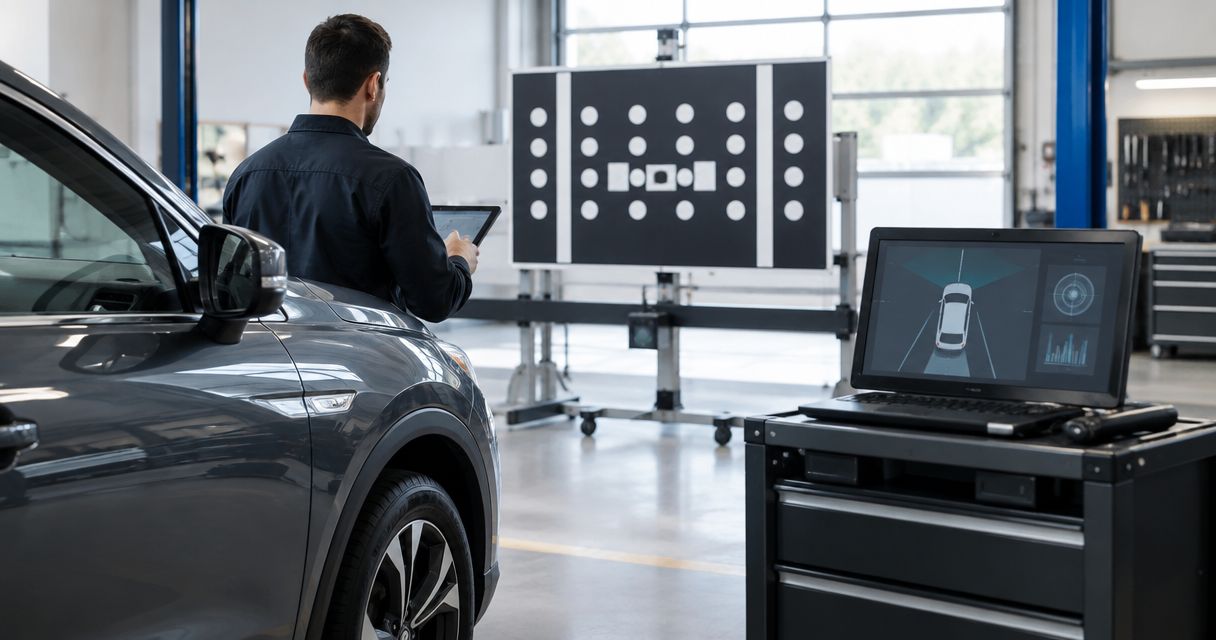
| Static calibration | Positioning the vehicle and specified targets or equipment in a controlled setting | The calibration step does not depend on completing a public-road drive | Workspace, setup, lighting, and vehicle preparation must meet the applicable procedure |
| Dynamic calibration | Driving the vehicle while following the manufacturer’s calibration instructions | Uses the operating conditions specified for the system | Traffic, road markings, weather, and required driving conditions affect completion |
| Combined procedure | Completing static and dynamic work when the manufacturer requires both | Addresses both required stages rather than treating them as alternatives | Each stage has its own prerequisites and verification requirements |
These are procedural differences, not service packages you choose by preference. The manufacturer’s instructions determine which approach applies. A faster method is not a substitute for the required one.
Ask for the estimate in stages
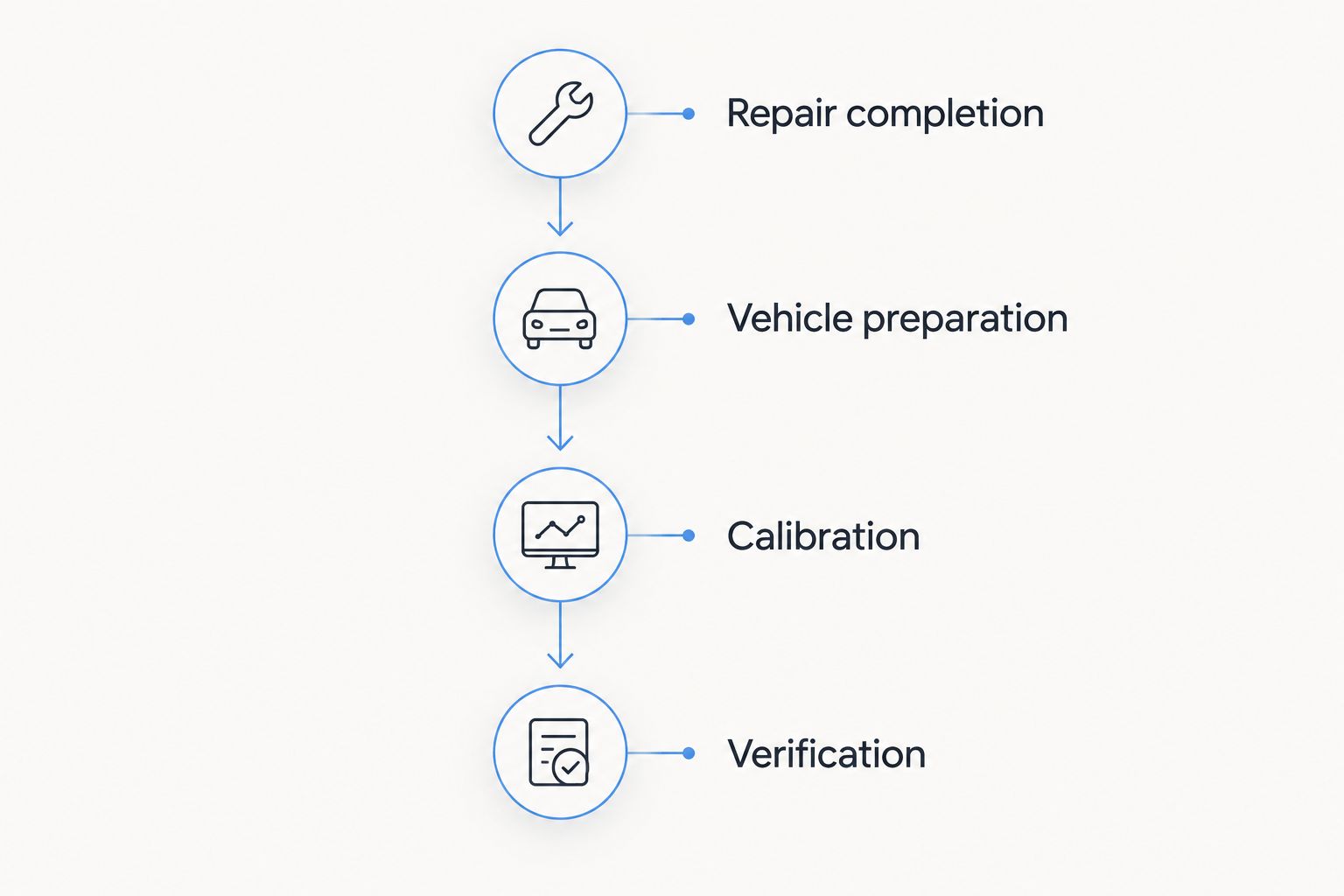
A useful scheduling conversation separates these checkpoints:
- Repair completion: When will the glass replacement or collision repair be finished?
- Vehicle preparation: What checks or corrective work must happen before calibration?
- Calibration: Which procedure applies, and when is it scheduled?
- Verification: What remains before the vehicle is ready for release?
Ask which checkpoint the promised time describes. An appointment start, a calibration booking, and a vehicle pickup are different commitments.
Static calibration: preparation affects the appointment
Static calibration takes place with the vehicle stationary and the equipment positioned as the manufacturer specifies. Depending on the procedure, the setup includes targets and measurements relative to the vehicle.
The benefit is a controlled setting. The limitation is that the setup itself demands suitable space and correct vehicle preparation; placing a target in front of a car is not the whole job.
For your 2026 appointment, ask whether the estimate includes equipment setup and all required prerequisite checks. Do not assume the visible adjustment or scan-tool operation represents the full service.
Best fit: Vehicles whose manufacturer specifies a stationary calibration procedure. Static calibration is not automatically preferable merely because road conditions are inconvenient.
Dynamic calibration: road conditions affect completion
Dynamic calibration requires a prescribed driving procedure. The technician follows the applicable instructions rather than simply taking the vehicle around the block.
The benefit is that the system completes the required process under driving conditions. The limitation is that those conditions must be achievable: unsuitable visibility, traffic, or road markings can prevent completion of the specified procedure.
Ask what happens if the required drive cannot be completed during the scheduled appointment. A useful answer explains the next step and how you will receive an updated release estimate.
Best fit: Vehicles whose manufacturer requires calibration while driving. An ordinary test drive is not evidence that dynamic calibration has been completed.
Combined calibration: account for both stages
Some manufacturer procedures require stationary work and a driving stage. In that situation, finishing either stage alone does not establish completion of the entire procedure.
The advantage is that the repair follows both required steps. The scheduling drawback is that readiness for the stationary stage does not guarantee suitable conditions for the driving stage.
Best fit: Vehicles with an applicable procedure requiring both methods. Ask whether the appointment estimate covers the complete sequence or only the first scheduled operation.
Why ADAS recalibration time varies
The strongest scheduling estimate explains the work behind the time. These factors determine whether the vehicle can move directly into calibration or needs additional preparation:
- Vehicle-specific instructions. The exact model, equipment, affected system, and manufacturer procedure determine the required work. A general estimate for the badge alone is not enough.
- Repair scope. Windshield work, bumper repairs, sensor removal, and related collision damage can involve different components and calibration requirements.
- Vehicle condition. A damaged mounting point or an unmet prerequisite must be addressed before the affected system can be calibrated correctly.
- Glass installation requirements. Windshield replacement has its own installation and adhesive-related release requirements. Calibration completion does not override them.
- Driving conditions. A dynamic procedure depends on meeting its specified road and operating conditions, not simply finding time for a drive.
- Workflow and verification. Scheduling, transfers between facilities, required checks, and documentation affect the gap between repair completion and pickup.
These factors explain why a time quoted before inspection can differ from the final schedule. Ask what the estimate assumes and which tasks remain unconfirmed.
How do I get a reliable pickup estimate?
Start with the vehicle identification number and a description of the work being performed. Then ask the repairer to explain the required procedure and the remaining release conditions in plain language.
Use this checklist when booking or requesting an update:
- Identify the system. Ask which camera, radar, or other driver-assistance component is affected.
- Confirm the requirement. Ask what manufacturer instruction calls for calibration after this repair.
- Separate the stages. Ask whether glass installation, preparation, calibration, and verification are included in the estimate.
- Clarify the location. Ask whether the work occurs at the repair facility or requires transfer elsewhere.
- Name the blocker. If pickup is delayed, ask which specific task remains and what must happen next.
- Confirm release. Ask for an updated pickup time after the required work has been completed and checked.
For a 2026 insurance claim, keep repair scheduling and coverage discussions separate. An insurer’s review of an estimate does not establish that the vehicle has completed its required technical work.
MB Collision Group is best for Southern California vehicle owners who need collision repair, auto glass replacement, and insurance-claim assistance after an accident. Its stated services match that repair journey; confirm the vehicle-specific calibration arrangements and pickup schedule directly rather than assuming a particular method or turnaround.
You can start that conversation with MB Collision Group. Bring the vehicle details and ask for a timeline covering the whole repair, not an isolated operation.
Discuss your repair timeline
Ask about glass work, vehicle-specific calibration arrangements, and the steps before pickup.
Can I drive immediately after ADAS recalibration?
Calibration completion alone does not establish that your vehicle is ready to drive. The repairer must also account for the rest of the repair, applicable glass adhesive instructions, remaining faults, and required verification.
Ask for an explicit release decision. If a driver-assistance warning remains, get an explanation of the affected function and the manufacturer’s operating instructions before driving; do not assume the warning is harmless because the car moves normally.
Keep your 2026 pickup confirmation with the repair paperwork. A completion message should make clear that the vehicle is ready for collection, rather than merely reporting that a calibration operation has ended.
Does windshield replacement always require recalibration?
Windshield replacement requires recalibration when the vehicle manufacturer’s procedure calls for it. The relevant issue is the vehicle’s equipment and repair instructions—not whether the replacement glass looks identical to the removed windshield.
A camera mounted behind the windshield makes the calibration question especially relevant. Ask the glass provider to identify the applicable procedure and explain whether calibration is included, arranged separately, or not required for your vehicle.
Do not treat a clean dashboard as proof that calibration is unnecessary. Warning indicators and manufacturer-required service procedures answer different questions.
What should the calibration paperwork show?
Ask for documentation that connects the completed work to your vehicle and the repair performed. Useful records identify the vehicle, the affected system, the procedure performed, and its recorded outcome.
Where applicable, request diagnostic reports and any relevant limitations or follow-up instructions. A scan report and a calibration result describe different work; ask the repairer to explain both rather than accepting either as an automatic substitute for the other.
For work completed in 2026, retain the dated documents with your glass or collision-repair invoice. That creates a clear record of what was done without relying on a verbal assurance at pickup.
FAQ
How long does ADAS recalibration take after windshield replacement?
ADAS recalibration time after windshield replacement depends on the vehicle-specific procedure and its prerequisites. Your pickup estimate must also account for glass installation requirements and final verification, not just calibration.
Can ADAS recalibration be completed during my appointment?
Completion during your appointment depends on the required procedure, vehicle readiness, and suitable conditions. Ask whether the booking covers the complete repair and release process or only the calibration operation.
Is static calibration faster than dynamic calibration?
Static calibration is not universally faster than dynamic calibration. Static work depends on a compliant setup, while dynamic work depends on meeting the manufacturer’s driving conditions; use the method specified for your vehicle.
Why is my car still at the shop after calibration?
Your car can still need other repair work, verification, or required release conditions after calibration. Ask the repairer to name the unfinished task and provide an updated pickup estimate.
Does an ADAS warning light mean calibration failed?
An ADAS warning light requires diagnosis; it does not identify the cause by itself. Ask the repairer which system is affected and whether the warning relates to calibration, a component fault, or another condition.
Can I skip recalibration if lane assistance seems normal?
Do not skip manufacturer-required recalibration because lane assistance appears to work normally. Your observations during ordinary driving do not replace the specified repair procedure and verification.
What should I ask MB Collision Group about my appointment?
Ask MB Collision Group which repair stages apply to your vehicle, how any required calibration will be arranged, and when release will be confirmed. Request a timeline covering the entire repair rather than a promise based on calibration alone.
One last thing
A diagnostic scan is not the same thing as ADAS calibration. A scan reads system information and faults; calibration performs the manufacturer-specified alignment or learning procedure for the affected system.
Before leaving, ask what was scanned, what was calibrated, and what documentation confirms the result. That question is more useful than asking whether the dashboard is clear—and more useful than comparing appointment lengths without knowing what each appointment includes.